Category Astronomy/Space

How a Supermassive Black Hole Originates

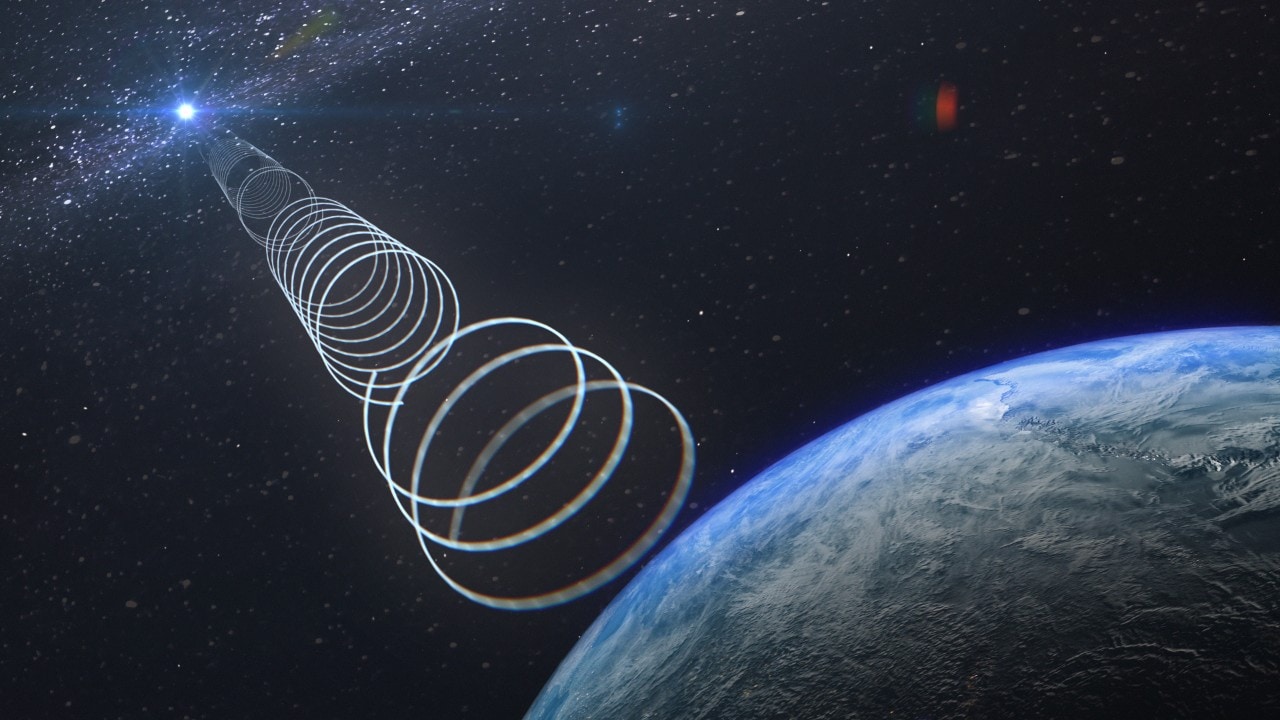
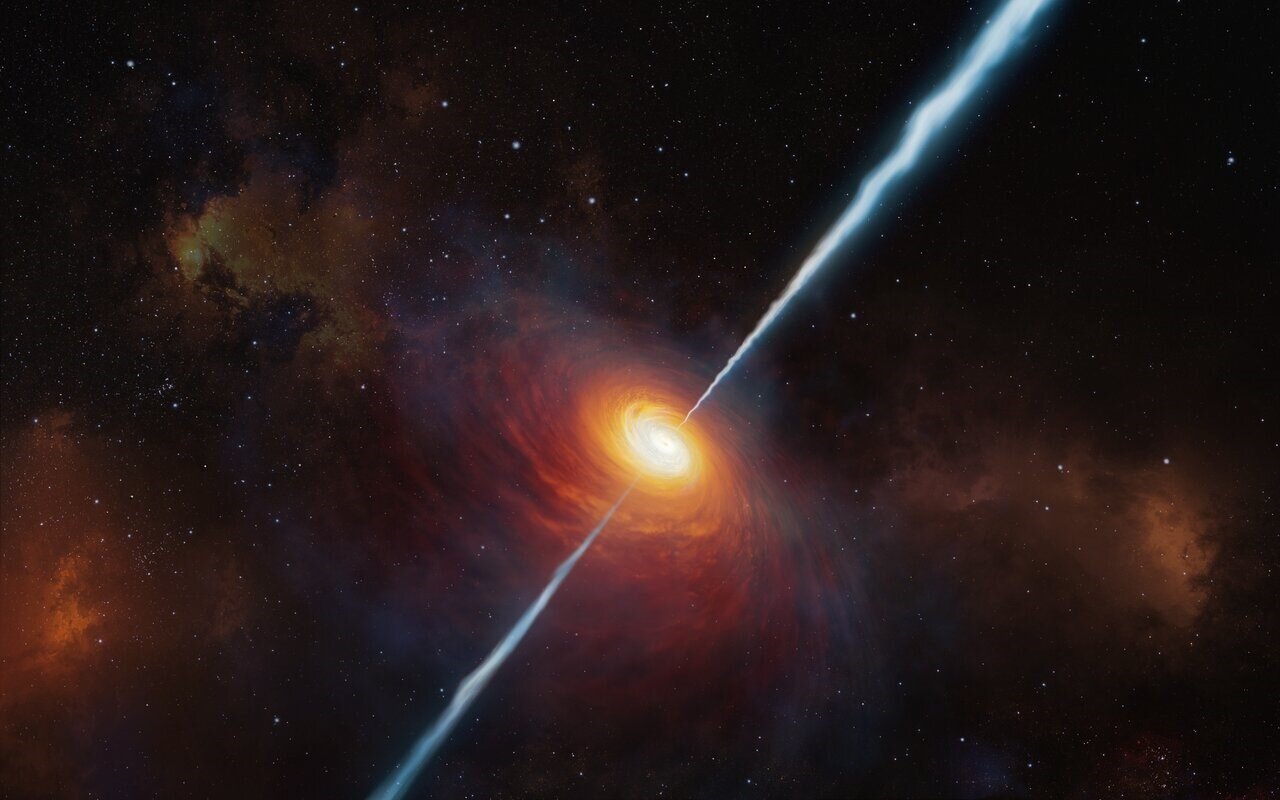
Study points to a seed black hole produced by a dark matter halo collapse. Supermassive black holes, or SMBHs, are black holes with masses that are several million to billion times the mass of our sun. The Milky Way hosts an SMBH with mass a few million times the solar mass. Surprisingly, astrophysical observations show that SMBHs already existed when the universe was very young. For example, a billion solar mass black holes are found when the universe was just 6% of its current age, 13.7 billion years. How do these SMBHs in the early universe originate?

A team led by a theoretical physicist at the University of California, Riverside, has come up with an explanation: a massive seed black hole that the collapse of a dark matter halo could produce.

Dark matter halo is the halo of ...

Read More

Mystery solved: Dust Cloud led to Betelgeuse’s ‘Great Dimming’

ESO/M. Montargès et al

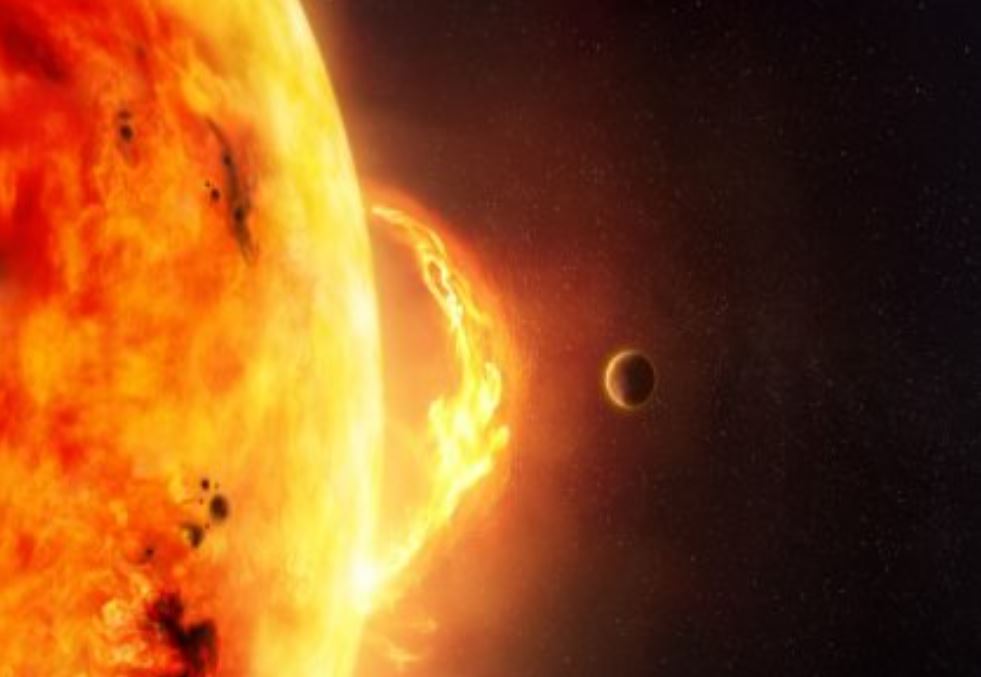
When Betelgeuse, a bright orange star in the constellation of Orion, lost more than two-thirds of its brightness in late 2019 and early 2020, astronomers were puzzled.

What could cause such an abrupt dimming?

Now, in a new paper published Wednesday in Nature, an international team of astronomers reveal two never-before-seen images of the mysterious darkening — and an explanation. The dimming was caused by a dusty veil shading the star, which resulted from a drop in temperature on Betelgeuse’s stellar surface.

Led by Miguel Montargès at the Observatoire de Paris, the new images were taken in January and March of 2020 using the European Southern Observatory’s Very Large Telescope...

Read More

Dark Matter is Slowing the Spin of the Milky Way’s Galactic Bar

artist's conception of the Milky Way

For 30 years, astrophysicists have predicted such a slowdown, but this is the first time it has been measured. The researchers say it gives a new type of insight into the nature of dark matter, which acts like a counterweight slowing the spin.

The spin of the Milky Way’s galactic bar, which is made up of billions of clustered stars, has slowed by about a quarter since its formation, according to a new study by researchers at University College London (UCL) and the University of Oxford.

For 30 years, astrophysicists have predicted such a slowdown, but this is the first time it has been measured.

The researchers say it gives a new type of insight into the nature of dark matter, which acts like a counterweight slowing the spin.

In the study, published in the Monthly Notices o...

Read More

Black Holes Help with Star Birth

Virtual milky way: Gas density around a massive central galaxy in a group in the virtual universe of the TNG50 simulation. Gas inside the galaxy corresponds to the bright vertical structure: a gaseous disk. To the left and right of that structure… [more]
© TNG Collaboration/Dylan Nelson

The cosmic mass monsters clear the way for the formation of new suns in satellite galaxies. Research combining systematic observations with cosmological simulations has found that, surprisingly, black holes can help certain galaxies form new stars. On scales of galaxies, the role of supermassive black holes for star formation had previously been seen as destructive — active black holes can strip galaxies of the gas that galaxies need to form new stars...

Read More