

While studying two exoplanets in a bright nearby star system, the CHEOPS satellite has unexpectedly spotted the system’s third kn...
Read More

While studying two exoplanets in a bright nearby star system, the CHEOPS satellite has unexpectedly spotted the system’s third kn...
Read More
June 28, 2021,
 Astronomy/Space
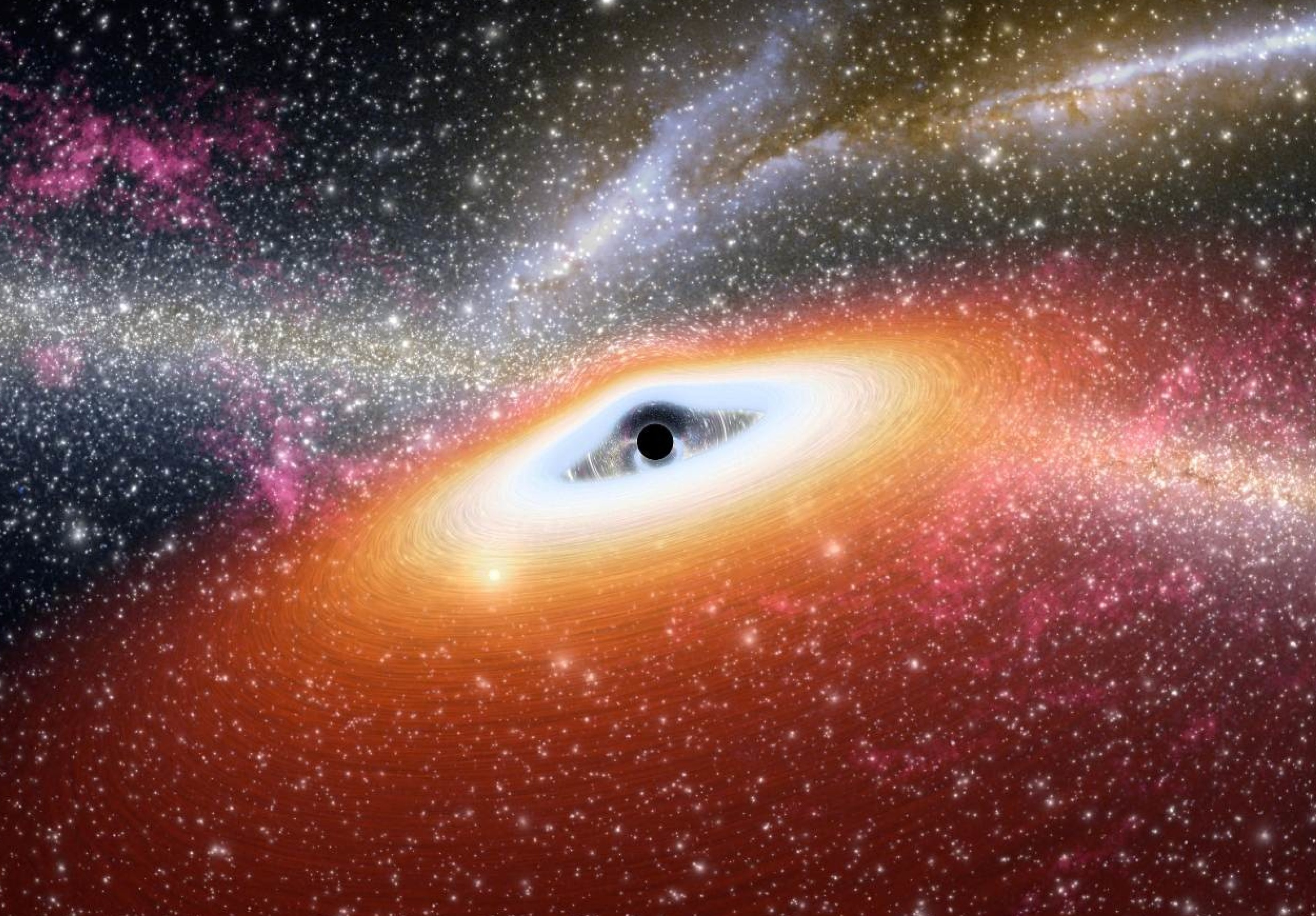
New research shows how the fundamental law of conservation of charge could break down near a black hole. Singularities such as those at the centre of black holes, where density becomes infinite, are often said to be places where physics ‘breaks down’. However, this doesn’t mean that ‘anything’ could happen, and physicists are interested in which laws could break down, and how.
Now, a research team from Imperial College London and the Cockcroft Institute and Lancaster University have proposed a way that singularities could violate the law of conservation of charge. Their theory is published in Annalen der Physik.
Co-author Professor Martin McCall, from the Department of Physics at Imperial, said: “‘Physics breaks down at a singularity’ is one of the most famous statements in pop-...
Read More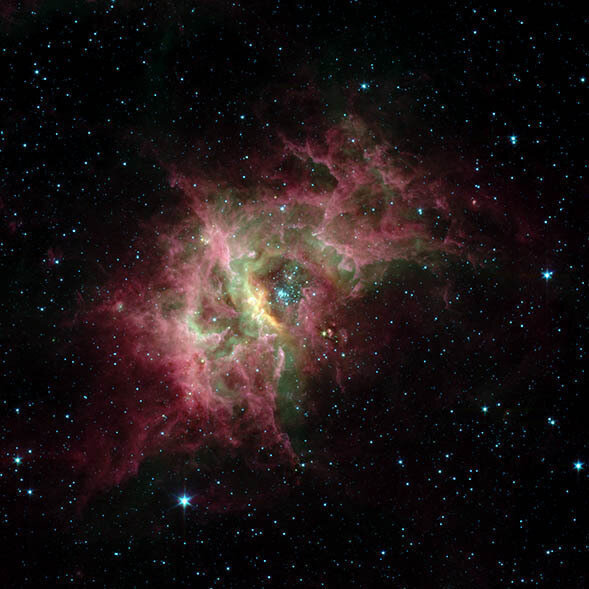
UMD-led team used NASA’s SOFIA telescope to capture high-resolution details of a star nursery in the Milky Way. University of Maryland researchers created the first high-resolution image of an expanding bubble of hot plasma and ionized gas where stars are born...
Read More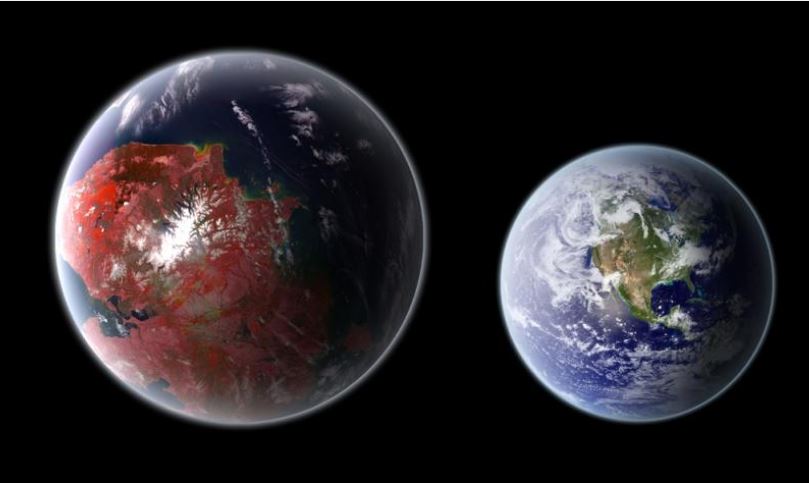
A new analysis of known exoplanets has revealed that Earth-like conditions on potentially habitable planets may be much rarer than previously thought. The work focuses on the conditions required for oxygen-based photosynthesis to develop on a planet, which would enable complex biospheres of the type found on Earth. The study is published today in Monthly Notices of the Royal Astronomical Society.
The number of confirmed planets in our own Milky Way galaxy now numbers into the thousands...
Read More
Recent Comments