

Credit: M. Weiss / Center for Astrophysics | Harvard & Smithsonian
Radio observations of a cold, dense cloud of molecular ga...
Read More

March 20, 2021,
 Astronomy/Space
Radio observations of a cold, dense cloud of molecular ga...
Read More
March 19, 2021,
Astronomy/Space
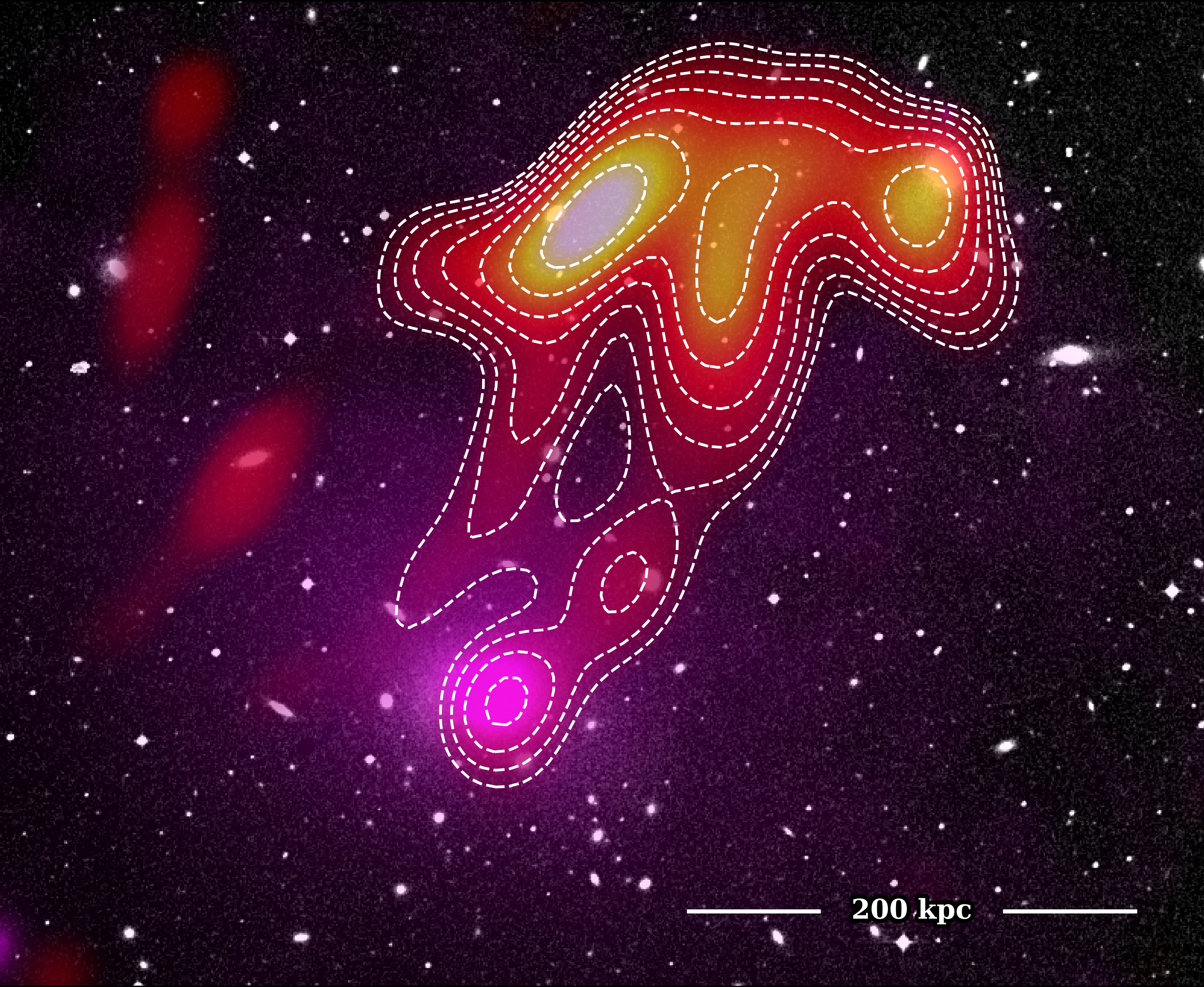
A radio telescope located in outback Western Australia has observed a cosmic phenomenon with a striking resemblance to a jellyfish.
Published today in The Astrophysical Journal, an Australian-Italian team used the Murchison Widefield Array (MWA) telescope to observe a cluster of galaxies known as Abell 2877.
Lead author and PhD candidate Torrance Hodgson, from the Curtin University node of the International Centre for Radio Astronomy Research (ICRAR) in Perth, said the team observed the cluster for 12 hours at five radio frequencies betwee...
Read More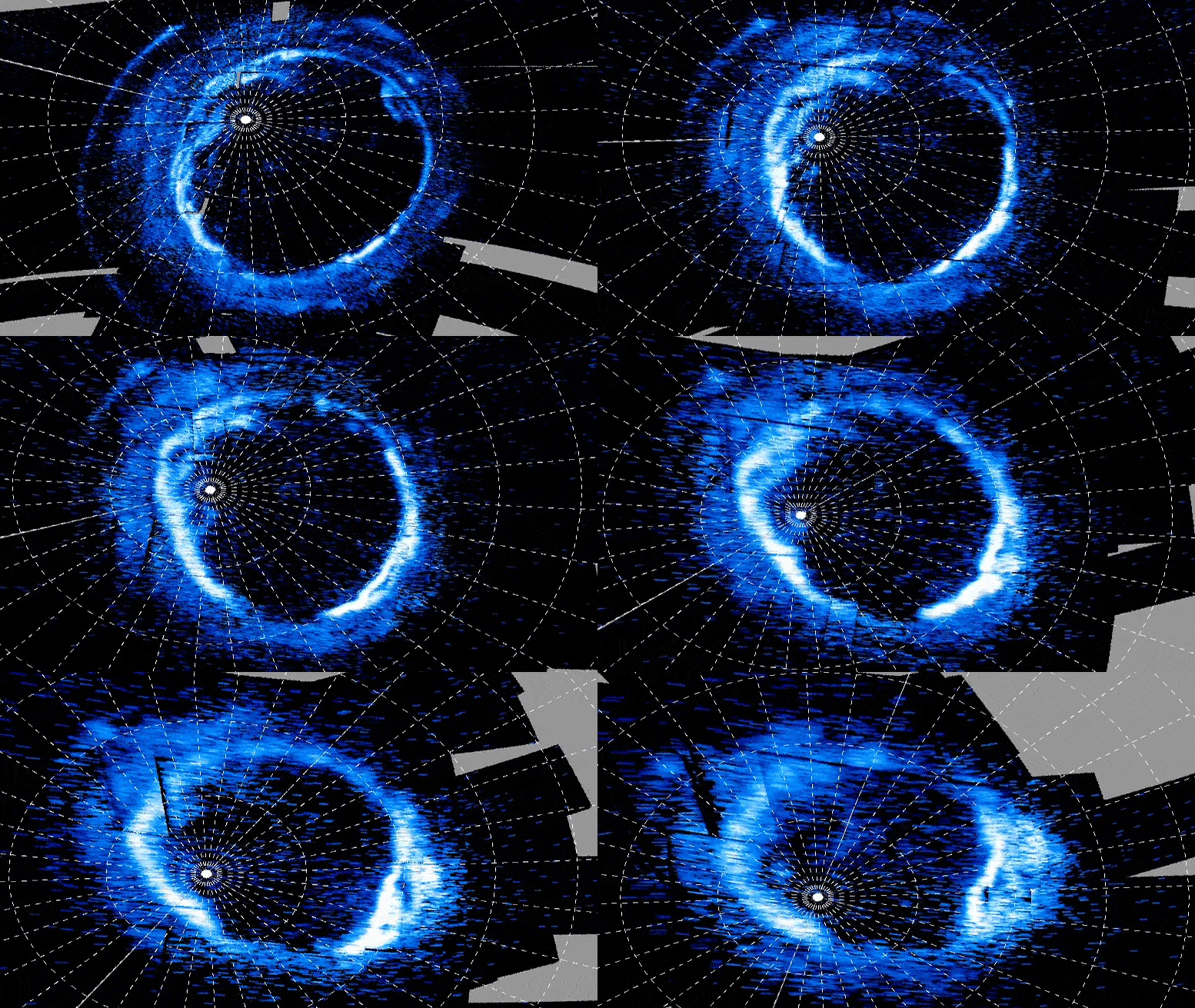
Spectacular ultraviolet storms in big planet’s aurora, generated by charged particles from its volcanic moon, Io. The midnight births of the dramatic bright surges in Jupiter’s aurora known as dawn storms are captured in a new study of data from the Juno space probe.
The storms, which consist of brightenings and broadenings of the dawn flank of an oval of auroral activity that encircles Jupiter’s poles, evolve in a pattern surprisingly reminiscent of familiar surges in the aurora that undulate across Earth’s po...
Read More
A new study suggests that hot, rocky exoplanets could not only develop atmospheres full of water vapor, but keep them for long stretches. An atmosphere is what makes life on Earth’s surface possible, regulating our climate and sheltering us from damaging cosmic rays. But although telescopes have counted a growing number of rocky planets, scientists had thought most of their atmospheres long lost.
However, a new study by University of Chicago and Stanford University researchers expands our p...
Read More
Recent Comments