

Credits: NASA/Bill Ingalls
The largest, most advanced rover NASA has sent to another world touched down on Mars Thursday, after a 203-day journey traversing 293 million miles (472 million kilometers)...
Read More

February 18, 2021,
 Astronomy/Space, Biology/Biotechnology, Environment/Geology
The largest, most advanced rover NASA has sent to another world touched down on Mars Thursday, after a 203-day journey traversing 293 million miles (472 million kilometers)...
Read More
February 18, 2021,
Technology/Electronics, Astronomy/Space
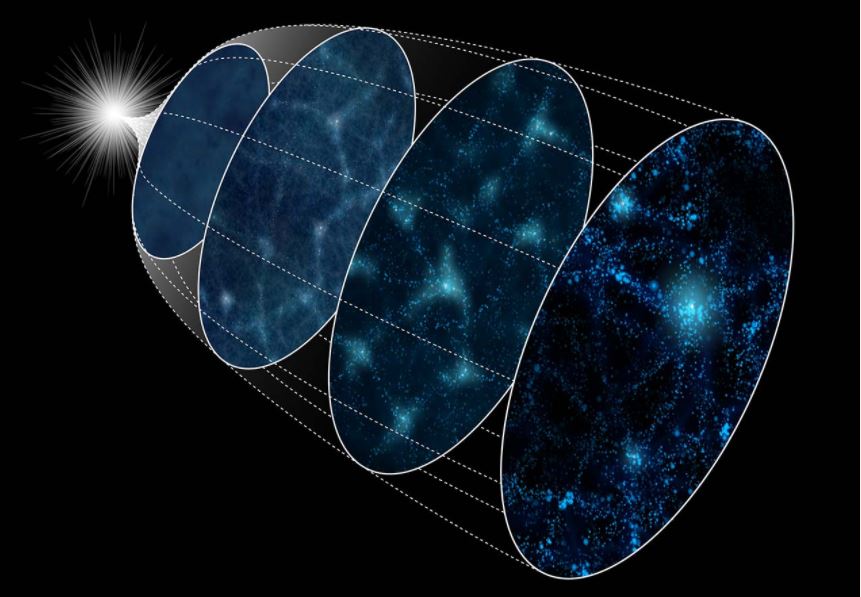
Astronomers have tested a method for reconstructing the state of the early Universe by applying it to 4000 simulated universes using the ATERUI II supercomputer at the National Astronomical Observatory of Japan (NAOJ). They found that together with new observations the method can set better constraints on inflation, one of the most enigmatic events in the history of the Universe...
Read More
February 17, 2021,
Astronomy/Space, Environment/Geology
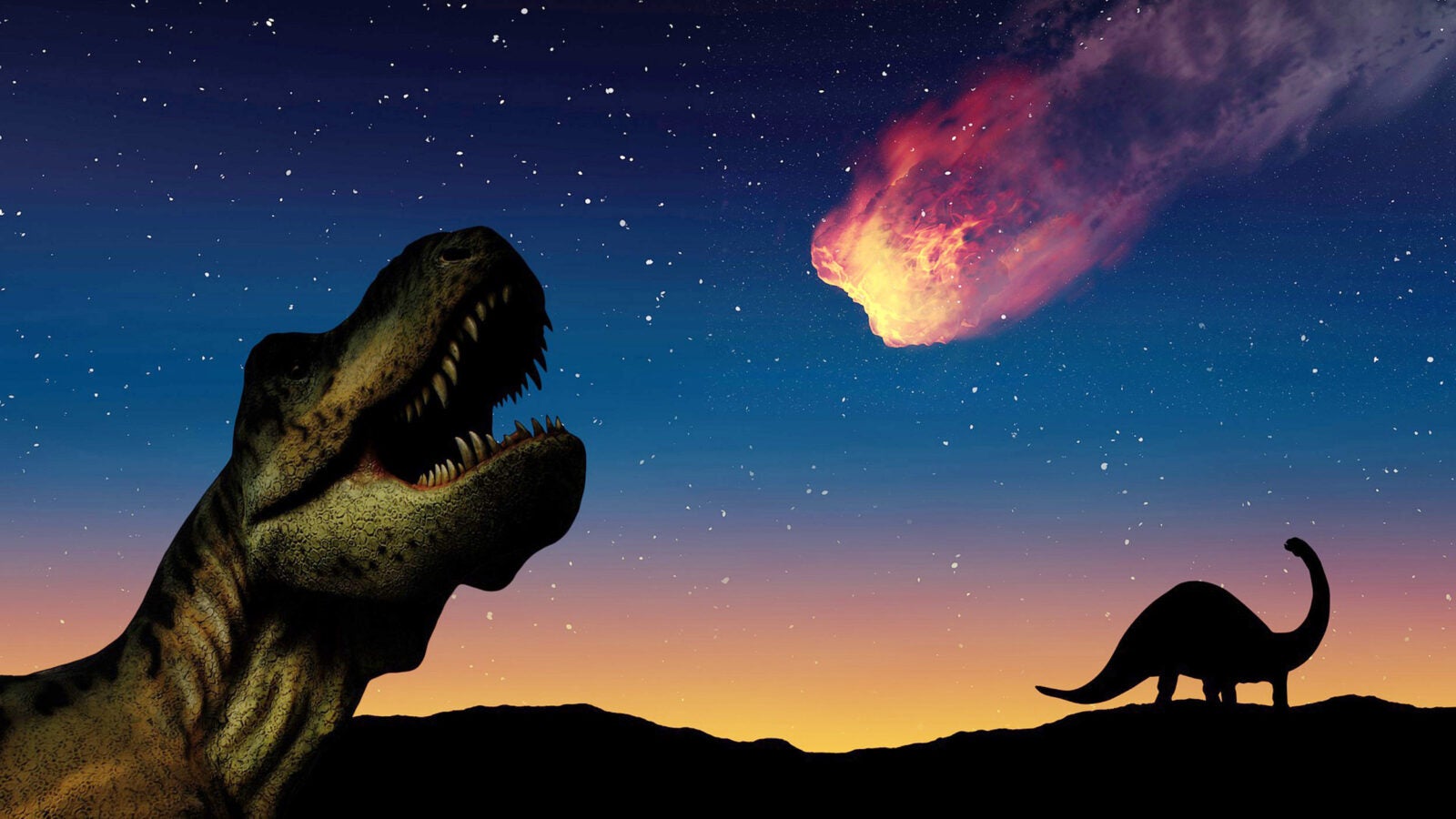
New theory explains possible origin of the Chicxulub impactor. It was tens of miles wide and forever changed history when it crashed into Earth about 66 million years ago.
The Chicxulub impactor, as it’s known, left behind a crater off the coast of Mexico that spans 93 miles and goes 12 miles deep. Its devastating impact brought the reign of the dinosaurs to an abrupt and calamitous end by triggering their sudden mass extinction, along with the end of almost three-quarters of the plant and animal species then living on Earth.
The enduring puzzle has always been where the asteroid or comet that set off the destruction originated, and how it came to strike the Earth...
Read More
February 15, 2021,
Astronomy/Space

Using observations from NASA’s Transiting Exoplanet Survey Satellite (TESS), an international team of astronomers has discovered a trio of hot worlds larger than Earth orbiting a much younger version of our Sun called TOI 451. The system resides in the recently discovered Pisces-Eridanus stream, a collection of stars less than 3% the age of our solar system that stretches across one-third of the sky.
The planets were discovered in TESS images taken between October and December 2018...
Read More
Recent Comments