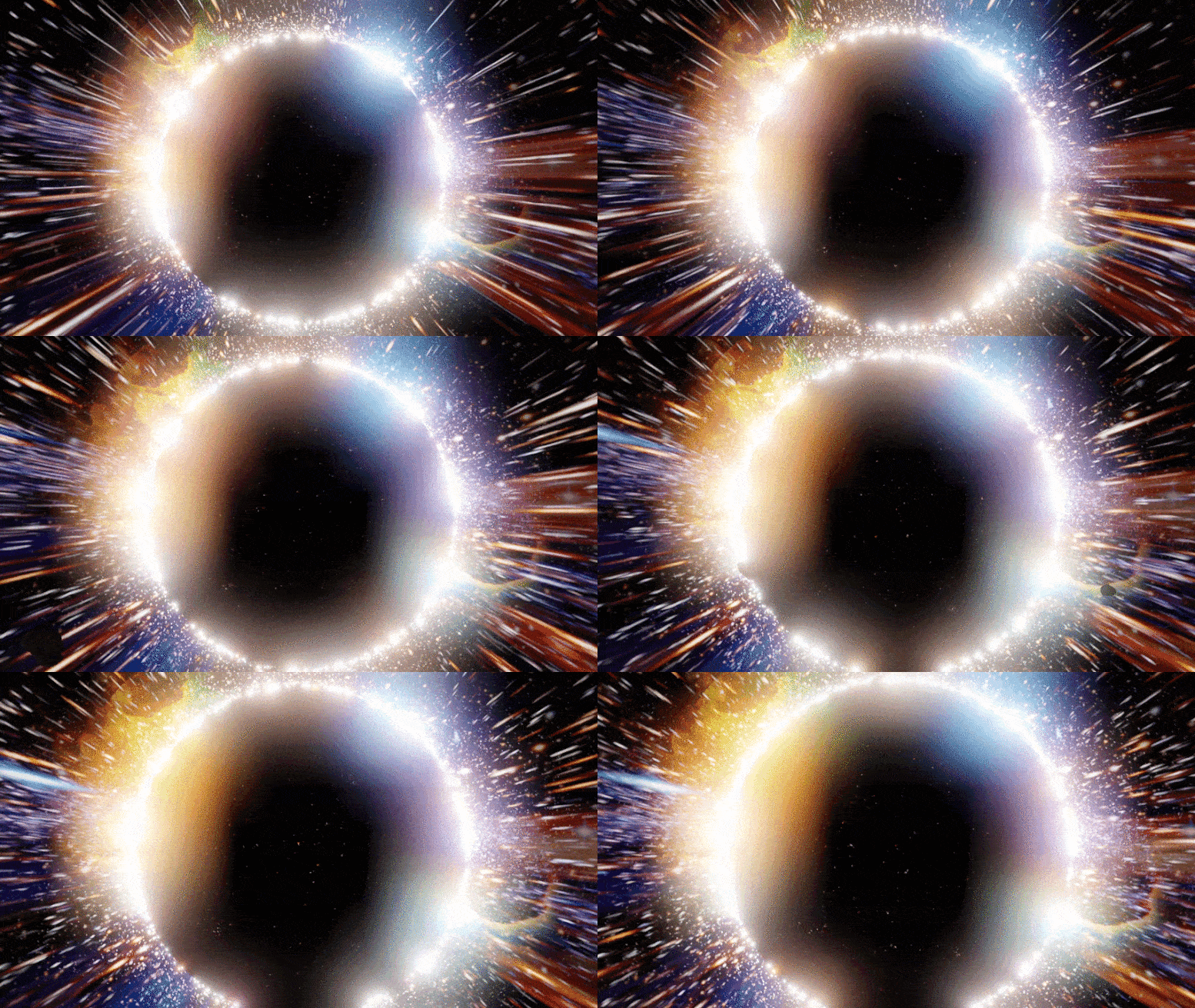
What researchers have done is apply the theory of the holographic principle to black holes. In this way, their mysterious thermodynamic properties have become more understandable: focusing on predicting that these bodies have a great entropy and observing them in terms of quantum mechanics, you can describe them just like a hologram: they have two dimensions, in which gravity disappears, but they reproduce an object in three dimensions.
According to new research, black holes could be like a hologram, where all the information is amassed in a 2D surface able to reproduce a 3D image.
We can all picture that incredible image of a black hole that traveled around the world about a year ago...
A false-color infrared image of the Infrared Dark Cloud called “the Snake” as seen by the IRAC camera on the Spitzer Space Telescope. Astronomers have produced a new catalog of IRDCs from IRAC’s sky survey images using a new computational search-and-detection algorithm. (Blue dots are stars relatively undimmed by dust, while the red dots are young stars embedded in the cloud.) NASA, JPL-Caltech/S. Carey (SSC/Caltech)
Infrared dark clouds (IRDCs) are dark patches of cold dust and gas seen in the sky against the bright diffuse infrared glow of warm dust in our galaxy. These IRDCs, massive and rich in molecules, are natural sites for star birth—one of the main reasons why astronomers are actively studying them...
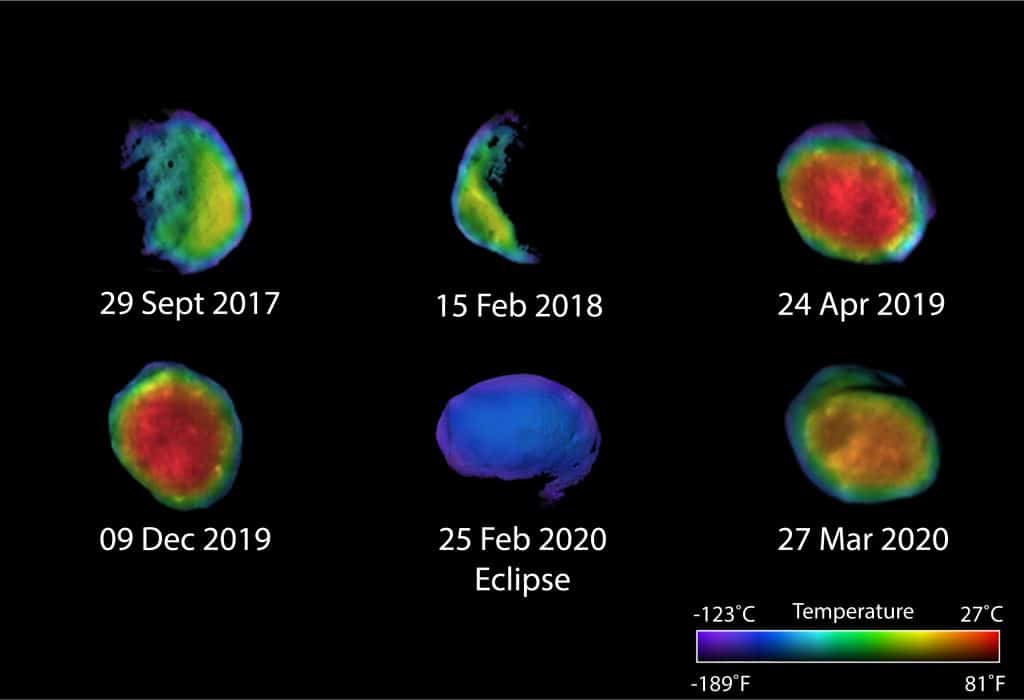
Christopher Edwards, assistant professor in NAU’s Department of Astronomy and Planetary Science, just processed new images of the Martian moon Phobos that give scientists insight into the physical properties of the moon and its composition. The images of the small moon, which is about 25 kilometers (15 miles) in diameter, were captured by NASA’s 2001 Mars Odyssey orbiter. When reviewed in combination with three previously released images, these new images could ultimately help settle the debate over whether the planetary body is a “captured asteroid” — pulled into perpetual orbit around Mars — or an ancient chunk of Mars blasted off the surface by a meteorite impact.
Along with scientists at NASA’s Jet Propulsion Lab and Arizona State University, Edwards used the Thermal Emission I...
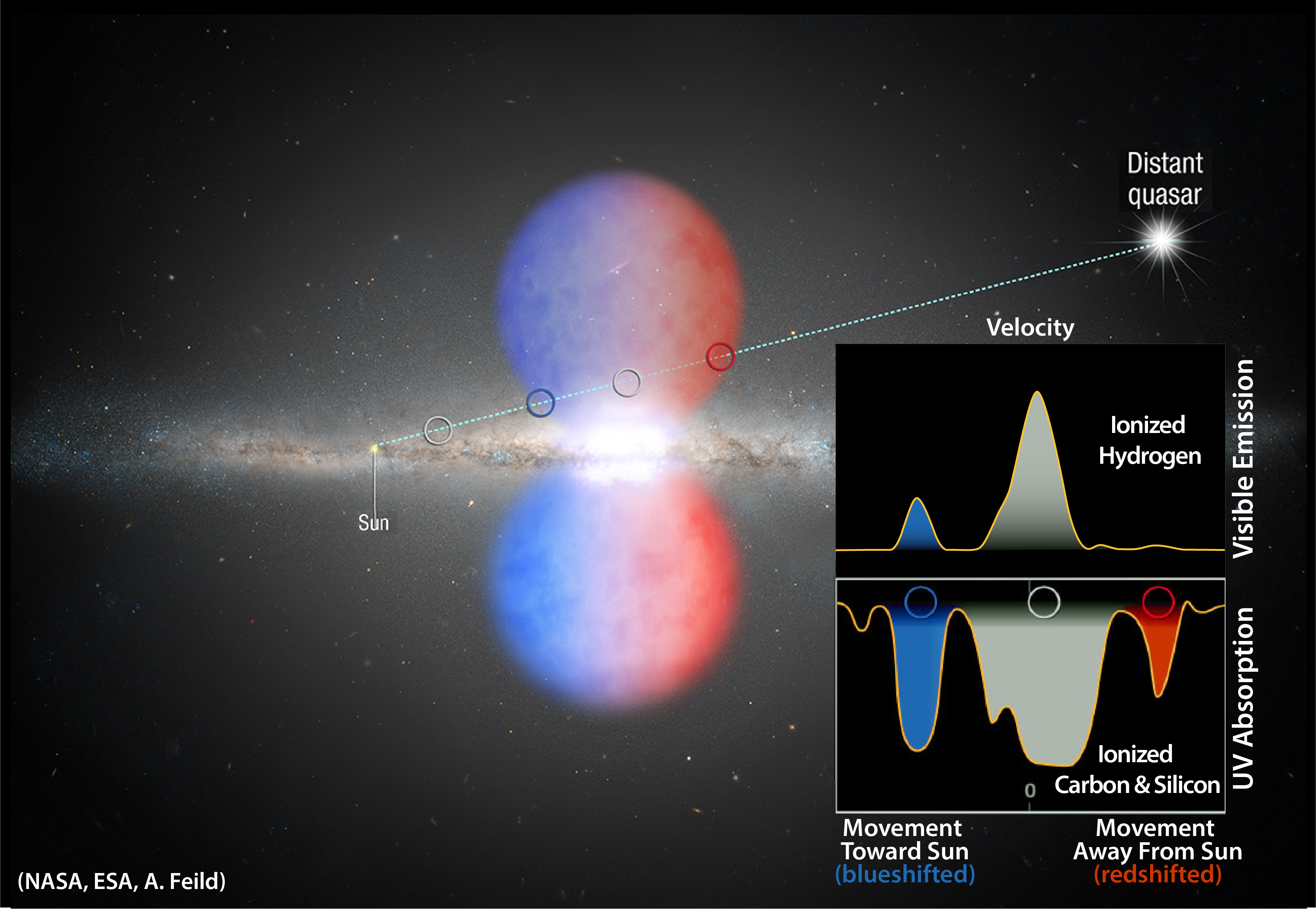
Astronomers used the WHAM telescope to measure huge outflows of gas extending from the Milky Way’s center known as the Fermi Bubbles. They were able to measure the velocity, density and pressure of the gas for the first time, confirming and extending previous measurements made by using a distant quasar as a light source to look through and measure the gas. IMAGE BY DHANESH KRISHNARAO AND NASA
Using the Wisconsin H-Alpha Mapper telescope, astronomers have for the first time measured the Fermi Bubbles in the visible light spectrum. The Fermi Bubbles are two enormous outflows of high-energy gas that emanate from the Milky Way and the finding refines our understanding of the properties of these mysterious blobs.
The research team from the University of Wisconsin-Madison, UW-Whitewater...






Recent Comments