Category Astronomy/Space

ALMA dives into Black Hole’s ‘Sphere of Influence’

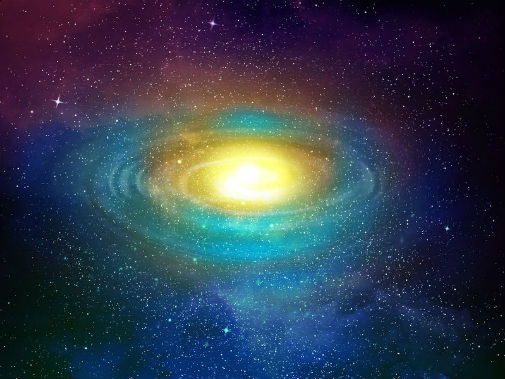
Telescope (NASA/ESA); Carnegie-Irvine Galaxy Survey

ALMA has made the most precise measurements of cold gas swirling around a supermassive black hole – the cosmic behemoth at the center of the giant elliptical galaxy NGC 3258. What happens inside a black hole stays inside a black hole, but what happens inside a black hole’s “sphere of influence” – the innermost region of a galaxy where a black hole’s gravity is the dominant force – is of intense interest to astronomers and can help determine the mass of a black hole as well as its impact on its galactic neighborhood.

Millimeter/submillimeter Array (ALMA) provide an unprecedented close-up view of a swirling disk of cold interstellar gas rotating around a supermassive black hole...

Read More

Glitch in Neutron Star reveals its Hidden Secrets

During the glitch the star started spinning even faster
An artistic impression of the three components in the neutron star. Credit: Carl Knox.

Neutron stars are not only the most dense objects in the Universe, but they rotate very fast and regularly. Until they don’t. Occasionally these neutron stars start to spin faster, caused by portions of the inside of the star moving outwards. It’s called a “glitch” and it provides astronomers a brief insight into what lies within these mysterious objects.

In a paper published today in the journal, Nature Astronomy, a team from Monash University, the ARC Centre of Excellence for Gravitational Wave Discovery (OzGrav), McGill University in Canada, and the University of Tasmania, studied the Vela Pulsar, a neutron star in the southern sky, that is 1,000 light years away.

According to the paper’s ...

Read More

A New Timeline of Earth’s Cataclysmic Past

Depiction of large asteroids striking Earth, which, during parts of its early history, would have had a much thicker atmosphere than it does today. (Credits: NASA with modifications by Stephen Mojzsis)

Recent research shows that our planet may have been pummeled with asteroids long before some scientists had previously thought. Welcome to the early solar system. Just after the planets formed more than 4.5 billion years ago, our cosmic neighborhood was a chaotic place. Waves of comets, asteroids and even proto-planets streamed toward the inner solar system, with some crashing into Earth on their way.

Now, a team led by University of Colorado Boulder geologist Stephen Mojzsis has laid out a new timeline for this violent period in our planet’s history...

Read More

Dark Matter may be Older than the Big Bang

cosmic inflation model
(Drbogdan/Yinweichen/Wikimedia Commons)

Dark matter, which researchers believe make up about 80% of the universe’s mass, is one of the most elusive mysteries in modern physics. What exactly it is and how it came to be is a mystery, but a new Johns Hopkins University study now suggests that dark matter may have existed before the Big Bang. The study, published August 7 in Physical Review Letters, presents a new idea of how dark matter was born and how to identify it with astronomical observations.

“The study revealed a new connection between particle physics and astronomy. If dark matter consists of new particles that were born before the Big Bang, they affect the way galaxies are distributed in the sky in a unique way...

Read More