
Category Biology/Biotechnology

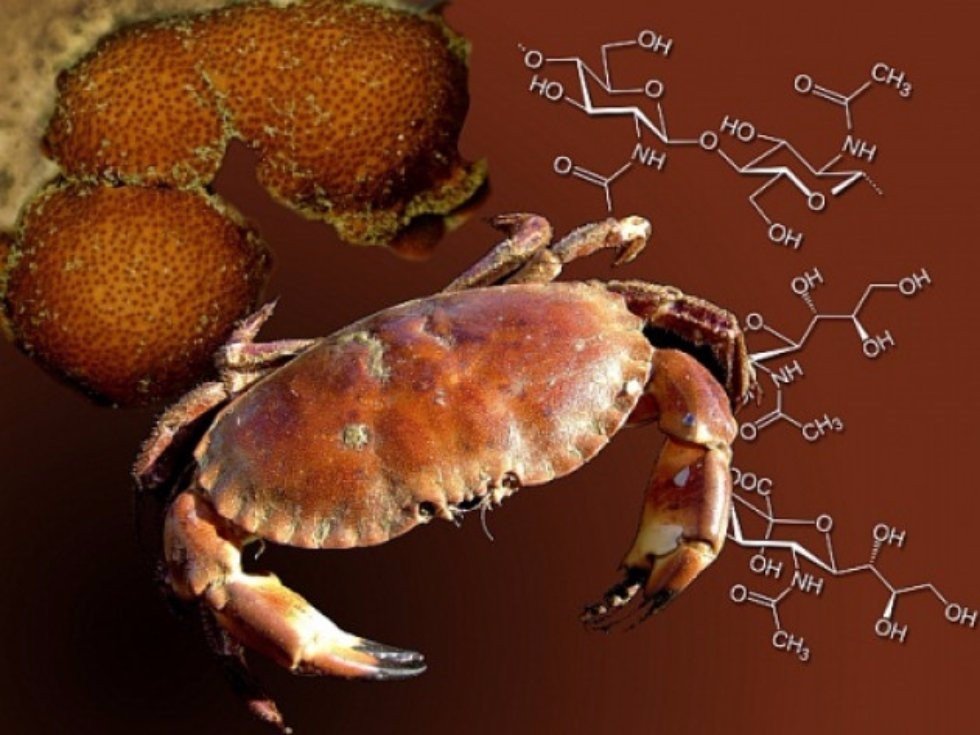
Chitin of Insects and Crustaceans has been found to be active against pathogenic microorganisms

New Antibacterial Drug to Be Created At KFU ,medicine, research, medication, biology

KFU’s researchers in cooperation with the Kazan Research Institute of Epidemiology and Microbiology and the Bioengineering Center of the Russian Academy of Sciences proved the effectiveness of biopolymers against pathogenic microorganisms. Подробности: http://kpfu.ru/eng/news-eng/new-antibacterial-drug-to-be-created-at-kfu-143092.html Любое использование материалов допускается только при наличии гиперссылки на портал КФУ (kpfu.ru)

The study specifically concentrated on chitosan extracted from chitin in the carapaces of insects and crustaceans. “We found that some forms of chitosan are toxic...

Read More

New Combination Rx effective against Melanoma Skin Metastases

Metastatic melanoma: positron emission tomographic (PET)/computed tomography (CT) images. A-C, PET/CT of the head and neck after recurrence of malignant melanoma reveals increased FDG uptake spanning from the nose, left malar cheek, to the left ear, which represents a large melanoma (8.5 cm) and multiple additional in-transit metastases. E-G, Three months after restarting intralesional interleukin 2, imiquimod, and a topical retinoid, there is resolution of the enhancing lesions. D, At initial presentation, PET/CT image (patient 8) shows increased FDG uptake in the skin and subcutaneous tissues of the back of right forearm, consistent with biopsy-proven melanoma (18- × 6-cm plaque). H, At 5 months posttreatment, no hypermetabolic lesion is identified.

Metastatic melanoma: positron emission tomographic (PET)/computed tomography (CT) images. A-C, PET/CT of the head and neck after recurrence of malignant melanoma reveals increased FDG uptake spanning from the nose, left malar cheek, to the left ear, which represents a large melanoma (8.5 cm) and multiple additional in-transit metastases. E-G, Three months after restarting intralesional interleukin 2, imiquimod, and a topical retinoid, there is resolution of the enhancing lesions. D, At initial presentation, PET/CT image (patient 8) shows increased FDG uptake in the skin and subcutaneous tissues of the back of right forearm, consistent with biopsy-proven melanoma (18- × 6-cm plaque). H, At 5 months posttreatment, no hypermetabolic lesion is identified. Creit: 10.1016/j.jaad.2015.06.060

L...

Read More

New Breath Test Shows Possible Biomarker for Early-Stage Liver Disease Diagnosis


A natural compound, limonene, found in oranges and lemons, could be indicative in early-stage diagnosis of liver disease. Patients with this illness do not often present with symptoms until the disease is advanced. Even then diagnosis is difficult and the symptoms and signs are often general and can be mistaken for other pathologies. For advanced cirrhosis liver,transplant is the only treatment.

In the UK liver disease has risen sharply over the past few decades and is the 3rd biggest cause of premature mortality, with 3/4 of liver deaths due to alcohol. Patients do not often present with symptoms until the disease is advanced.

The R enantiomer of limonene smells like oranges. The S enantiomer smells like lemons.

The R enantiomer of limonene smells like oranges. The S enantiomer smells like lemons. Credit: https://jahschem.wikispaces.com/stereochem+in+biology

The Molec...

Read More

Space Farming Yields a Crop of Benefits for Earth

Air Cleaner

NASA air purification technology, originally designed for plant-growing experiments on the space station, has been licensed and turned into a consumer device that keeps household air cleaner and healthier. Credits: Akida Holdings Inc.

The red romaine lettuce is far from the first crop grown on a space station. For decades, NASA etc have experimented with plants in space, but the results were always sent to Earth for examination, rather than eaten. A number of technologies NASA has explored have found their way onto the market.

Orbital Technologies (ORBITEC) partnered with Kennedy Space Center to develop the plant growth system: Veggie, that produced this most recent crop of lettuce, as well as its predecessor, Biomass Production System...

Read More