Category Biology/Biotechnology

Researchers discover how Gut Muscle can be Vital for Growth, Repair and Treatments

Gut muscle vital for absorbing fats forms like scars
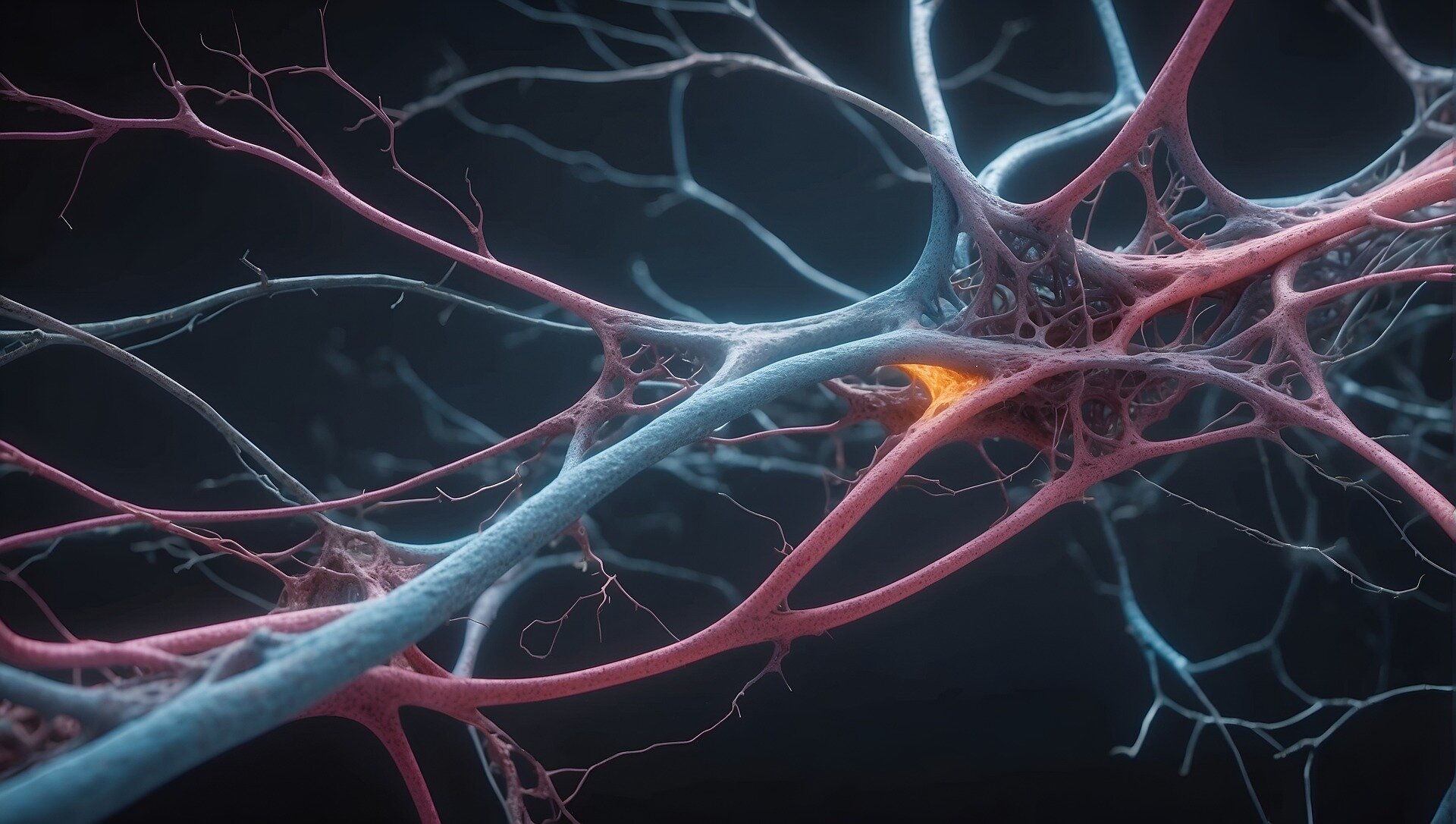
Intestinal villus with myofibroblast progenitor cells (magenta) differentiate into smooth muscle fibers (cyan) that support dietary fat absorption. Credit: Kurpios Lab/Provided

By discovering how a type of smooth muscle—which is essential for mechanical aspects of absorbing fats from food—forms in the gut, Cornell scientists have opened doors to making Artificial Muscle, Repairing muscle following gut surgeries, and treating inflammatory bowel disease and obesity.

The findings, published in a study in Developmental Cell, reveal that intestinal smooth muscle originates in embryos and forms by the same process that is a hallmark of creating scar tissue when a wound heals.

The smooth muscle sits inside tiny finger-like projections called villi, which absorb fats—also known as li...

Read More

New Inflammatory Bowel Disease Testing Protocol could Speed up Diagnosis

Black woman wearing sports outfit holding stomach in pain

Serial home tests would reduce unnecessary colonoscopy testing. Patients with suspected inflammatory bowel disease (IBD) could benefit from better testing protocols that would reduce the need and lengthy wait for potentially unnecessary colonoscopies, a new study has found.

In a paper published in Frontline Gastroenterology, researchers from the Birmingham NIHR Biomedical Research Centre (BRC) at the University of Birmingham tested a new protocol to improve IBD diagnosis combining clinical history with multiple home stool tests.

In the two-year study involving 767 participants, patients were triaged and had repeated faecal calprotectin (FCP) tests and the research team found that the use of serial FCP tests were able to strongly predict possible IBD as well as Crohn’s Disease an...

Read More

Researchers Identify Brain Region involved in Control of Attention

Illustration of a coronal section of the brain showing the location of the basal ganglia and region names. Details in caption.
The basal ganglia are subcortical structures located at the base of the forebrain. They are comprised of the caudate and putamen, which both make up the striatum, as well as the globus pallidus, substantia nigra, and subthalamic nucleus. ‘Basal Ganglia’ by Casey Henley is licensed under a Creative Commons Attribution Non-Commercial Share-Alike (CC BY-NC-SA) 4.0 International License.

Researchers at the University of Iowa in a new study have linked a region in the brain to how humans redirect thoughts and attention when distracted. The connection is important because it offers insights into cognitive and behavioral side effects to a technique being used to treat patients with Parkinson’s disease.

The subthalamic nucleus is a pea-sized brain region involved in the motor-contro...

Read More

Scientists uncover a Missing Link between Poor Diet and Higher Cancer Risk

2024 0409 (CSI) Poor diet and higher cancer risks
A new study by NUS researchers reveals that methylglyoxal, a chemical produced when our body break down glucose for energy production, instigates faults in our DNA that are early warning signs of cancer initiation.

A research team from the National University of Singapore (NUS) has unearthed new findings which may help explain the connection between cancer risk and poor diet, as well as common diseases like diabetes, which arise from poor diet. The insights gained from this study hold promise for advancing cancer prevention strategies aimed at promoting healthy ageing.

Led by Professor Ashok Venkitaraman, this ground-breaking study was conducted by scientists from the Cancer Science Institute of Singapore (CSI Singapore) at NUS and NUS Centre for Cancer Research (N2CR) under the Yon...

Read More