Category Biology/Biotechnology

New COVID Vaccine induces Good Antibody Response to Mutated Viral Variants, finds study

vaccination

Researchers at Karolinska Institutet and Danderyd Hospital have followed recipients of the new updated COVID-19 vaccine and analyzed the antibody response to different SARS-CoV-2 variants. The results show a surprisingly strong response to the now dominant and highly mutated omicron variants.

The ongoing COMMUNITY study, which was launched in the spring of 2020 with the regular testing of 2,149 members of the Danderyd Hospital staff, has recently published the results of this autumn’s leg of the study.

Twenty-four participants were recorded in this study, the majority of whom were over 64 and had received four or five previous vaccine doses...

Read More
New Brain-like Transistor Mimics Human Intelligence

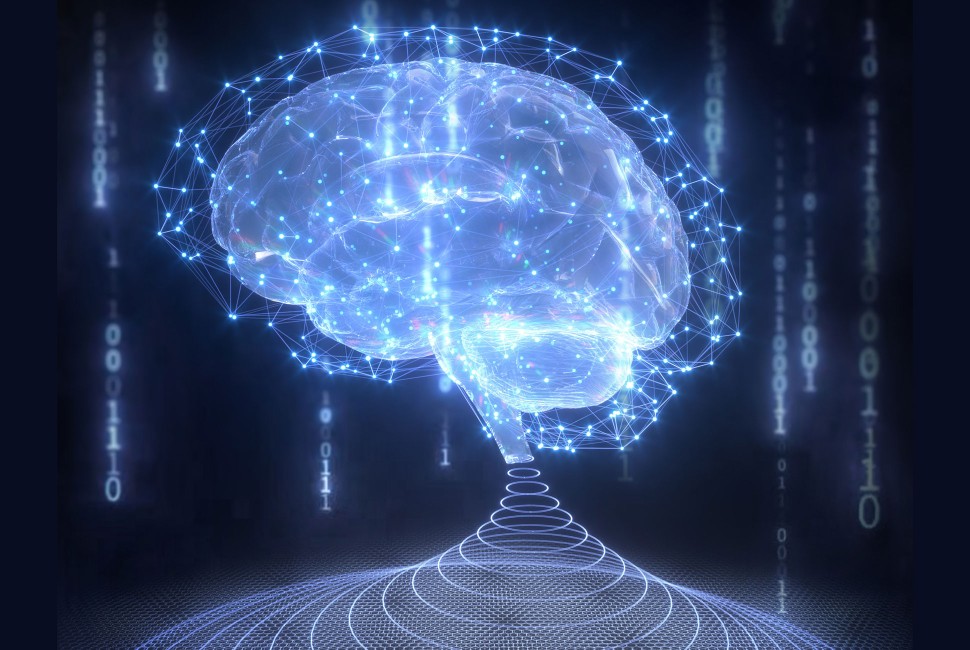
An artistic interpretation of brain-like computing. Image by Xiaodong Yan/Northwestern University

Transistor performs energy-efficient associative learning at room temperature. Taking inspiration from the human brain, researchers have developed a new synaptic transistor capable of higher-level thinking.

Designed by researchers at Northwestern University, Boston College and the Massachusetts Institute of Technology (MIT), the device simultaneously processes and stores information just like the human brain. In new experiments, the researchers demonstrated that the transistor goes beyond simple machine-learning tasks to categorize data and is capable of performing associative learning.

Although previous studies have leveraged similar strategies to develop brain-like computing device...

Read More

New Treatment Reverses Alzheimer’s Disease Signs, Improves Memory Function in Preclinical Study

A “chaperone” molecule that slows the formation of certain proteins reversed disease signs, including memory impairment, in a mouse model of Alzheimer’s disease, according to a study from researchers at the Perelman School of Medicine at the University of Pennsylvania.

In the study, published in Aging Biology, researchers examined the effects of a compound called 4-phenylbutyrate (PBA), a fatty-acid molecule known to work as a “chemical chaperone” that inhibits protein accumulation. In mice that model Alzheimer’s disease, injections of PBA helped to restore signs of normal proteostasis (the protein regulation process) in the animals’ brains while also dramatically improving their performance on a standard memory test, even when administered late in the disease course.

“By genera...

Read More

Sinai Health study identifies new concepts for GLP-1 action in the brain, the 2023 Science magazine breakthrough of the year

A woman stands facing the camera smiling. She is in a therapy gym in a hospital and there are  dumbells and other equipment in the background

Researcher Dr. Daniel Drucker has much to be proud of, as the GLP-1-based diabetes drugs hailing from his early research are named the 2023 breakthrough of the year by the Science Magazine. Not only have millions of people with type 2 diabetes benefitted from GLP-1 agonists, but the drugs also produced wide-ranging health benefits beyond weight loss in two recent patient trials.

For years, GLP-1 agonists have been known to have a fortuitous side effect of improving metabolic health, but how this is regulated in the body remains unclear. Now Dr. Drucker, who has dedicated his life’s work to understanding how these drugs work, has a new paper that begins to unravel the mystery with a novel finding—it all starts in the brain.

His team at the Lunenfeld-Tanenbaum Research Institute...

Read More