
Category Biology/Biotechnology

Cholesterol-lowering Therapy may Hinder Aggressive Type of Colorectal Tumor

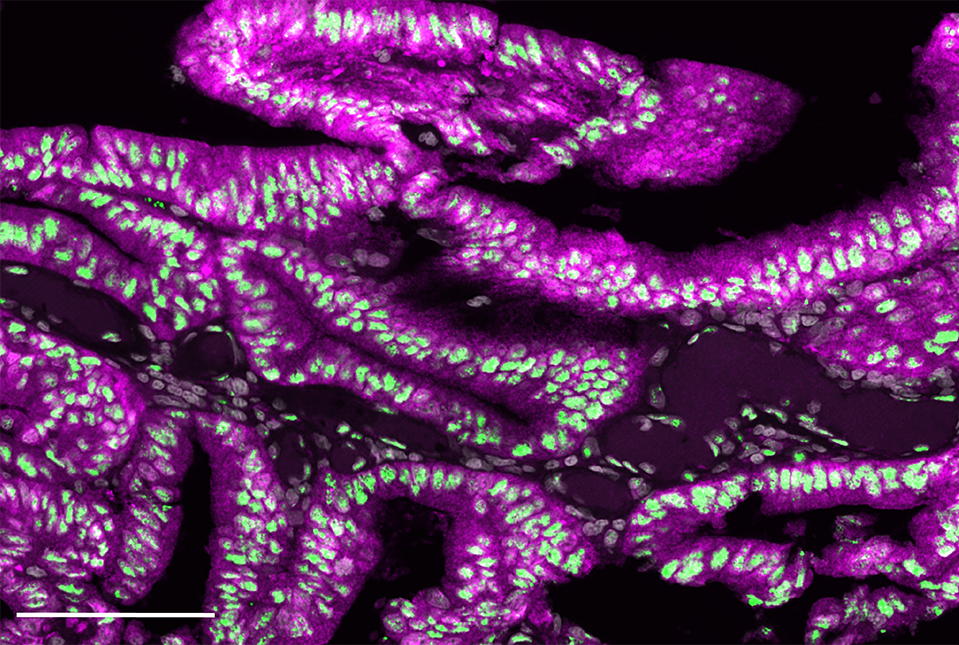
immunofluorescence image of cells labeled in green, magenta and turquoise
Multiplex immunofluorescence image of cholesterol-rich human serrated colorectal cancer. Highly aggressive tumoral cells (green and magenta) are negative for both aPKCs (turquoise). The nuclear accumulation of SREBP2 (the major enzyme of cholesterol biosynthesis) is labeled in green, and nuclei in grey. Credit: Anxo Martinez-Ordoñez

Hard-to-detect colorectal pre-cancerous lesions known as serrated polyps, and the aggressive tumors that develop from them, depend heavily on the ramped-up production of cholesterol, according to a preclinical study from researchers at Weill Cornell Medicine. The finding points to the possibility of using cholesterol-lowering drugs to prevent or treat such tumors.

In the study, published Oct...

Read More
Infection with Stomach Bacteria may Increase Risk of Alzheimer’s disease

This shows bacteria and a head.

Researchers from Charité and McGill University quantify association between Helicobacter pylori and Alzheimer’s disease. Infection with the stomach bacterium Helicobacter pylori could increase the risk of developing Alzheimer’s disease: In people over the age of 50, the risk following a symptomatic infection can be an average of 11 percent higher, and even more about ten years after the infection, at 24 percent greater risk. These are the findings of a study by Charité — Universitätsmedizin Berlin and McGill University (Canada), now published in the journal Alzheimer’s & Dementia: The Journal of the Alzheimer’s Association.* The researchers analyzed three decades’ worth of patient data.

As today’s populations age, dementia is set to become more common, tripling in prevalence in ...

Read More

Brain Tissue on a Chip Achieves Voice Recognition

 Brain tissue on a chip achieves voice recognition
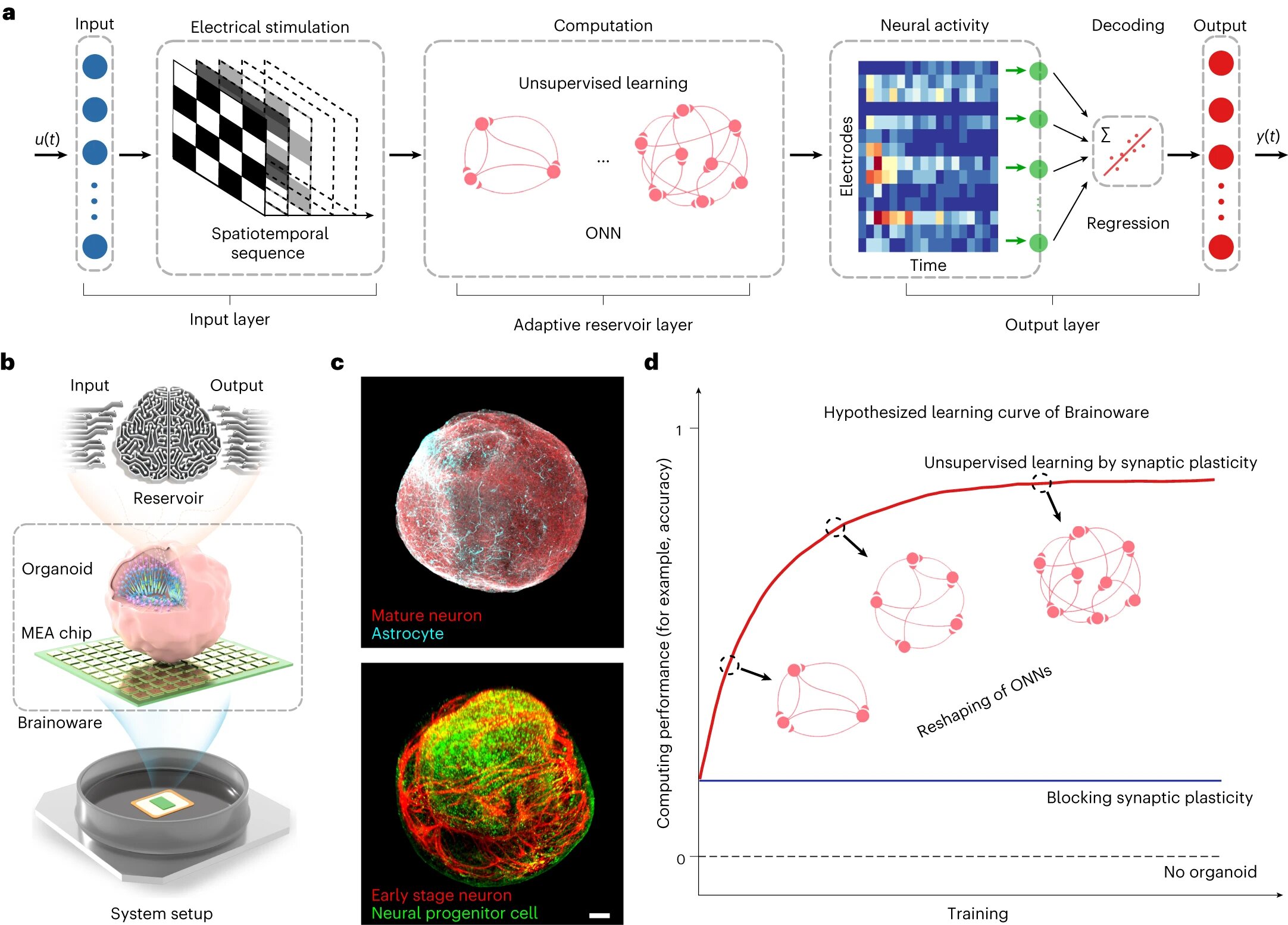
Brainoware with unsupervised learning for AI computing. a, Schematic of an adaptive reservoir computing framework using Brainoware. b, Schematic of the paradigm of Brainoware setup that mounts a single brain organoid onto a high-density MEA for receiving inputs and sending outputs. c, Whole-mount immunostaining of cortical organoids showing complex three-dimensional neuronal networks with various brain cell identities (for example, mature neuron, MAP2; astrocyte GFAP; neurons of early differentiation stage, TuJ1; neural progenitor cells, SOX2). d, Schematic demonstrating the hypothesized, unsupervised learning of Brainoware by reshaping the BNN during training, and the inhibition of unsupervised learning after synaptic plasticity is blocked. Scale bar, 100 μm. Credit: Nature Elect...
Read More

Made-to-Order Diagnostic Tests may be on the Horizon

McGill University researchers have made a breakthrough in diagnostic technology, inventing a ‘lab on a chip’ that can be 3D-printed in just 30 minutes. The chip has the potential to make on-the-spot testing widely accessible.

As part of a recent study, the results of which were published in the journal Advanced Materials, the McGill team developed capillaric chips that act as miniature laboratories.

Unlike other computer microprocessors, these chips are single-use and require no external power source — a simple paper strip suffices.

They function through capillary action — the very phenomena by which a spilled liquid on the kitchen table spontaneously wicks into the paper towel used to wipe it up.

“Traditional diagnostics require peripherals, while ours can circumvent them...

Read More
