Category Biology/Biotechnology

Revealing a Hidden Threat: Researchers show Viral Infections pose Early Heart Risks

Revealing a hidden threat: Researchers show viral infections pose early heart risks
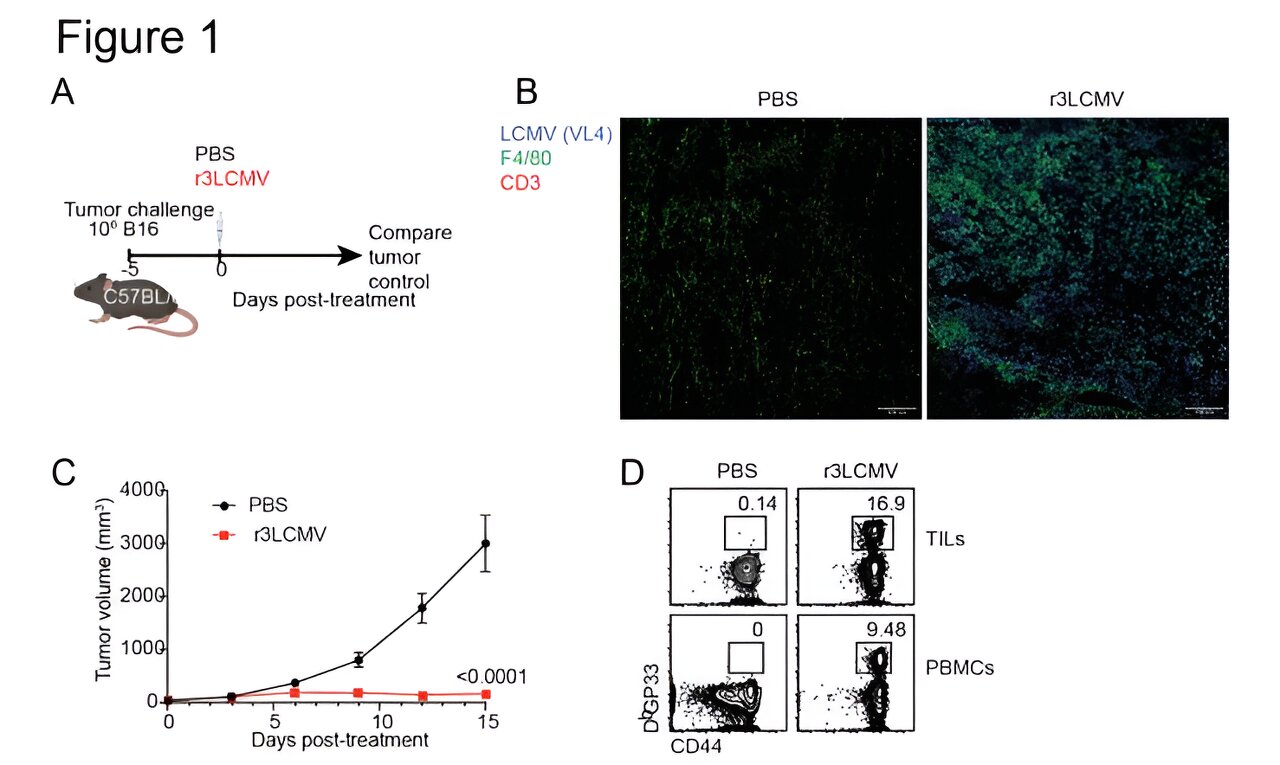
Graphical abstract. Credit: Circulation Research (2024). DOI: 10.1161/CIRCRESAHA.122.322437

In a potentially game-changing development, scientists with the Fralin Biomedical Research Institute at VTC have revealed a new understanding of sometimes fatal viral infections that affect the heart.

Traditionally, the focus has been on heart inflammation known as myocarditis, which is often triggered by the body’s immune response to a viral infection.

However, a new study led by James Smyth, associate professor at the Fralin Biomedical Research Institute, sheds new light on this notion, revealing that the virus itself creates potentially dangerous conditions in the heart before inflammation sets in.

The discovery, now online and set to appear in the March 29 issue of Circulation Res...

Read More

Cracking Epigenetic Inheritance: Biologists discovered the Secrets of How Gene Traits are passed on

 The evicted histone hexamer and its chaperons from the replisome structure. (A-B) The architecture of the parental histone hexamer. (C-D) The histone-chaperone complex on the replisome. (E-F) The structure of an intact nucleosome. Modified from Li et al, Nature (2004)

A research team led by Professor Yuanliang ZHAI at the School of Biological Sciences, The University of Hong Kong (HKU) collaborating with Professor Ning GAO and Professor Qing LI from Peking University (PKU), as well as Professor Bik-Kwoon TYE from Cornell University, has recently made a significant breakthrough in understanding how the DNA copying machine helps pass on epigenetic information to maintain gene traits at each cell division...

Read More

Researchers Develop Artificial Building Blocks of Life

For the first time, scientists have developed artificial nucleotides, the building blocks of DNA, with several additional properties in the laboratory. The DNA carries the genetic information of all living organisms and consists of only four different building blocks, the nucleotides. Nucleotides are composed of three distinctive parts: a sugar molecule, a phosphate group and one of the four nucleobases adenine, thymine, guanine and cytosine. The nucleotides are lined up millions of times and form the DNA double helix, similar to a spiral staircase. Scientists from the UoC’s Department of Chemistry have now shown that the structure of nucleotides can be modified to a great extent in the laboratory.

The researchers developed so-called threofuranosyl nucleic acid (TNA) with a new, ad...

Read More

Nanosurgical Tool could be Key to Cancer Breakthrough

A groundbreaking nanosurgical tool — about 500 times thinner than a human hair — could be transformative for cancer research and give insights into treatment resistance that no other technology has been able to do, according to a new study.

The high-tech double-barrel nanopipette, developed by University of Leeds scientists, and applied to the global medical challenge of cancer, has — for the first time — enabled researchers to see how individual living cancer cells react to treatment and change over time — providing vital understanding that could help doctors develop more effective cancer medication.

The tool has two nanoscopic needles, meaning it can simultaneously inject and extract a sample from the same cell, expanding its potential uses...

Read More