
Category Biology/Biotechnology

Study reveals Bacterial Protein capable of Keeping Human Cells healthy

Study reveals bacterial protein capable of keeping human cells healthy

Researchers at the University of São Paulo (USP) in Brazil, partnering with colleagues in Australia, have identified a novel bacterial protein that can keep human cells healthy even when the cells have a heavy bacterial burden. The discovery could lead to new treatments for a wide array of diseases relating to mitochondrial dysfunction, such as cancer and autoimmune disorders. Mitochondria are organelles that supply most of the chemical energy needed to power cells’ biochemical reactions.

The study is published in the journal PNAS. The researchers analyzed more than 130 proteins released by Coxiella burnetii when this bacterium invades host cells, and found at least one to be capable of prolonging cell longevity by acting directly on mitochondria.

After invading host cells, C...

Read More
‘Lab on a Chip’ Genetic Test device can Identify Viruses within Three Minutes with Top-Level Accuracy

Dr Despina Moschou with LoCKAmp replaceable lab on chip printed circuit board 16x9

Compact genetic testing device created for Covid-19 could be used to detect a range of pathogens, or conditions including cancer.

A virus diagnosis device that gives lab-quality results within just three minutes has been invented by engineers at the University of Bath, who describe it as the ‘world’s fastest Covid test’.

The prototype LoCKAmp device uses innovative ‘lab on a chip’ technology and has been proven to provide rapid and low-cost detection of Covid-19 from nasal swabs. The research team, based at the University of Bath, say the technology could easily be adapted to detect other pathogens such as bacteria — or even conditions like cancer.

The device works by rapidly releasing and amplifying genetic material from a nasal swab sample by carrying out a chemical reactio...

Read More

An Immune Molecule that Regulates Aging and a Living Organism’s Lifespan

An immune molecule that regulates aging and a living organism's lifespan
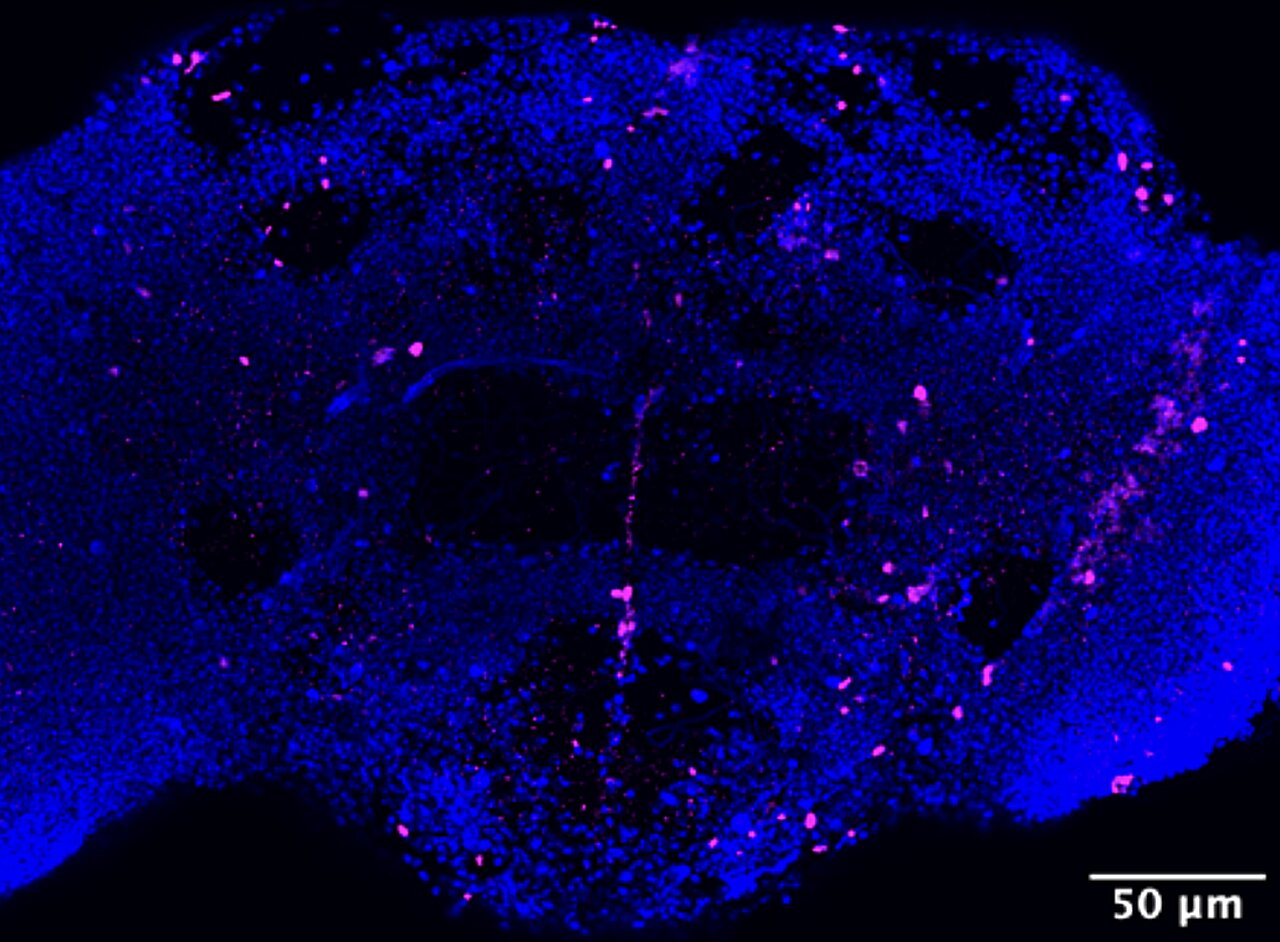
The expression of IM33 in fly brain. Blue: Dapi, which labels the nucleus of all the cells. Magenta: IM33 positive cells. Credit: Xu et al.

Aging is a natural process that affects all living organisms, prompting gradual changes in their behavior and abilities. Past studies have highlighted several physiological factors that can contribute to aging, including the body’s immune responses, an imbalance between the production of reactive oxygen (i.e., free radicals) and antioxidants, and sleep disturbances.

While the link between aging and these different factors is well-document, the connection between them is still poorly understood. Researchers at Washington University in St...

Read More

Bendy X-ray Detectors could Revolutionize Cancer Treatment

New materials developed at the University of Surrey could pave the way for a new generation of flexible X-ray detectors, with potential applications ranging from cancer treatment to better airport scanners.

Traditionally, X-ray detectors are made of heavy, rigid material such as silicon or germanium. New, flexible detectors are cheaper and can be shaped around the objects that need to be scanned, improving accuracy when screening patients and reducing risk when imaging tumors and administering radiotherapy.

Dr. Prabodhi Nanayakkara, who led the research at the University of Surrey, said, “This new material is flexible, low-cost, and sensitive. But what’s exciting is that this material is tissue equivalent...

Read More
