Category Biology/Biotechnology

Bot inspired by Baby Turtles can Swim Under the Sand

The robot is equipped with flipper-like appendages that allow it to move under the sand.
The robot is equipped with flipper-like appendages that allow it to move under the sand. 

This robot can swim under the sand and dig itself out too, thanks to two front limbs that mimic the oversized flippers of turtle hatchlings.

It’s the only robot that is able to travel in sand at a depth of 5 inches. It can also travel at a speed of 1.2 millimeters per second-roughly 4 meters, or 13 feet, per hour. This may seem slow but is comparable to other subterranean animals like worms and clams. The robot is equipped with force sensors at the end of its limbs that allow it to detect obstacles while in motion. It can operate untethered and be controlled via WiFi.

Robots that can move through sand face significant challenges like dealing with higher forces than robots that move in air or...

Read More
Researchers Find that Targeting Immune Cells May Help Treat Atrial Fibrillation

New study finds that macrophages and macrophage-produced proteins contribute to heartbeat irregularities. Targeting these cells may therefore represent a promising strategy to treat and prevent AFib.

Current treatments for atrial fibrillation (AFib), a common heart condition characterized by fast and irregular beats that can lead to stroke and heart failure, have multiple side effects and are ineffective for preventing AFib recurrence.

New research led by investigators at Massachusetts General Hospital (MGH) and published in Science reveals that certain immune cells play a major role in the development of AFib. Targeting these cells may therefore represent a promising strategy to treat and prevent AFib.

For the work, senior author Matthias Nahrendorf, MD, PhD, an investigator...

Read More

Nanomedicine for Treating Inflammatory Bowel Disease

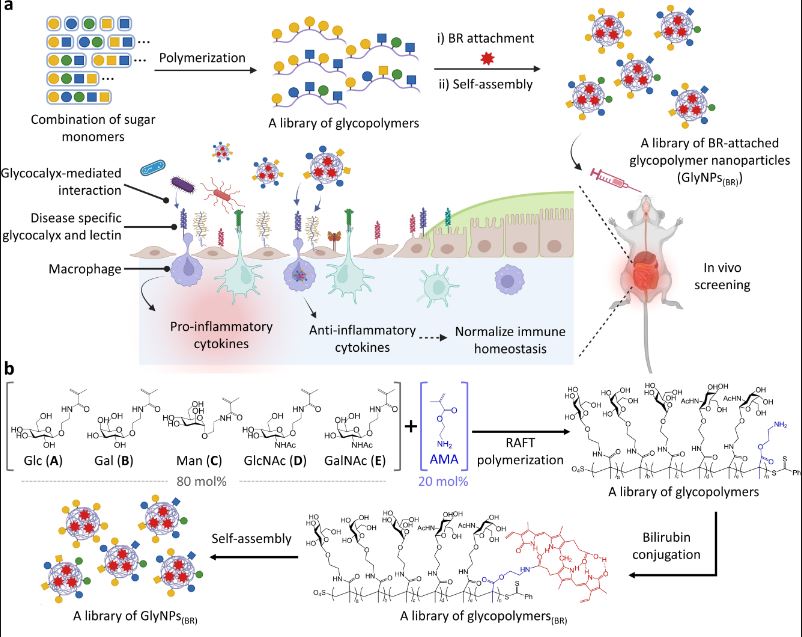
Schematic summary of the overall flow of the study, showing GlyNPs(BR) library synthesis and characterizations of the constructed GlyNP(BR) library.
Schematic summary of the overall flow of the study, showing GlyNPs(BR) library synthesis and characterizations of the constructed GlyNP(BR) library. 

Anti-inflammatory nanoparticles mimic glycocalyx. Chronic inflammatory bowel disease (IBD), such as Crohn’s disease and ulcerative colitis, is on the rise worldwide. The benefits of current medications are limited by problematic side effects. In the journal Angewandte Chemie, a South Korean research team has now introduced a new method of treatment. It is based on nanoparticles that mimic a special carbohydrate layer (glycocalyx) located on inflamed bowel cells, and which trigger anti-inflammatory effects in the diseased sites in the intestine.

Stomach cramps and severe diarrhea, often accompanied by significant weight loss, are some o...

Read More

The Power of Healthy Breast Adipocytes in the Fight Against Breast Cancer

The power of healthy breast adipocytes in the fight against breast cancer
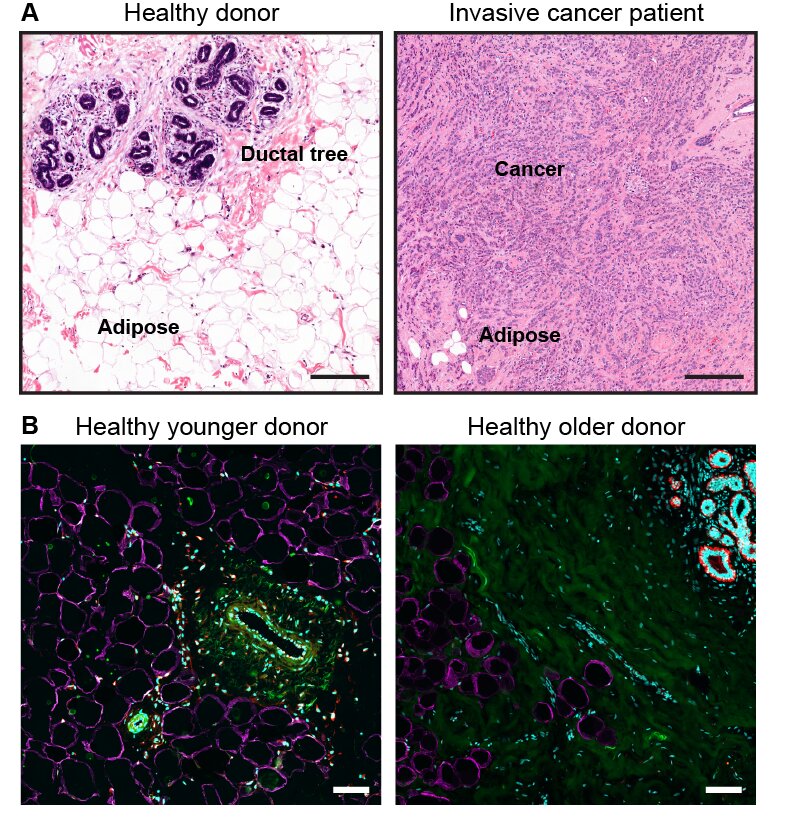
Clinical patient samples from a healthy donor after reduction mammoplasty surgery (left), or suffering from invasive ductal carcinoma (right). Scale bar, 200 μm. B, labeling of IGFBP2 (magenta) in adipocytes in younger (left) or older (right) patient groups after normal reduction mammoplasty. Cell nuclei are given in cyan and extracellular matrix, such as collagen, in green. Scale bar, 100 μm. Credit: University of Turku

Researchers have found a possible explanation as to why higher breast density and older age increases the risk of breast cancer.

In an innovative study, researchers at the Turku Bioscience Centre, InFLAMES Flagship of the University of Turku, and Turku University Hospital, Finland, have made an extraordinary discovery that turns conventional wisdom on its head...

Read More