The upper images are the chest radiographs of patients from 21 to 40 years old and from 81 to 100 years old chronologically and the lower images are a visualization of the AI’s focus (both after averaging). Red indicates the points most useful for age determination.
Credit: Yasuhito Mitsuyama, Osaka Metropolitan University
AI-powered model using chest Xrays helps develop biomarkers for aging. Osaka Metropolitan University scientists have developed an AI model that accurately estimates a patient’s age, using chest radiographs of healthy individuals collected from multiple facilities...
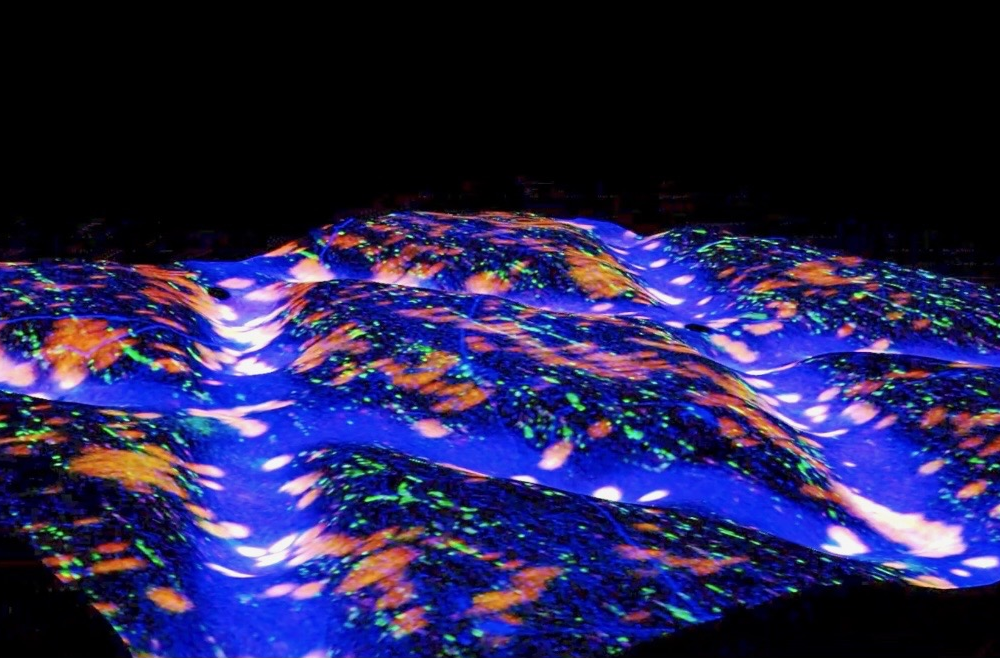
Systemic PF4 enhances adult hippocampal neurogenesis in vivo. a Experimental design of PF4 injection paradigm in young mice. b, c Intravenous (i.v.) PF4 injections for 1 week did not affect neural precursor cell proliferation in the subgranular zone (SGZ; n = 10 mice in saline group; n = 9 mice in PF4 group; counts of one hemisphere), but increased the number of doublecortin+ (DCX+) cells (n = 15 mice per group; counts of one hemisphere). d Experimental design of the double-labeling paradigm with CldU and IdU. e Acute administration of PF4 did not affect neural precursor cell proliferation, including the recruitment of cells from quiescence (n = 20 mice per group). f Running paradigm of PF4 knockout (KO) mice. g Representative images of Ki67+ cells in the S...Read More
Age plays a part in the type of digital games that are best to stimulate memory
The study, from the University of York, also found that adults aged 60 and over who play digital puzzle games had a greater ability to ignore irrelevant distractions, but older adults who played strategy games did not show the same improvements in memory or concentration.
It is known that as humans age, their mental abilities tend to decrease, particularly the ability to remember a number of things at a single time — known as working memory. Working memory is thought to peak between the ages of 20 and 30 before slowly declining as a person gets older.
Previous research, however, has shown that the way we hold information in the brain changes as we get older, and so the York team looked at whether the ...
New research suggests a new solar energy design, inspired by nature, may pave the way for future renewable energy technologies.
Photovoltaic solar energy is obtained by converting sunshine into electricity—and researchers from Imperial have developed a new leaf-like design with increased efficiency.
The new photovoltaic leaf (PV-leaf) technology uses low-cost materials and could inspire the next generation of renewable energy technologies.
A series of experiments has demonstrated that a PV-leaf can generate over 10% more electricity compared to conventional solar panels, which lose up to 70% of the incoming solar energy to the environment...
Recent Comments