Category Biology/Biotechnology

Stress-induced depression
Credit: Getty Images

In experiments with mice and humans, a team led by Johns Hopkins Medicine researchers says it has identified a particular intestinal immune cell that impacts the gut microbiome, which in turn may affect brain functions linked to stress-induced disorders such as depression. Targeting changes mediated by these immune cells in the gut, with drugs or other therapies, could potentially bring about new ways to treat depression.

The findings of the study were published March 20, 2023 in the journal Nature Immunology.

“The results of our study highlight the previously unrecognized role of intestinal gamma delta T cells (γδ T cells) in modifying psychological stress responses, and the importance of a protein receptor known as dectin-1, found on the surface of immune c...

Read More

A Novel Waste Removal Factor Treats Brain Hemorrhage

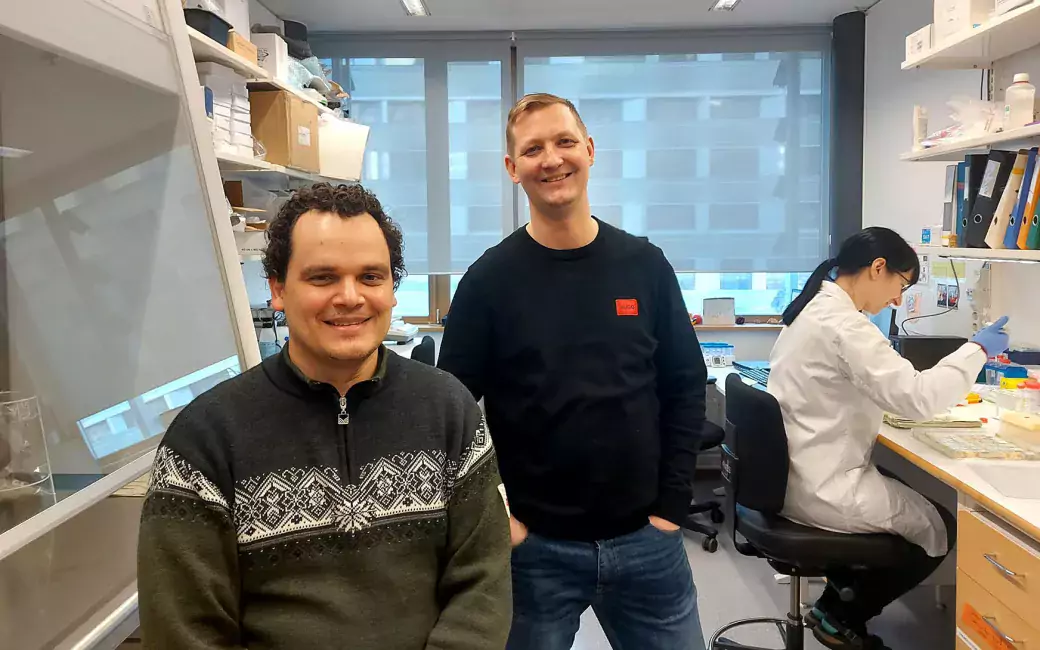
Vassileios Stratoulias and Mikko Airavaara.
Vassileios Stratoulias and Mikko Airavaara at the BrainRepair laboratory, University of Helsinki.

University of Helsinki and Taiwanese researchers have found a new way to remove waste from the brain after haemorrhage.

Intracerebral haemorrhage, and bleeding into the brain tissue, is a devastating neurological condition affecting millions of people annually. It has a high mortality rate, while survivors are affected by long-term neurological deficits. No medication has been found to support brain recovery following hemorrhage.

In an international collaboration, researchers from the Brain Repair laboratory, University of Helsinki, together with their Taiwanese colleagues investigated whether a protein called cerebral dopamine neurotrophic factor (CDNF) has potential as a treatment ...

Read More

New Research establishes How and Why Western Diets High in Sugar and Fat cause Liver Disease

fatty sugary food

Research is unlocking how the food we eat contributes to an epidemic of chronic liver disease. New research from the University of Missouri School of Medicine has established a link between western diets high in fat and sugar and the development of non-alcoholic fatty liver disease, the leading cause of chronic liver disease.

The research, based in the Roy Blunt NextGen Precision Health Building at MU, has identified the western diet-induced microbial and metabolic contributors to liver disease, advancing our understanding of the gut-liver axis, and in turn the development of dietary and microbial interventions for this global health threat.

“We’re just beginning to understand how food and gut microbiota interact to produce metabolites that contribute to the development of liver...

Read More

Memories could be lost if Two Key Brain Regions Fail to Sync together, study finds

Neurons brain cells

Learning, remembering something, and recalling memories is supported by multiple separate groups of neurons connected inside and across key regions in the brain. If these neural assemblies fail to sync together at the right time, the memories are lost, a new study led by the universities of Bristol and Heidelberg has found.

How do you keep track of what to do next? What happens in the brain when your mind goes blank? Short-term memory relies on two key brain regions: the hippocampus and the prefrontal cortex. The researchers set out to establish how these brain regions interact with one another as memories are formed, maintained and recalled at the level of specific groups of neurons. The study, published in Current Biology, also wanted to understand why memory sometimes fails.

Read More