This figure shows that the healthy participants who received prucalopride had greater functional connectivity between key cognitive regions (the posterior / anterior cingulate cortices) and a major cognitive network (the central executive network). That is, they appeared to be strengthening their connectivity within cognitive networks (Credit: de Cates, et al., Biological Psychiatry: Cognitive Neuroscience and Neuroimaging).
Cognitive deficits accompany mood disorders and other psychiatric conditions, often with debilitating effects. Limited treatments currently exist, but studies in animals and humans have pointed to drugs such as the laxative prucalopride that activate serotonin receptors as a potential therapeutic for the symptoms...
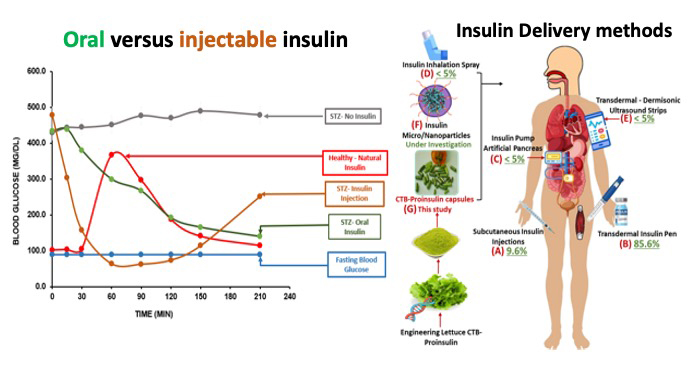
Oral versus injectable insulin and insulin drug delivery methods. (Image: Courtesy of Henry Daniell)
Insulin production has, for the last 50 or so years, come with some risks to the patient. Even so, the medication is lifesaving for the estimated 537 million adults living with diabetes worldwide, with that number expected to grow.
Recent clinical studies show that injection via insulin pens can cause insulin to reach the bloodstream so quickly that hypoglycemia, or blood sugar levels that dip below the healthy range, may result. Automated insulin pumps can deliver precise insulin and minimize this risk but are expensive and available only to a small portion of diabetes patients around the world.
Now, a plant-based, oral delivery of proinsulin could address these drawbacks, accord...
Juice concentrate from the Japanese plum, also known as the ume fruit, can be effective in preventing hypertension, according to new research out of Temple University. Credit: IMAGE/TEMPLE UNIVERSITY
More than 122 million Americans—about half of the U.S. population ages 20 and older—have high blood pressure, referred to medically as hypertension. Hypertension is a major cause of cardiovascular disease, and despite advances in treatment, even patients who take medications to control their blood pressure remain at high risk of death from diseases like heart attack, heart failure, and stroke.
The lack of new drugs to effectively control hypertension and associated cardiovascular problems has fueled a search for novel treatment strategies, and now, researchers at the Lewis Katz Scho...
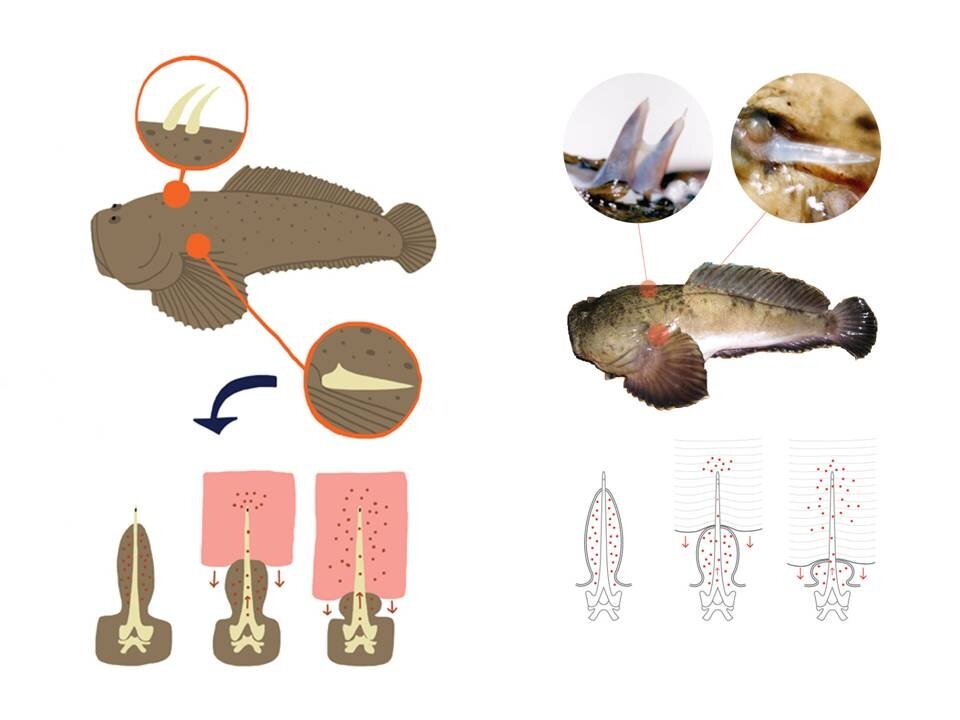
T. nattereri has four spines. It ejects venom through these spines when threatened by a predator, causing intense pain, swelling, and potentially necrosis. Credit: Mônica Lopes-Ferreira/CeTICS
A molecule found in the venomous toadfish Thalassophryne nattereri has proven capable of controlling lung inflammation and could be the basis for a more effective asthma drug. The research was conducted by scientists at Butantan Institute in São Paulo, Brazil. An article describing the results is published in the journal Cells.
A welter of fish species live in freshwater, seawater, and a mixture of the two, and some of them are venomous. They have spines or stingers connected to venom glands, which are a kind of pouch full of molecules, large and small, that are toxins...






Recent Comments