Category Biology/Biotechnology

Harnessing the Healing Power within our Cells

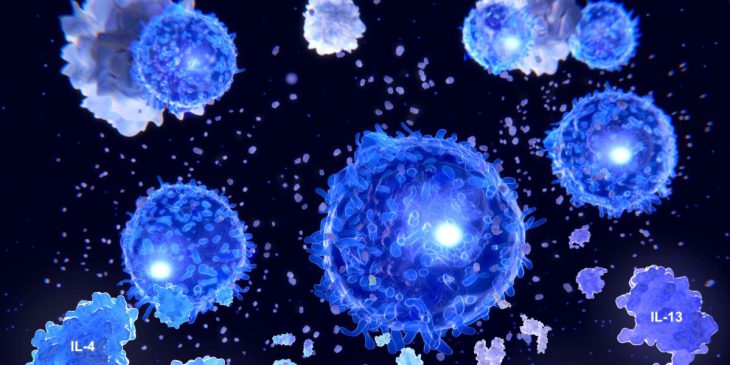
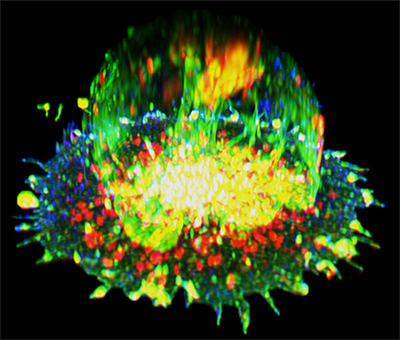
A close-up of several human cells
E. coli bacteria. Image: Adobe

University of Queensland researchers have identified a pathway in cells that could be used to reprogram the body’s immune system to fight back against both chronic inflammatory and infectious diseases.

Dr. Kaustav Das Gupta and Professor Matt Sweet from UQ’s Institute for Molecular Bioscience discovered that a molecule derived from glucose in immune cells can both stop bacteria growing and dampen inflammatory responses. Dr. Das Gupta said that the finding is a critical step towards future therapeutics that train immune cells.

The research was published in Proceedings of the National Academy of Sciences (PNAS).

“The effects of this molecule called ribulose-5-phosphate on bacteria are striking—it can cooperate with other immune factors to stop dise...

Read More

Modified CRISPR-based Enzymes improve the prospect of Inserting Entire Genes into the Genome to Overcome Diverse Disease-causing Mutations

Modified CRISPR-Based Enzymes Improve the Prospect of Inserting Entire Genes into the Genome to Overcome Diverse Disease-Causing Mutations
Noah Brownnbrown9@mgh.harvard.edu617-643-3907

Many genetic diseases are caused by diverse mutations spread across an entire gene, and designing genome editing approaches for each patient’s mutation would be impractical and costly.

Investigators at Massachusetts General Hospital (MGH) recently developed an optimized method that improves the accuracy of inserting large DNA segments into a genome.

This approach could be used to insert a whole normal or “wild-type” replacement gene, which could act as a blanket therapy for a disease irrespective of a patient’s particular mutation.

The work involves the optimization of a new class of technologies...

Read More

How to Rewind the Clock on Arthritic Cartilage

knee cartilage
Credit: CC0 Public Domain

A new study in Aging Cell describes how a key protein called Signal Transducer and Activator of Transcription 3 (STAT3) might turn back the clock on aging cartilage that leads to osteoarthritis.

“STAT3 performs an astonishing repertoire of roles in development and regeneration, as well as inflammatory disease and cancer. In this study, we found an innovative chemical approach for reversing aging of joint-forming cells in a clinically relevant manner, because this intervention is simple and fully controlled,” said the study’s co-corresponding author Denis Evseenko, who is a Professor of Orthopaedic Surgery, and Stem Cell Biology and Regenerative Medicine at USC, and holds the J. Harold and Edna LaBriola Chair in Genetic Orthopedic Research.

“We wanted to ...

Read More

The ‘Guardian of the Genome’ Protects against Cardiovascular Disease

The 'guardian of the genome' protects against cardiovascular disease
The analysis of human samples and animal experiments demonstrate that the presence of p53 gene mutations in the blood increases the risk of developing atherosclerosis, the principle cause of cardiovascular disease. Credit: CNIC

A team at the Centro Nacional de Investigaciones Cardiovasculares (CNIC), working in collaboration with institutes in the U.S., has demonstrated that acquired mutations in the gene encoding the protein p53 contribute to the development of atherosclerotic cardiovascular disease.

Known as the “guardian of the genome,” p53 helps to maintain the integrity of the hereditary material inside cells by regulating multiple cell functions in response to cellular stresses.

Every day, an adult person generates hundreds of thousands of blood cells...

Read More