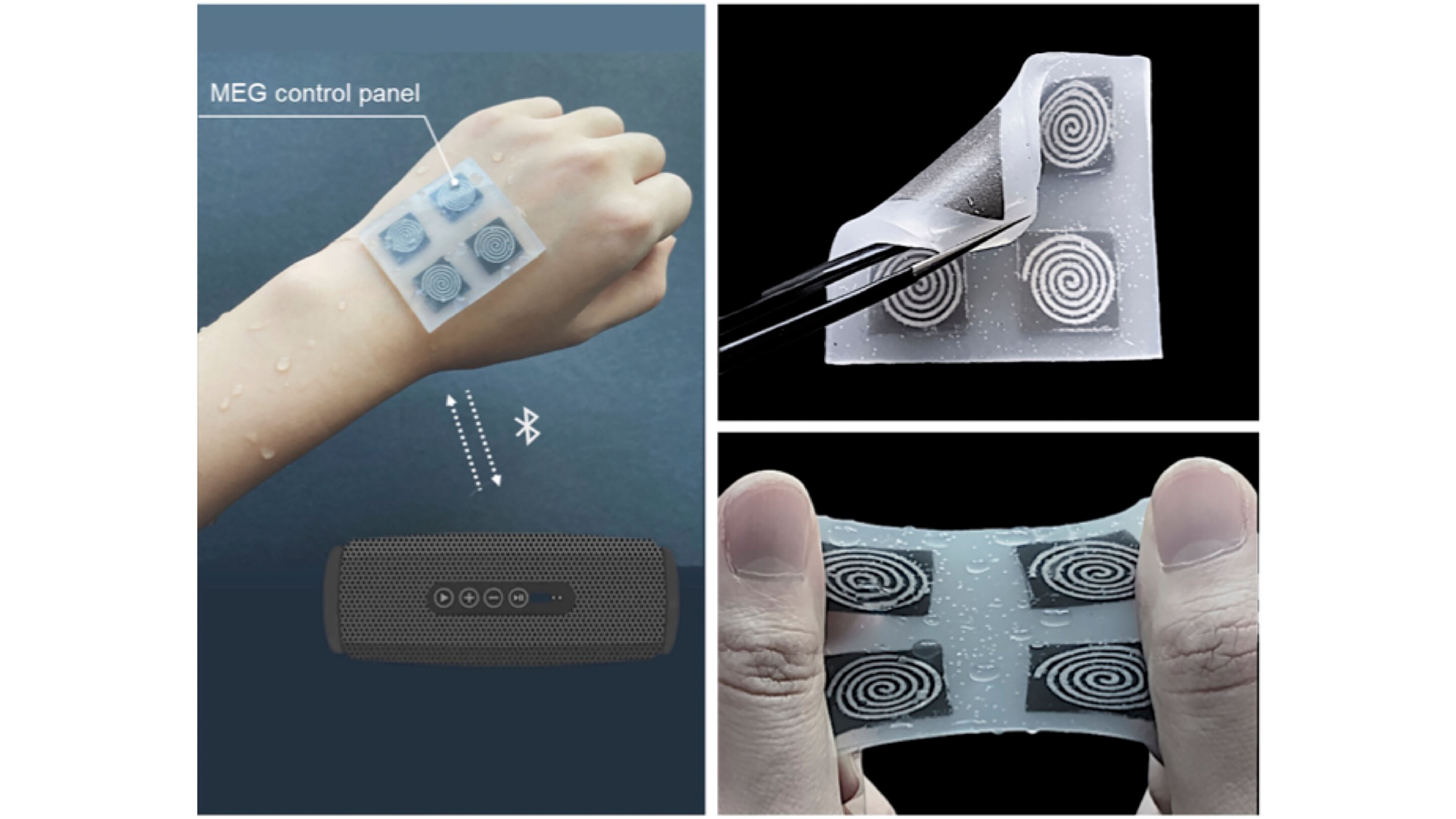
(Left) Photo of the magnetoelastic sensor array, which conforms to human skin and can function even when exposed to liquid. It can interact with a music speaker’s command components: play, pause, next, and previous. (Right two) The self-powered magnetoelastic sensor array is rollable and stretchable. Credit: The Jun Chen Research Group at UCLA: junchenlab.com
Wearable human-machine interface devices, HMIs, can be used to control machines, computers, music players, and other systems. A challenge for conventional HMIs is the presence of sweat on human skin.
In Applied Physics Reviews, scientists at UCLA describe their development of a type of HMI that is stretchable, inexpensive, and waterproof...
Disruption of the circadian clocks that keep the body and its cells entrained to the 24-hour day-night cycle plays a critical role in weight gain, according to a pair of studies by Weill Cornell Medicine investigators.
One study, published June 27, in Cell Reports revealed that stress caused by chronically administering glucocorticoid stress hormones and disturbing the normal daily cycle of release triggers a temporary protective mechanism in mice. This mechanism boosts fat cell growth and insulin production while reducing excess blood sugar and fat levels in the bloodstream and liver. The second study, published Aug...
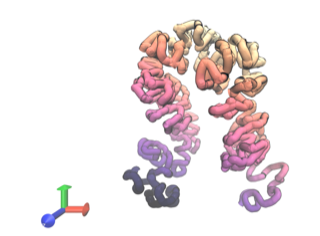
Predicted 3D structure for a segment of human genomic DNA
Sequence modeling algorithms could eventually lead to new ways to fight diseases caused by genetic mutations. Newly developed artificial intelligence (AI) programs accurately predicted the role of DNA’s regulatory elements and three-dimensional (3D) structure based solely on its raw sequence, according to two recent studies in Nature Genetics. These tools could eventually shed new light on how genetic mutations lead to disease and could lead to new understanding of how genetic sequence influences the spatial organization and function of chromosomal DNA in the nucleus, said study author Jian Zhou, Ph.D., Assistant Professor in the Lyda Hill Department of Bioinformatics at UTSW.
“Taken together, these two programs provide a mor...
Muscle stem cell on a muscle fiber: When a muscle fiber is damaged, stem cells (in pink) start producing and coating themselves with hyaluronic acid (pale green outline). Once the coating gets thick enough, it causes the muscle stem cells to wake up
A new study published in the journal Science reveals a unique form of cell communication that controls muscle repair. In damaged muscle, stem cells must work together with immune cells to complete the repair process, yet how these cells coordinate to ensure the efficient removal of dead tissue before making new muscle fibers has remained unknown...







Recent Comments