Category Biology/Biotechnology

How it works: The Protein that Stimulates Muscle Growth

In the gym, you are not just pumping iron, you are oxygenating muscle cells which keeps those muscles healthy, strong and growing in a process called hypertrophy.

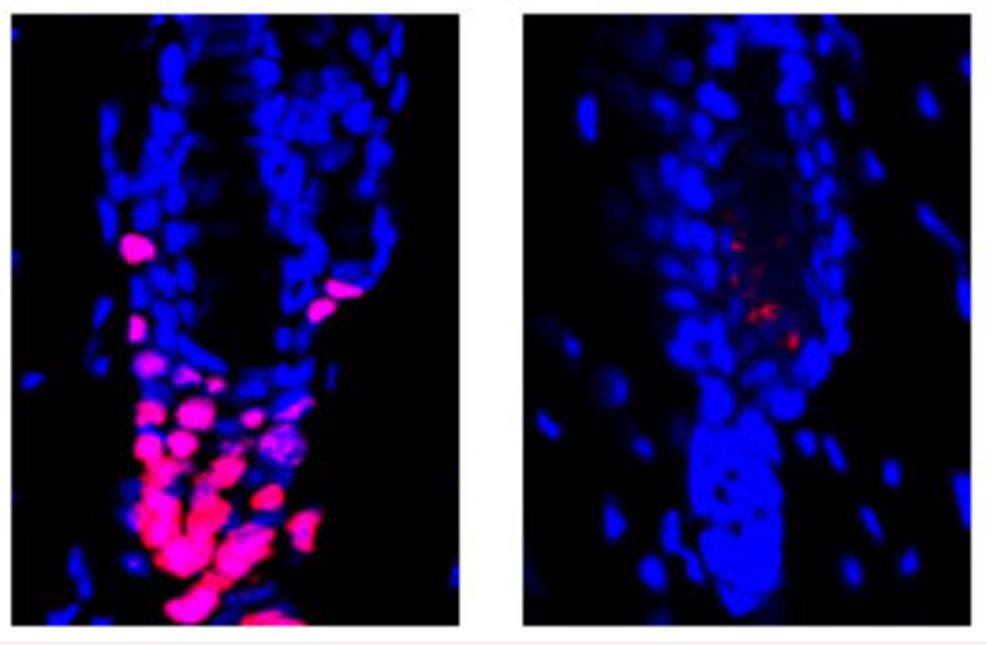
Research findings may help identify drug targets for neuromuscular disorders. Using genetic approaches, researchers have demonstrated how a certain protein is involved in skeletal muscle growth. The findings open new avenues to develop drug targets for neuromuscular diseases and other pathological conditions.

In the gym, you are not just pumping iron, you are oxygenating muscle cells which keeps those muscles healthy, strong and growing — a process called hypertrophy, or an increase in muscle mass due to an increase in muscle cell size. Conversely, under the covers, lounging, your muscles may begin to atrophy, or shrink.

...Read More

Electronic Skin anticipates and perceives Touch from Different Directions for the First Time

Artificial electronic skin (e-skin): Highly integrated flexible microelectronic 3D sensorics perceive movement of fine hairs on artificial skin. (Image: AG Prof. Dr. Oliver G. Schmidt)

A research team from Chemnitz and Dresden has taken a major step forward in the development of sensitive electronic skin (e-skin) with integrated artificial hairs. E-skins are flexible electronic systems that try to mimic the sensitivity of their natural human skin counterparts. Applications range from skin replacement and medical sensors on the body to artificial skin for humanoid robots and androids. Tiny surface hairs can perceive and anticipate the slightest tactile sensation on human skin and even recognize the direction of touch...

Read More

Researchers discover Drug-Resistant Environmental Mold is capable of Infecting People

A new study led by Imperial College London finds that drug-resistant mould is spreading from the environment and infecting susceptible people’s lungs.

The researchers found six cases of people infected with a drug-resistant form of a fungi called Aspergillus fumigatus that could be traced back to spores in the environment. Their findings use samples from England, Wales, Scotland and Ireland, and are published in Nature Microbiology.

Aspergillus fumigatus is an environmental mould that can cause fungal lung disease. While people with healthy lungs clear inhaled spores, people with lung conditions or weakened immune systems sometimes cannot, meaning the spores may remain in the lungs causing an infection called aspergillosis. Aspergillosis affects 10-20 million people worldwide...

Read More

A New Era of Mitochondrial Genome Editing has begun

A new era of mitochondrial genome editing has begun. Scientists successfully achieve A to G base conversion, the final missing piece of the puzzle in gene-editing technology.

Researchers from the Center for Genome Engineering within the Institute for Basic Science developed a new gene-editing platform called transcription activator-like effector-linked deaminases, or TALED. TALEDs are base editors capable of performing A-to-G base conversion in mitochondria. This discovery was a culmination of a decades-long journey to cure human genetic diseases, and TALED can be considered to be the final missing piece of the puzzle in gene-editing technology.

From the identification of the first restriction enzyme in 1968, the invention of polymerase chain reaction (PCR) in 1985, and the demo...

Read More