

Implantable bioelectronics are now often key in assisting or monitoring the heart, brain, and other vital organs, but they often lack a safe, reliable way of transmitting their data to doctors...
Read More

April 8, 2022,
 Technology/Electronics, Health/Medical, Biology/Biotechnology
Implantable bioelectronics are now often key in assisting or monitoring the heart, brain, and other vital organs, but they often lack a safe, reliable way of transmitting their data to doctors...
Read More
April 7, 2022,
Health/Medical, Biology/Biotechnology
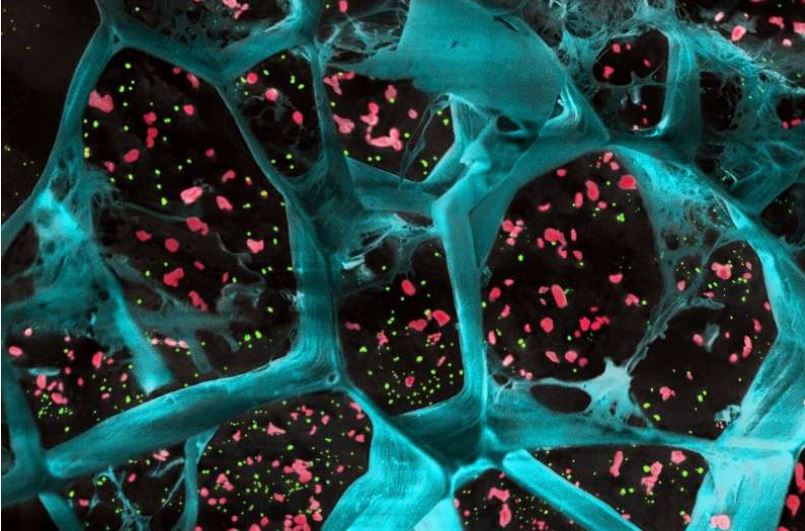
A new biodegradable gel improves the immune system’s ability to keep cancer at bay after tumors are surgically removed. The gel, tested in mice, releases drugs and special antibodies that simultaneously deplete immune-blocking cells called macrophages from the surgical site and activate Tcells so they can attack cancer.
University of Wisconsin–Madison scientists tested the gel on mouse models of several cancers...
Read More
April 6, 2022,
Health/Medical, Biology/Biotechnology

Nanoparticle platform delivers a nucleotide that blocks production of scar-promoting protein. Scientists at the University of Illinois Chicago have developed a treatment for pulmonary fibrosis by using nanoparticles coated in mannose — a type of sugar — to stop a population of lung cells called macrophages that contribute to lung tissue scarring. The cell-targeting method holds promise for preventing this severe lung scarring disease, which can result in life-threatening complications like shortness of breath.
The researchers say that the treatment is not yet ready to be tested in clinical trials, but its success in relevant animal models is a promising sign that it may be possible to treat the dise...
Read More
April 6, 2022,
Health/Medical, Biology/Biotechnology
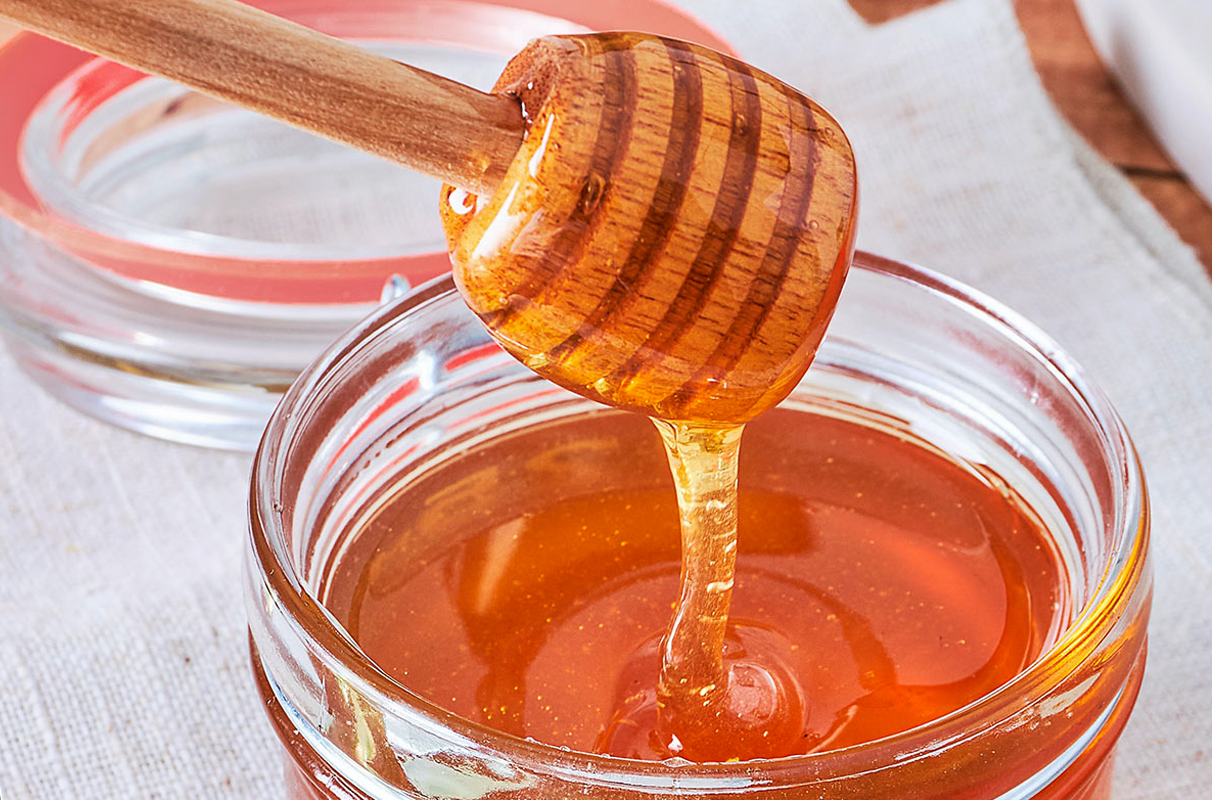
Honey might be a sweet solution for developing environmentally friendly components for neuromorphic computers, systems designed to mimic the neurons and synapses found in the human brain. Hailed by some as the future of computing, neuromorphic systems are much faster and use much less power than traditional computers. WSU Engineers have demonstrated one way to make them more organic too by using honey to make a memristor, a component similar to a transistor that can not only process but also store data in memory.
In a study published in Journal of Physics D, the researchers show that honey can be used to make a memristor, a component similar to a transistor that can not only process but also store data in memory.
“This is a very small device wi...
Read More
Recent Comments