Category Biology/Biotechnology

Researchers developing Smart Dental Implants that Resist Bacterial Growth, Generate their own Electricity

Researchers developing smart dental implants that resist bacterial growth, generate their own electricity
A “smart” dental implant could improve upon current devices by employing biofilm-resisting nanoparticles and a battery-powered light to promote health of the surrounding gum tissue. Credit: Geelsu Hwang

More than 3 million people in America have dental implants, used to replace a tooth lost to decay, gum disease, or injury. Implants represent a leap of progress over dentures or bridges, fitting much more securely and designed to last 20 years or more.

But often implants fall short of that expectation, instead needing replacement in five to 10 years due to local inflammation or gum disease, necessitating a repeat of a costly and invasive procedure for patients.

“We wanted to address this issue, and so we came up with an innovative new implant,” says Geelsu Hwang, an assistant ...

Read More

Groundbreaking Technique yields important new Details on Silicon, Subatomic Particles and possible ‘Fifth Force’

Groundbreaking technique yields important new details on silicon, subatomic particles and possible ‘fifth force’
As neutrons pass through a crystal, they create two different standing waves – one along atomic planes and one between them. The interaction of these waves affects the path of the neutron, revealing aspects of the crystal structure. Credit: NIST

Using a groundbreaking new technique at the National Institute of Standards and Technology (NIST), an international collaboration led by NIST researchers has revealed previously unrecognized properties of technologically crucial silicon crystals and uncovered new information about an important subatomic particle and a long-theorized fifth force of nature.

By aiming subatomic particles known as neutrons at silicon crystals and monitoring the outcome with exquisite sensitivity, the NIST scientists were able to obtain three extraordinary resu...

Read More

Safeguarding Clean Water for Spaceflight Missions

Biofilms are dense, multispecies aggregates of cells, which clump together in a residue that forms on surfaces. Biofilms are resistant to antimicrobials and notoriously difficult to clean up. They can cause a range of health issues and have a corrosive effect on many materials, including stainless steel, making them a threat to the water supply system of the International Space Station.

In a first study of its kind, scientists characterized different bacterial populations isolated over time from potable (drinking) water from the International Space Station (ISS).

By all appearances, the universe beyond Earth is a vast, lonely, and sterile space. Yet, wherever humans may travel, an abundance of microbial life will follow.

In a first study of its kind, lead author Jiseon Yang at th...

Read More

Study illuminates origins of Lung Cancer in Never Smokers

Genomic and evolutionary classification of lung cancer in never smokers |  Nature Genetics
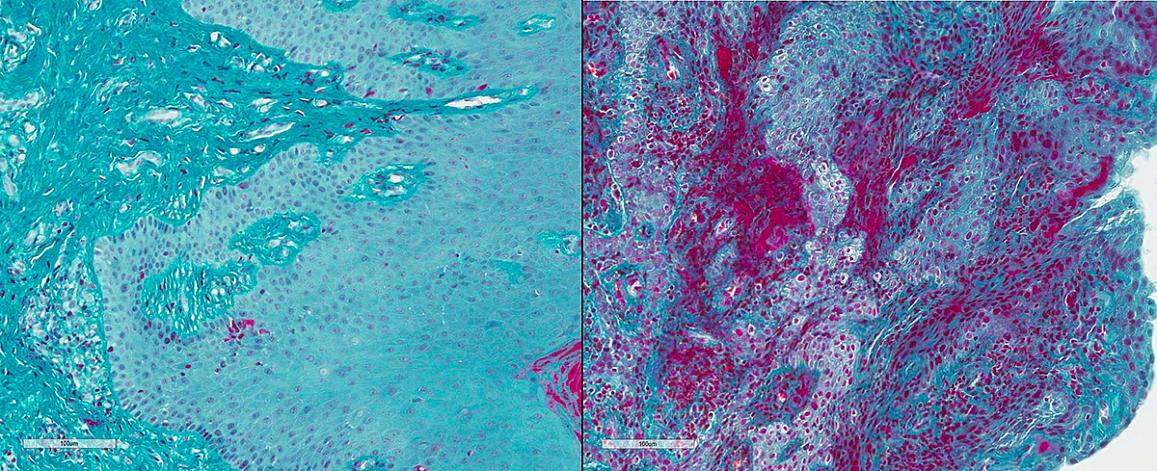
Landscape of mutational processes in Sherlock-Lung.

A genomic analysis of lung cancer in people with no history of smoking has found that a majority of these tumors arise from the accumulation of mutations caused by natural processes in the body. This study was conducted by an international team led by researchers at the National Cancer Institute (NCI), part of the National Institutes of Health (NIH), and describes for the first time three molecular subtypes of lung cancer in people who have never smoked.

These insights will help unlock the mystery of how lung cancer arises in people who have no history of smoking and may guide the development of more precise clinical treatments. The findings were published September 6, 2021, in Nature Genetics.

“What we’re seeing is that there a...

Read More