
Category Biology/Biotechnology

Scientists Rejuvenate Mouse Brains with Ketamine or Flickering Light

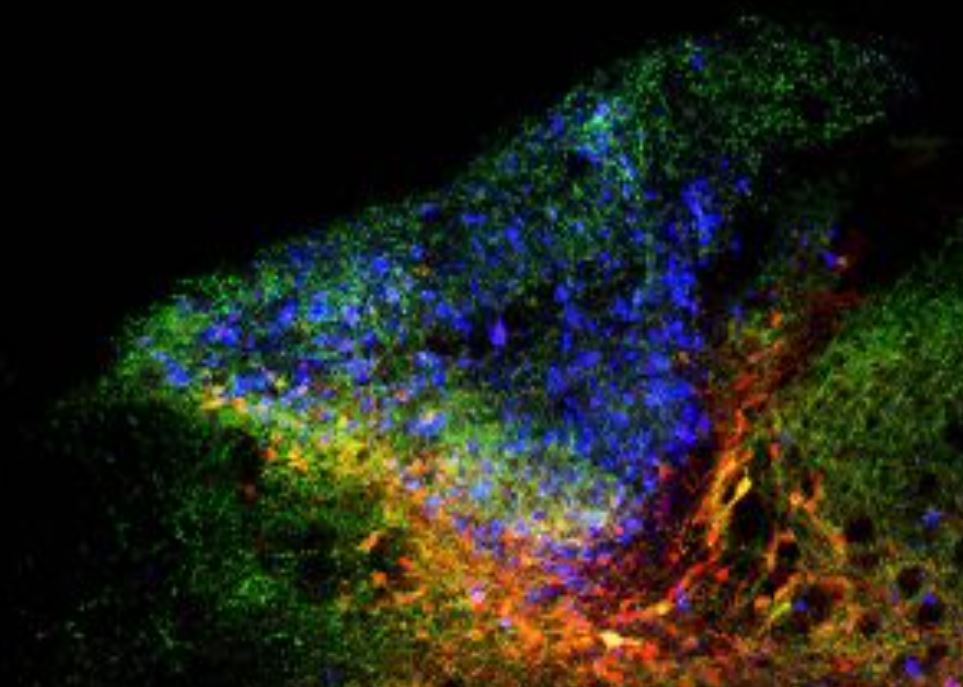
Microglia (green) and Perineuronal Net (magenta). © IST Austria

In defining periods of development, the brain re-organizes connections between its neurons more freely than in its adult form. Researchers have now discovered two methods to reopen such plasticity: repeated ketamine anesthesia and non-invasive 60 hertz light flickering. The findings may have the potential to become a therapeutic tool applicable to humans.

Can you remember the smell of flowers in your grandmother’s garden or the tune your grandpa always used to whistle? Some childhood memories are seemingly ingrained into your brain. In fact, there are critical periods in which the brain learns and saves profound cognitive routines and memories. The structure responsible for saving them is called the perineuronal net.

...Read More

Ultrathin Semiconductors Electrically Connected to Superconductors

For the first time, University of Basel researchers have equipped an ultrathin semiconductor with superconducting contacts. These extremely thin materials with novel electronic and optical properties could pave the way for previously unimagined applications. Combined with superconductors, they are expected to give rise to new quantum phenomena and find use in quantum technology.

Whether in smartphones, televisions or building technology, semiconductors play a central role in electronics and therefore in our everyday lives. In contrast to metals, it is possible to adjust their electrical conductivity by applying a voltage and hence to switch the current flow on and off.

With a view to future applications in electronics and quantum technology, researchers are focusing on the devel...

Read More

Biomarker could help to Diagnose Pancreatic Cancer

Studies have identified biomarkers that may be useful in diagnosing  pancreatic cancer - Florida News Times

Researchers from Queen Mary University of London have identified a protein that could be used to aid in the diagnosis of pancreatic cancer.

Findings from the new study suggest that a protein called pentraxin 3 (PTX3) may be a specific diagnostic biomarker — or biological measure — for pancreatic cancer, with the ability to differentiate pancreatic cancer from other non-cancerous conditions of the pancreas.

The research was published today in npj Precision Oncology, and primarily funded by the Pancreatic Cancer Research Fund, Barts Charity and Cancer Research UK.

PTX3 levels elevated in patients with pancreatic cancer

In the study, researchers measured PTX3 levels in serum blood samples from patients with pancreatic ductal adenocarcinoma (PDAC) — the most common type of pan...

Read More

Being Clean and Hygienic Need Not Impair Childhood Immunity

The theory that modern society is too clean, leading to defective immune systems in children, should be swept under the rug, according to a new study by researchers at UCL and the London School of Hygiene & Tropical Medicine.

In medicine, the ‘hygiene hypothesis’ states that early childhood exposure to particular microorganisms protects against allergic diseases by contributing to the development of the immune system.

However, there is a pervading view (public narrative) that Western 21st century society is too hygienic, which means toddlers and children are likely to be less exposed to germs in early life and so become less resistant to allergies.

In this paper, published in the Journal of Allergy and Clinical Immunology, researchers point to four significant reasons which, ...

Read More