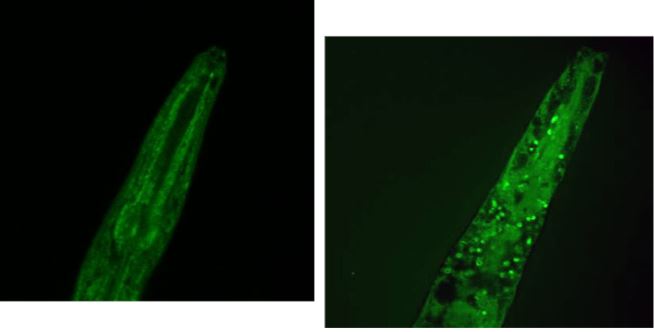
Alzheimer’s disease model of the worm C. elegans treated with the plant-derived compound fenchol (Left) and with a DMSO placebo (Right). Fenchol reduced accumulation of amyloid-β (green dots) in the organism’s head, compared to the placebo. | Images courtesy of Hariom Yadav, PhD, of the University of South Florida, first appeared as Fig. 4d in Frontiers in Aging Neuroscience, DIO: 10.3389/fnagi.2021.735933
Fenchol, a natural compound abundant in some plants including basil, can help protect the brain against Alzheimer’s disease pathology, a preclinical study led by University of South Florida Health (USF Health) researchers suggests.
New research led by University of Limerick in Ireland has revealed a direct link between fatty tissue and Crohn’s disease. The study, carried out by researchers at UL along with a team from University Hospital Limerick, is suggesting for the first time that Crohn’s disease, which is an inflammatory bowel condition, may in fact be a fatty intestine condition.
The research, published in leading journal Scientific Reports, has been described as “an exciting starting point” for the further exploration of Crohn’s disease, which affects thousands of people every year in Ireland and internationally.
The study involved body composition analysis of patients with Crohn’s disease using equipment hosted on the UL campus, with the UL team collaborating with gastroenterology and surgical spec...
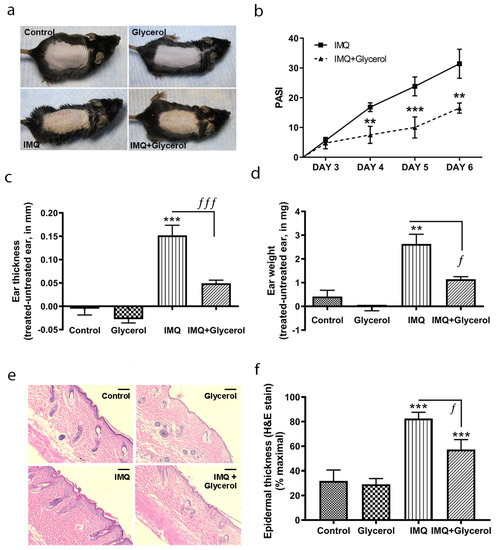
Patients with psoriasis have reported that glycerin, an inexpensive, harmless, slightly sweet liquid high on the list of ingredients in many skin lotions, is effective at combatting their psoriasis and now scientists have objective evidence to support their reports.
They found that whether applied topically or ingested in drinking water, glycerin, or glycerol, helps calm the classic scaly, red, raised and itchy patches in their psoriasis model, Dr. Wendy Bollag, cell physiologist and skin researcher at the Medical College of Georgia and Charlie Norwood VA Medical Center and her colleagues report in the International Journal of Molecular Sciences.
The studies also provide more evidence of the different ways glycerin enables the healthy maturation of skin cells through four stages...
Observed growth differences between clover (Melilotus officinalis) inoculated with nodule forming bacteria Sinorhizobium meliloti (left) and a clover plant not inoculated when grown in Martian regolith. Credit: Harris et al., 2021, PLOS ONE, CC-BY 4.0 (creativecommons.org/licenses/by/4.0/)
Benefits of nitrogen-fixing bacteria could aid efforts towards farming soils on Mars. Clover plants grown in Mars-like soils experience significantly more growth when inoculated with symbiotic nitrogen-fixing bacteria than when left uninoculated. Franklin Harris of Colorado State University, U.S., and colleagues present these findings in the open-access journal PLOS ONE on September 29, 2021.
As Earth’s population grows, researchers are studying the possibility of farming Martian soils, or “regoli...







Recent Comments