Category Biology/Biotechnology

There’s more to Genes than DNA: How Mum and Dad add something Extra, just for you

Embryos
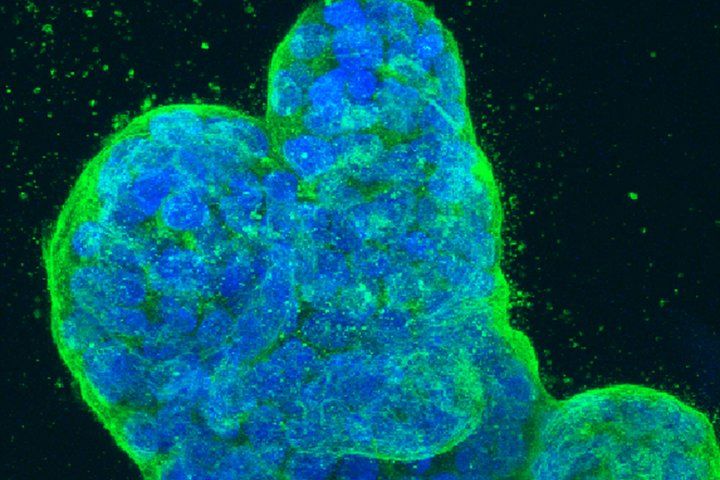
A normal 4-day-old mouse embryo (L) and an embryo of the same age that has been manipulated to contain maternal chromosomes only (parthenogenote). At this stage, the embryos (blastocysts) appear similar, but the parthenogenote will soon die, underscoring the importance of inheriting imprinted genes from both parents. Different cell types are stained green or red. Credit: Dr Maki Asami.

Biologists at the Universities of Bath and Vienna have discovered 71 new ‘imprinted’ genes in the mouse genome, a finding that takes them a step closer to unravelling some of the mysteries of epigenetics — an area of science that describes how genes are switched on (and off) in different cells, at different stages in development and adulthood.

To understand the importance of imprinted genes to inherit...

Read More

Scientists Detect Signatures of Life Remotely

Scientists detect signatures of life remotely
The spectropolarimeter instrument FlyPol aboard the helicopter, with which the team carried out the experiment. Image Credit: Jonas Kühn

It could be a milestone on the path to detecting life on other planets: Scientists detect a key molecular property of all living organisms from a helicopter flying several kilometers above ground. The measurement technology could also open up opportunities for remote sensing of the Earth.

Left hands and right hands are almost perfect mirror images of each other. But whatever way they are twisted and turned, they cannot be superimposed onto each other. This is why the left glove simply won’t fit the right hand as well as it fits the left. In science, this property is referred to as chirality.

Just like hands are chiral, molecules can be chiral, ...

Read More

Thin, Stretchable ‘Biosensors could make Surgery Safer

Biosensor
The new biosensors allow for simultaneous recording and imaging of tissues and organs during surgical procedures. In this photo, researchers attached the biosensor to the heart of a pig that was obtained commercially. Credit: Bongjoong Kim, Purdue University

A research team from Los Alamos National Laboratory and Purdue University have developed bio-inks for biosensors that could help localize critical regions in tissues and organs during surgical $operations.

“The ink used in the biosensors is biocompatible and provides a user-friendly design with excellent workable time frames of more than one day,” said Kwan-Soo Lee, of Los Alamos’ Chemical Diagnostics and Engineering group.

The new biosensors allow for simultaneous recording and imaging of tissues and organs during surg...

Read More

Link found between Gut Microbes and Stroke

Findings lay the groundwork for new stroke treatments, prevention strategies. New findings from Cleveland Clinic researchers show for the first time that the gut microbiome impacts stroke severity and functional impairment following stroke. The results, published in Cell Host & Microbe, lay the groundwork for potential new interventions to help treat or prevent stroke.

The research was led by Weifei Zhu, Ph.D., and Stanley Hazen, M.D., Ph.D., of Cleveland Clinic’s Lerner Research Institute. The study builds on more than a decade of research spearheaded by Dr...

Read More