Category Biology/Biotechnology

How Oxygen Radicals Protect against Cancer

Low concentrations of cellular hydrogen peroxide may prevent a cell from becoming cancerous. (Picture: Illustration Forest/Shutterstock)

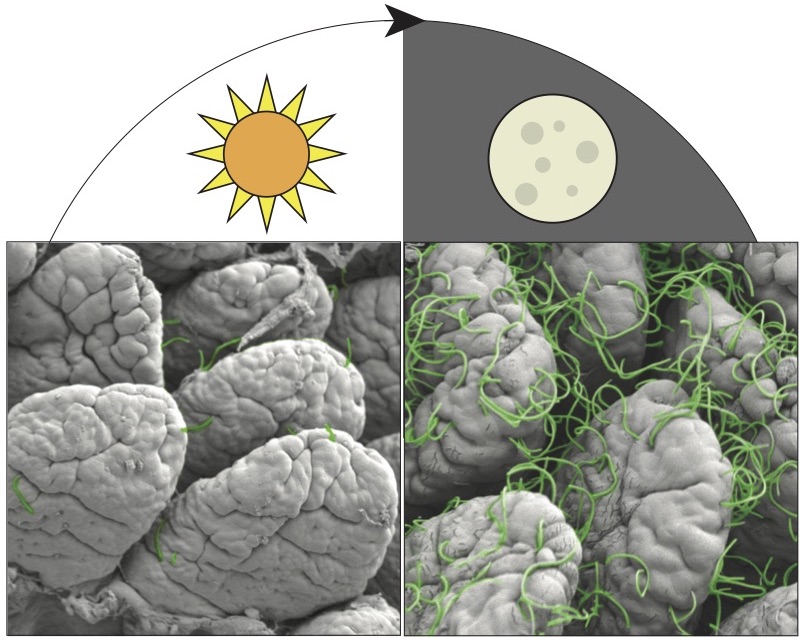
Goethe University researchers investigate oxidative stress in mice. Originally, oxygen radicals — reactive oxygen species, or ROS for short — were considered to be exclusively harmful in the body. They are produced, for example, by smoking or UV radiation. Because of their high reactivity, they can damage many important molecules in cells, including the hereditary molecule DNA. As a result, there is a risk of inflammatory reactions and the degeneration of affected cells into cancer cells.

Because of their damaging effect, however, ROS are also deliberately produced by the body, for example by immune or lung epithelial cells, which destroy invading ...

Read More

Skin and Bones Repaired by Bioprinting During Surgery

schematic showing bioprinting of skin and bone, a rat cartoon with a defect on its head is bioprinted with one bone and 4 skin inks creating bone and skin layers.
Schematic of the skin and bone bioprinting process. After scanning, the bone and then skin layers are bioprinted creating a layered repair with bone, a barrier layer, and dermis and epidermis.
 IMAGE: OZBOLAT LABORATORY, PENN STATE

Fixing traumatic injuries to the skin and bones of the face and skull is difficult because of the many layers of different types of tissues involved, but now, researchers have repaired such defects in a rat model using bioprinting during surgery, and their work may lead to faster and better methods of healing skin and bones.

“This work is clinically significant,” said Ibrahim T. Ozbolat, Hartz Family Career Development Associate Professor of Engineering Science and Mechanics, Biomedical Engineering and Neurosurgery, Penn State...

Read More

Inspired by Nature, the research to develop a new Load-bearing Material

Abstract Image
Fabrication of Cartilage-Inspired Hydrogel/Entangled Polymer–Elastomer Structures Possessing Poro-Elastic Properties

Engineers have developed a new material that mimics human cartilage — the body’s shock absorbing and lubrication system, and it could herald the development of a new generation of lightweight bearings.

Cartilage is a soft fibrous tissue found around joints which provides protection from the compressive loading generated by walking, running or lifting. It also provides a protective, lubricating layer allowing bones to pass over one another in a frictionless way. For years, scientists have been trying to create a synthetic material with the properties of cartilage.

To date, they have had mixed results.

But in a paper published in the journal Applied Polymer Mate...

Read More

Body’s Natural Pain Killers can be enhanced

cookie cutter with pills inside in colorful colors
Getty Images

A study in cells and mice finds compound works with fewer side effects than opioids. Fentanyl, oxycodone, morphine—these substances are familiar to many as a source of both pain relief and the cause of a painful epidemic of addiction and death.

Scientists have attempted for years to balance the potent pain-relieving properties of opioids with their numerous negative side effects—with mostly mixed results.

Work by John Traynor, Ph.D., and Andrew Alt, Ph.D., and their team at the University of Michigan Edward F. Domino Research Center, funded by the National Institute on Drug Abuse, seeks to side-step these problems by harnessing the body’s own ability to block pain.

All opioid drugs—from poppy-derived opium to heroin—work on receptors that are naturally prese...

Read More