Category Biology/Biotechnology

Scientists find Key Function of Molecule in cells crucial for Regulating Immunity

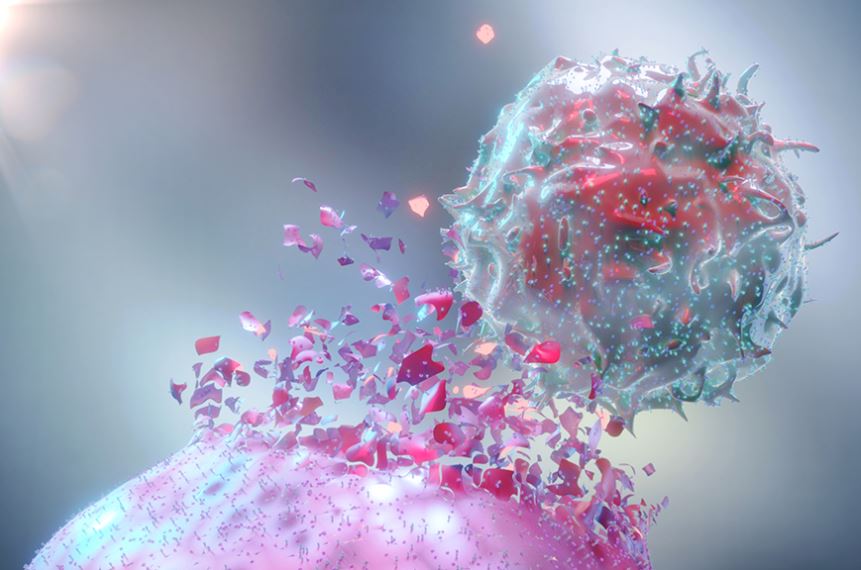
immune cell
Credit: CC0 Public Domain

Scientists discovered that AIM2 is important for the proper function of regulatory T cells, or Treg cells, and plays a key role in mitigating autoimmune disease. Treg cells are a seminal population of adaptive immune cells that prevents an overzealous immune response, such as those that occurs in autoimmune diseases.

Many molecules in our bodies help our immune system keep us healthy without overreacting so much that our immune cells cause problems, such as autoimmune diseases. One molecule, called AIM2, is part of our innate immunity — a defense system established since birth — to fight pathogens and keep us healthy...

Read More

Protein Anchors as a newly discovered Key Molecule in Cancer Spread and Epilepsy

Certain anchor proteins inhibit a key metabolic driver that plays an important role in cancer and developmental brain disorders. Scientists from the German Cancer Research Center (DKFZ) and the University of Innsbruck, together with a Europe-wide research network, discovered this molecular mechanism, which could open up new opportunities for personalized therapies for cancer and neuronal diseases. They published their results in the journal Cell.

The signaling protein MTOR (Mechanistic Target of Rapamycin) is a sensor for nutrients such as amino acids and sugars. When sufficient nutrients are available, MTOR boosts metabolism and ensures that sufficient energy and cellular building blocks are available...

Read More

Biodegradable Displays for Sustainable Electronics

2020_111_Kompostierbare Displays fuer nachhaltige Elektronik_72dpi
Thanks to its flexibility and adhesion, the biodegradable display can be worn directly on the hand. (Photo: Manuel Pietsch, KIT)

Researchers develop biodegradable printed display. In the next years, increasing use of electronic devices in consumables and new technologies for the internet of things will increase the amount of electronic scrap. To save resources and minimize waste volumes, an eco-friendlier production and more sustainable lifecycle will be needed. Scientists of Karlsruhe Institute of Technology (KIT) have now been the first to produce displays, whose biodegradability has been checked and certified by an independent office. The results are reported in the Journal of Materials Chemistry.

“For the first time, we have demonstrated that it is possible to produce sustainabl...

Read More

Newly discovered subset of Brain Cells fight Inflammation with Instructions from the Gut

This shows the outline of a head and a brain
The researchers used refined gene- and protein-analysis tools to identify the novel astrocyte subset. Image is in the public domain

Astrocytes are the most abundant type of cells within the central nervous system (CNS), but they remain poorly characterized. Researchers have long assumed that astrocytes’ primary function is to provide nutrients and support for the brain’s more closely scrutinized nerve cells; over the years, however, increasing evidence has shown that astrocytes can also actively promote neurodegeneration, inflammation, and neurological diseases...

Read More