Category Biology/Biotechnology

New molecule Reverses Alzheimer’s-like Memory Decline – The drug CMS121 treats neurodegeneration in mice

CMS121, a fisetin-derivative, alleviates memory decline in a double transgenic AD mouse model.

A drug candidate developed by Salk researchers, and previously shown to slow aging in brain cells, successfully reversed memory loss in a mouse model of inherited Alzheimer’s disease. The new research, published online in July 2020 in the journal Redox Biology, also revealed that the drug, CMS121, works by changing how brain cells metabolize fatty molecules known as lipids.

“This was a more rigorous test of how well this compound would work in a therapeutic setting than our previous studies on it,” says Pamela Maher, a senior staff scientist in the lab of Salk Professor David Schubert and the senior author of the new paper...

Read More

Implantable Transmitter provides Wireless option for Biomedical devices

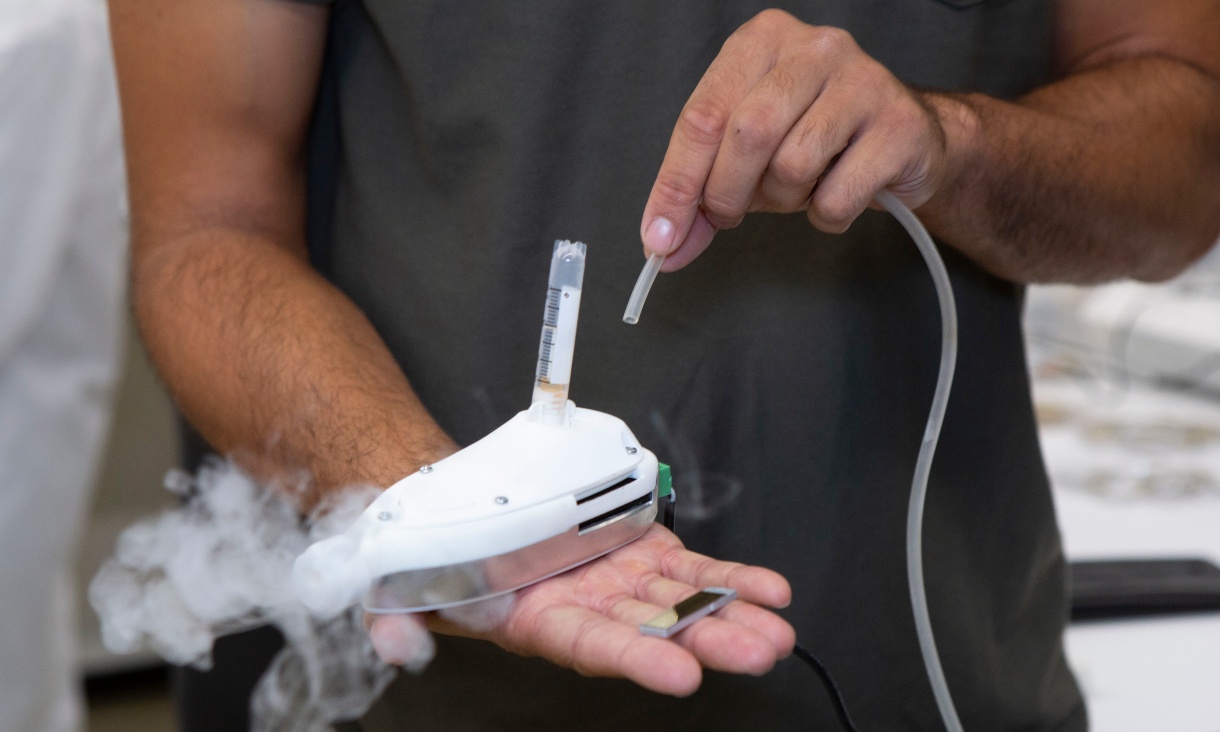
A Purdue University team developed a fully implantable transmitter chip for wireless sensor nodes and biomedical devices. (Image provided)

Purdue University innovators are working on inventions to use micro-chip technology in implantable devices and other wearable products such as smart watches to improve biomedical devices, including those used to monitor people with glaucoma and heart disease.

The Purdue team developed a fully implantable radio-frequency transmitter chip for wireless sensor nodes and biomedical devices. The research is published in the journal IEEE Transactions on Circuits and Systems II. The transmitter chip consumes lowest amount of energy per digital bit published to date.

The transmitter works in a similar fashion to communication technology in mobile phone...

Read More

Transferrin identified as Potential Contributor to COVID-19 Severity

Could transferrin be a potential biomarker for COVID-19 severity?

The University of Kent’s School of Biosciences and the Institute of Medical Virology at Goethe-University, Frankfurt am Main, have identified that a glycoprotein known as transferrin may critically contribute to severe forms of COVID-19.

SARS-CoV-2 is the coronavirus that causes COVID-19. It is currently not known why some individuals develop only mild or no symptoms when infected, whilst others experience severe, life-threatening forms of the disease. However, it is known that the risk of COVID-19 becoming severe increases with age and is higher in males than in females. Many severe COVID-19 cases are characterised by increased blood clotting and thrombosis formation.

The team combined existing data on gene expres...

Read More

Aerobic Exercise could have the final say on Fatty Livers

A new study from Trinity College Dublin highlights that fitness may be a more important clinical endpoint for improvement in patients with fatty liver diseases during exercise trials, rather than weight loss. The findings have been published today (Tuesday, 28th July 2020) in the medical journal Alimentary Pharmacology and Therapeutics.

Metabolic associated fatty liver disease (MAFLD) is a condition characterised by a build up of fat in the liver. The liver is central to a suite of vital processes in the body including digestion, blood clotting and energy production.

If left untreated, MAFLD can lead to serious complications like liver fibrosis (scarring), cirrhosis, liver failure and liver cancer, as well as cardiovascular and metabolic issues...

Read More