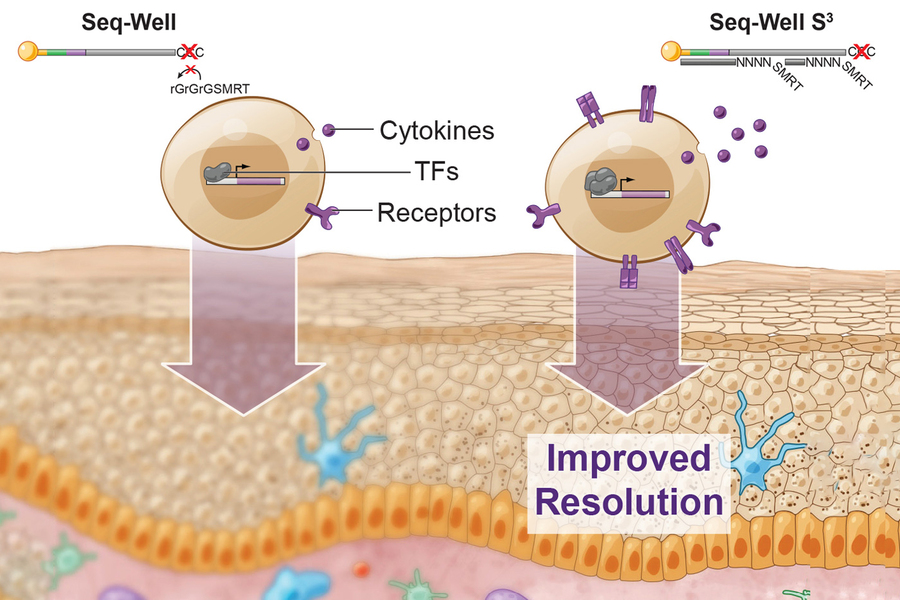
MIT researchers have greatly boosted the amount of information that can be obtained using Seq-Well, a technique for rapidly sequencing RNA from single cells. This advance should enable scientists to learn much more about the critical genes that are expressed in each cell, and help them to discover subtle differences between healthy and dysfunctional cells for designing new preventions and cures. This image illustrates the improved resolution, right, using the new technique. Credits:Courtesy of the researchers. Edited by MIT News.
Boosting the efficiency of single-cell RNA-sequencing helps reveal subtle differences between healthy and dysfunctional cells. Sequencing RNA from individual cells can reveal a great deal of information about what those cells are doing in the body...
Virginia Tech researchers with the Fralin Biomedical Research Institute at VTC Center for Human Neuroscience Research construct carbon fiber microelectrodes for real-time detection of dopamine and serotonin activity in human patients. The in-house, custom-made electrodes are narrow and used during deep brain stimulation electrode implantation surgeries to measure activity of both dopamine and serotonin in patients. Shown at right in comparison with a paper clip.
Dopamine, serotonin involved in sub-second perception, cognition...
Working with California mice, UC Davis researches showed that the “love hormone” oxytocin can sometimes have antisocial effects depending on where in the brain it is made. (Mark Chappell/UC Riverside)
Finding a better route to treating social anxiety disorder may lie in another part of the brain, researchers suggest. The findings of the study show that oxytocin produced in the BNST increases stress-induced social anxiety behaviors in mice. This may provide an explanation as to why oxytocin can sometimes have antisocial effects.
Studies have long suggested that oxytocin – a hormone that can also act as a neurotransmitter – regulates prosocial behavior such as empathy, trust and bonding, which led to its popular labeling as the “love hormone...
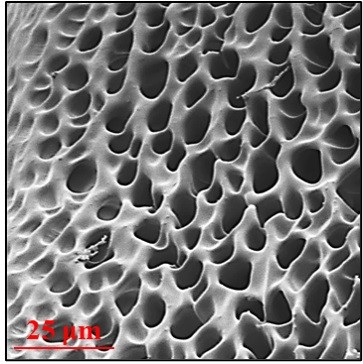
A conductive polymer hydrogel could help repair damaged peripheral nerves. Credit: Adapted from ACS Nano2020, DOI: 10.1021/acsnano.0c05197
Injuries to peripheral nerves – tissues that transmit bioelectrical signals from the brain to the rest of the body – often result in chronic pain, neurologic disorders, paralysis or disability. Now, researchers have developed a stretchable conductive hydrogel that could someday be used to repair these types of nerves when there’s damage. They report their results in ACS Nano.
Injuries in which a peripheral nerve has been completely severed, such as a deep cut from an accident, are difficult to treat...







Recent Comments