
Category Biology/Biotechnology

Paper-based Technology Advances Earlier Cancer Detection

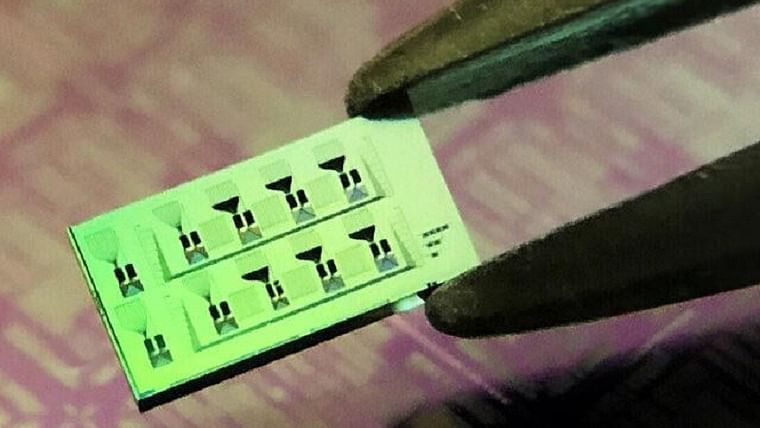
Image of the paper-based isotachophoresis (ITP) device that isolates, enriches, and detects exosomes from a prostate cancer cell line.

Washington State University researchers have developed a technology that is more than 30 times more sensitive than current lab-based tests in finding early stage cancer biomarkers in blood.

The technology uses an electric field to concentrate and separate cancer biomarkers onto a paper strip. It could someday become a kind of liquid biopsy and could lead to earlier detection of and faster treatments for cancer, a disease that causes more than 9.6 million deaths a year around the world.

Led by Wenji Dong, associate professor in the Gene and Linda Voiland School of Chemical Engineering and Bioengineering, and graduate student Shuang Guo, the researc...

Read More

Scientists develop unique polymer coating to tackle harmful fungi

Fungi on different surfaces

Scientists from the University of Nottingham have developed a new way to control harmful fungi, without the need to use chemical bioactives like fungicides or antifungals.

Fungi cause diverse, serious societal and economic problems in the UK and globally. As well as causing fatal diseases in humans, fungi devastate food crops and spoil valuable products and materials. This has led to an antifungals/fungicide industry worth around $30bn globally.

There are tight regulations around the use of fungicides and antifungals and there is also growing resistance of fungi to these agents.

In a paper published today in Science Advances, experts from the University’s Schools of Life Sciences, Pharmacy, and Engineering, show how they have developed an innovative...

Read More

New image of a Cancer-related Enzyme in action helps explain Gene Regulation

corest connects nucleosome and LSD1
A new atomic model for the LSD1/CoREST histone methylase in complex with its nucleosome substrate could provide important insight into how cells regulate their genes.
 IMAGE: SONG TAN, PENN STATE

New images of an enzyme in action as it interacts with the chromosome could provide important insight into how cells—including cancer cells—regulate their genes.

The enzyme, LSD1, can “turn off gene expression by removing chemical flags (methyl groups) from the nucleosome—tightly packed units of DNA and protein in chromosomes. This LSD1 histone demethylase is over-expressed in multiple cancer types, resulting in disruption to normal cell development, and the new structure could inform therapeutic interventions that target the enzyme.

A paper by Penn State researchers describing the ...

Read More

‘Poisoned Arrow’ Defeats Antibiotic-Resistant Bacteria

An illustration of a monstrous bacteria being punctured by molecular components of a new antibiotic
A team of Princeton researchers led by Professor Zemer Gitai has found an antibiotic that can simultaneously puncture bacterial walls and destroy folate within their cells â€” taking out even monstrous bacteria with the effectiveness of a poisoned arrow â€” while proving immune to antibiotic resistance.
Illustration by
Matilda Luk, Office of Communications

A dual-mechanism antibiotic kills Gram-negative bacteria and avoids drug resistance. Poison is lethal all on its own – as are arrows – but their combination is greater than the sum of their parts. A weapon that simultaneously attacks from within and without can take down even the strongest opponents, from E. coli to MRSA (methicillin resistant Staphylococcus aureus).

A team of Princeton researchers reported today in the journal Cell...

Read More