Category Biology/Biotechnology

Faster-degrading Plastic could promise Cleaner Seas

Chemists create faster-degrading plastic for marine uses | Cornell ...

To address plastic pollution plaguing the world’s seas and waterways, Cornell University chemists have developed a new polymer that can degrade by ultraviolet radiation, according to research published in the Journal of the American Chemical Society.

“We have created a new plastic that has the mechanical properties required by commercial fishing gear. If it eventually gets lost in the aquatic environment, this material can degrade on a realistic time scale,” said lead researcher Bryce Lipinski, a doctoral candidate in the laboratory of Geoff Coates, professor of chemistry and chemical biology at Cornell University. “This material could reduce persistent plastic accumulation in the environment.”

Commercial fishing contributes to about half of all floating plastic waste that ends ...

Read More

Researchers Repurpose Classic Chemotherapy Drug to Overcome Cancer Therapy Resistance

Anticancer immunity targeting therapy-resistant leukemia stem cells is activated by low-dose doxorubicin.
Image/Art credit: Mark Miller, Stowers Institute.

Drug resistance is a major obstacle in cancer treatment – leading to relapse for many patients. In a new study, published online April 20, 2020, in Nature Cell Biology, researchers from the Stowers Institute for Medical Research, Children’s Mercy Kansas City, and The University of Kansas Cancer Center report on a promising new strategy to overcome drug resistance in leukemia, using targeted doses of the widely-used chemotherapy drug doxorubicin.

The study’s researchers found that low doses of the anthracycline antibiotic doxorubicin inhibit the interaction between two molecular pathways that work closely together to promote tumor ...

Read More

Synthetic Scaffolds to Heal Injured Tendons and Ligaments

The research hopes to improve the outcomes of sport injury surgeries. Credit: Pixabay

The research hopes to improve the outcomes of sport injury surgeries. Credit: Pixabay

Top biomedical engineering researcher develops synthetic scaffolds for tendon and ligament regeneration. Australia’s love of sport means it has one of the highest rates of knee anterior cruciate ligament (ACL) injury and reconstruction in the world.

Worldwide, the costs of tendon and ligament rupture repair and surgery revision represent tens of billions of dollars of the clinical orthopaedic market.

A team of biomedical engineering researchers from the University of Sydney, working with Columbia University’s Regenerative Engineering Laboratory and FAU Erlangen-Nurnberg Institute of Medical Biotechnology (Germany), are hoping to improve the outcomes of tendon and ligament repair by developing a new synthe...

Read More

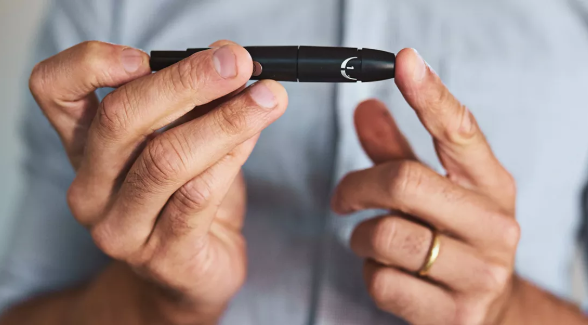
A Non-Invasive way of Monitoring Diabetes

Saliva could be used instead of blood to monitor diabetes in a method proposed in research involving the University of Strathclyde.
The test has been developed as an alternative to the current prevalent practice of monitoring blood glucose, which can be invasive, painful and costly.

Lab tests of the saliva process had an accuracy rate of 95.2%. The research shows promising results for monitoring diabetes, which affects an estimated 425 million people worldwide — around half of them undiagnosed.

The research has been published in the journal PLOS ONE. It also involved partners at the Federal University of Uberlandia in Minas Gerais, Brazil, the University of Vale do Paraíba in Sao Paolo, Brazil and the University of Saskatchewan in Canada.

Dr Matthew Baker, a Reader in Strathc...

Read More