Category Biology/Biotechnology

Mitochondria are the ‘Canary in the Coal Mine’ for Cellular Stress

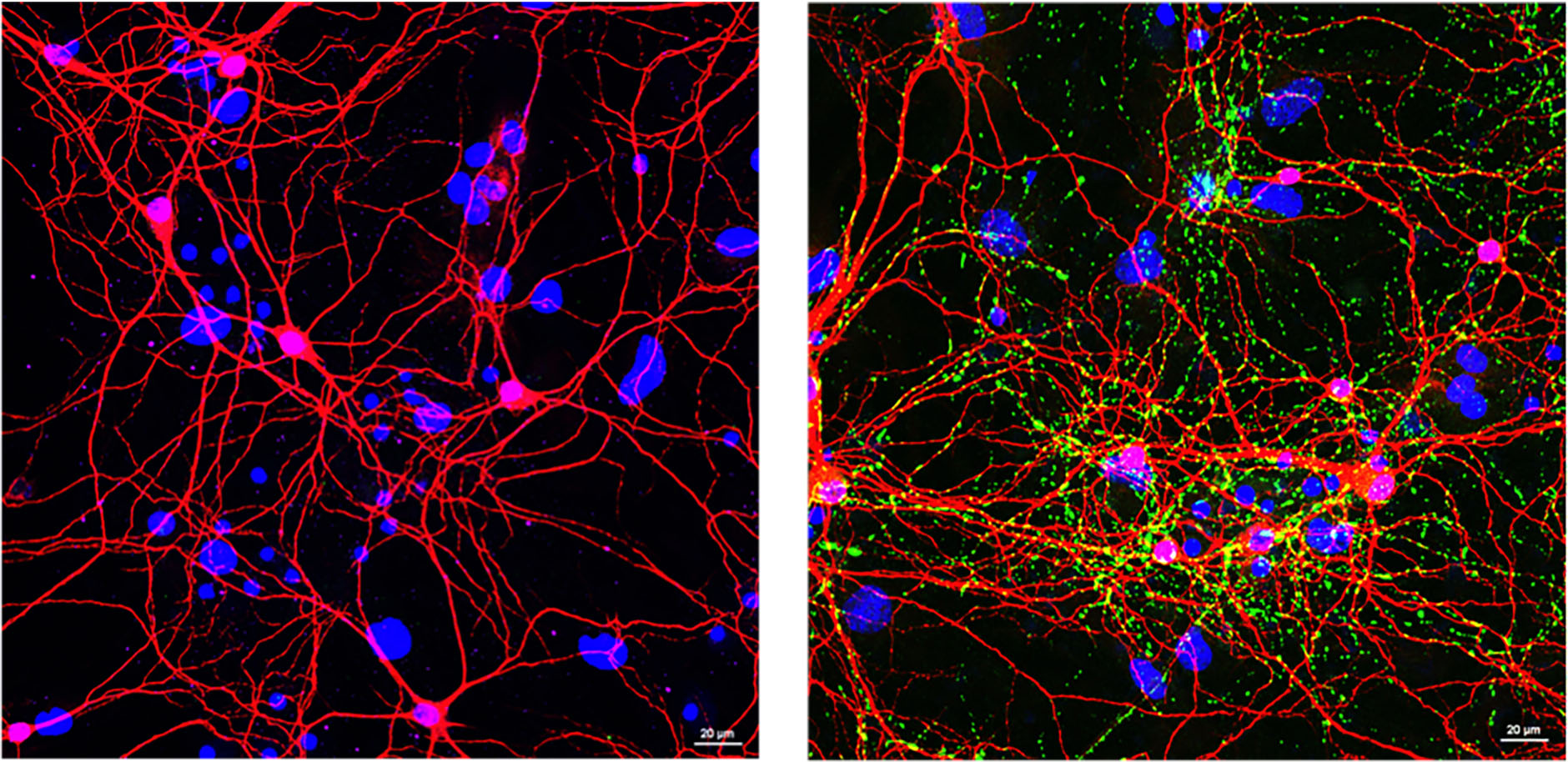
Pictured are mitochondria (red), cell nuclei (blue) and mtDNA (white dots).
Credit: Salk Institute/Waitt Advanced Biophotonics Center

How some cancers resist chemotherapy…
Mitochondria, tiny structures present in most cells, are known for their energy-generating machinery. Now, Salk researchers have discovered a new function of mitochondria: they set off molecular alarms when cells are exposed to stress or chemicals that can damage DNA, such as chemotherapy. The results, published online in Nature Metabolism on December 9, 2019, could lead to new cancer treatments that prevent tumors from becoming resistant to chemotherapy.

“Mitochondria are acting as a first line of defense in sensing DNA stress...

Read More

Herpes’s Achilles Heel

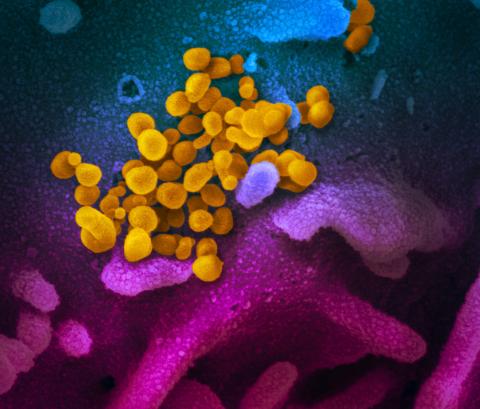
microscopy image of herpes simplex virus
Scientists have used gene editing to disrupt both latent and actively replicating herpes simplex virus in human cells. Image: Aunt_Spray/iStock/Getty Images

In a first, scientists use gene-editing to disrupt both latent and active herpes virus in human cells. Scientists have used the gene-editing tool CRISPR-Cas9 to disrupt both latent reservoirs of the herpes simplex virus and actively replicating virus in human fibroblast cells. Experiments pinpoint weak spot that can make the virus susceptible to gene editing.

The herpes simplex virus, commonly known as the cold sore virus, is a devious microbe.

It enters the body through regions lined with mucous membranes – mouth, nose and genitals – but quickly establishes lifelong viral hideouts inside nerve cells...

Read More

Poor Diet linked to Age-Related Macular Degeneration

Image result for Poor diet linked to age-related macular degeneration
Diet patterns and the incidence of age-related macular degeneration in the Atherosclerosis Risk in Communities (ARIC) study. British Journal of Ophthalmology, 2019; bjophthalmol-2019-314813 DOI: 10.1136/bjophthalmol-2019-314813

Participants who ate a diet high in red and processed meat, fried food, refined grains and high-fat dairy were 3X more likely to develop an eye condition that damages the retina and affects a person’s central vision, according to the results of a study from the University at Buffalo.

The condition is called late-stage age-related macular degeneration (AMD). AMD is an irreversible condition that affects a person’s central vision, taking away their ability to drive, among other common daily activities.

“Treatment for late, neovascular AMD is invasive and expens...

Read More

Identification of a Key Protein linked to Aging

Fig. 8
Scheme: role of CSB depletion in replicative senescence. Illustration of epigenetic regulation of CSB expression and its effect on downstream targets (a) regular CSB expression (b) low CSB levels leading to replicative senescence. Novel senescence effectors that are shared with the Cockayne syndrome paradigm (a disease due to CSB impairment in its most severe form) are shown in a framed area. Transcripts are indicated with a wavy line, active promoter with an arrow; Ac, acetyl group.

Ageing is a dramatic public health issue in the face of the current demographic changes: the proportion of 60 and over in the world’s population will almost double by 2050. In this context, a new discovery has just broadened scientific knowledge...

Read More