Category Biology/Biotechnology

Programmable Nests for Cells

2019_161_Programmierbare Nester fuer Zellen_72dpi
Bacteria cells (red) on a programmable composite of silica nanoparticles (yellow) and carbon nanotubes (blue). (Photo: Niemeyer-Lab, KIT)

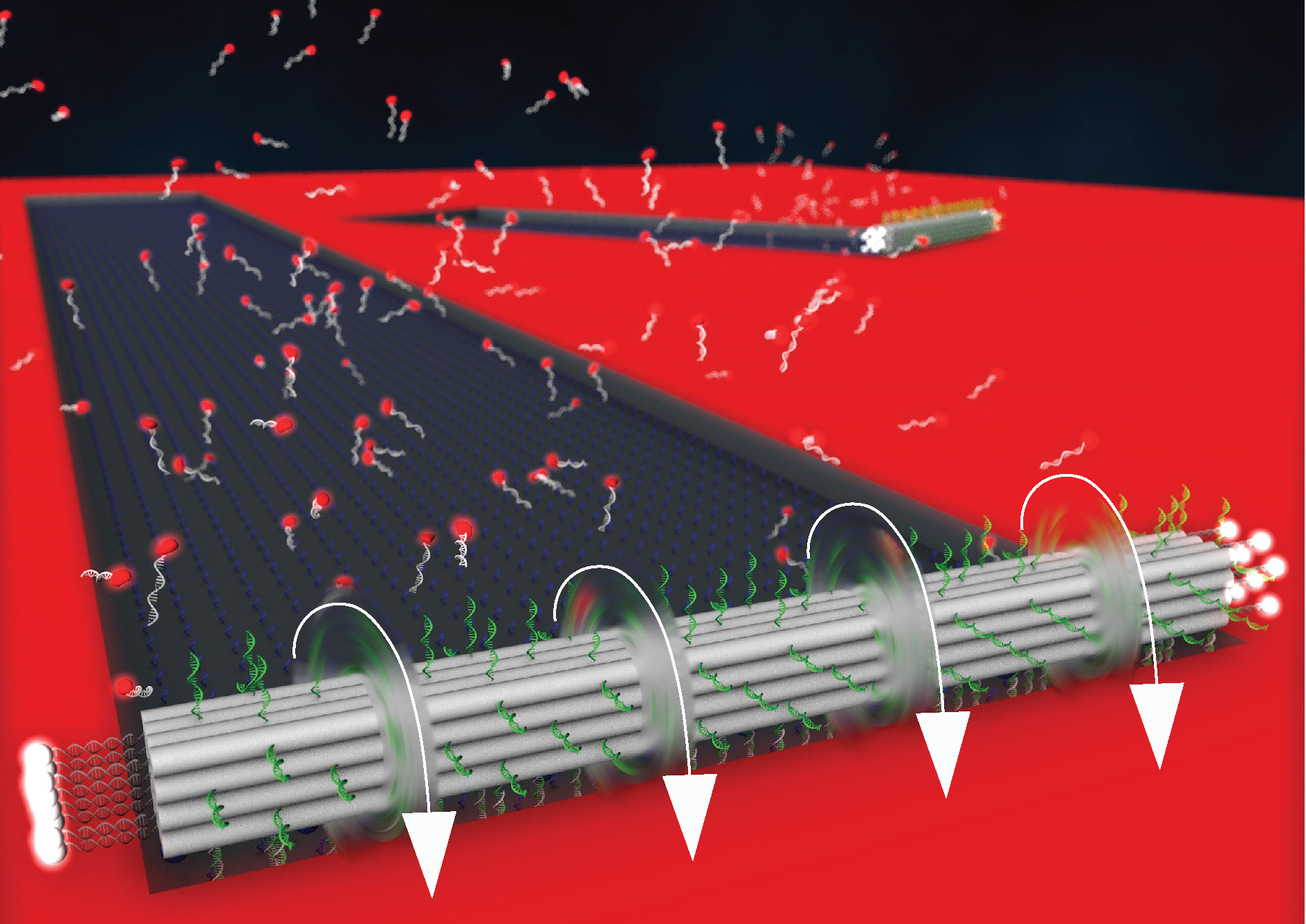
Using DNA, smallest silica particles, and carbon nanotubes, researchers of Karlsruhe Institute of Technology (KIT) developed novel programmable materials. These nanocomposites can be tailored to various applications and programmed to degrade quickly and gently. For medical applications, they can create environments in which human stem cells can settle down and develop further. Additionally, they are suited for the setup of biohybrid systems to produce power, for instance. The results are presented in Nature Communications and on the bioRxiv platform.

Stem cells are cultivated for fundamental research and development of effective therapies agains...

Read More

A Replacement for Exercise?

Exercise gear in a bottle
Sestrins are evolutionarily conserved mediators of exercise benefits
Nature Communications volume 11, Article number: 190 (2020)

A protein called Sestrin might be responsible for many of the benefits of a good workout. Michigan Medicine researchers studying a class of naturally occurring protein called Sestrin have found that it can mimic many of exercise’s effects in flies and mice. The findings could eventually help scientists combat muscle wasting due to aging and other causes.

“Researchers have previously observed that Sestrin accumulates in muscle following exercise,” said Myungjin Kim, Ph.D., a research assistant professor in the Department of Molecular & Integrative Physiology. Kim, working with professor Jun Hee Lee, Ph.D...

Read More

A Replacement for Exercise?

Michigan Medicine researchers studying a class of naturally occurring protein called Sestrin have found that it can mimic many of exercise’s effects in flies and mice. The findings could eventually help scientists combat muscle wasting due to aging and other causes.

“Researchers have previously observed that Sestrin accumulates in muscle following exercise,” said Myungjin Kim, Ph.D., a research assistant professor in the Department of Molecular & Integrative Physiology. Kim, working with professor Jun Hee Lee, Ph.D. and a team of researchers wanted to know more about the protein’s apparent link to exercise. Their first step was to encourage a bunch of flies to work out.

Taking advantage of Drosophila flies’ normal instinct to climb up and out of a test tube, their collaborators Robert Wess...

Read More

Ingestible Medical Devices can be Broken Down with Light

MIT engineers demonstrated a bariatric balloon that can be inflated in the stomach and then degraded by shining light on the seal, which is made of a novel light-sensitive polymer.
Image: Ritu Raman

New light-sensitive material could eliminate some of the endoscopic procedures needed to remove gastrointestinal devices

A variety of medical devices can be inserted into the gastrointestinal tract to treat, diagnose, or monitor GI disorders. Many of these have to be removed by endoscopic surgery once their job is done. However, MIT engineers have now come up with a way to trigger such devices to break down inside the body when they are exposed to light from an ingestible LED.

The new approach is based on a light-sensitive hydrogel that the researchers designed...

Read More