Jarod A. Rollins of the MDI Biological Laboratory in Bar Harbor, Maine, is a lead author of a recent scientific paper that identifies synergistic cellular pathways for longevity that amplify lifespan fivefold in C. elegans, a nematode worm used as a model in aging research. The increase in lifespan would be the equivalent of a human living for 400 or 500 years. The discovery of the synergistic effect opens the door to new, more effective anti-aging therapies. Credit: MDI Biological Laboratory
Discovery of cellular mechanisms could open door to more effective anti-aging therapies. Scientists have identified synergistic cellular pathways for longevity that amplify lifespan fivefold in C. elegans, a nematode worm used as a model in aging research...
UsIntegrative discovery of treatments for high-risk neuroblastoma. Nature Communications, 2020; 11 (1) DOI: 10.1038/s41467-019-13817-8
Using a computer algorithm, scientists at Uppsala University have identified a promising new treatment for neuroblastoma. This form of cancer in children, which occurs in specialised nerve cells in the sympathetic nervous system, may be life-threatening. In the long term the discovery, described in the latest issue of the scientific journal Nature Communications, may result in a new form of treatment for children in whom the disease is severe or at an advanced stage.
The new treatment is based on activating a receptor protein, CNR2 (cannabinoid receptor 2), in the nervous system...
Biology professor Ali Güler’s research links “highly processed foods readily and cheaply available at any time of the day or night” to obesity and its many complications via disrupted circadian rhythms. (Photos by Dan Addison, University Communications)
A new study finds that the pleasure center of the brain and the brain’s biological clock are linked, and that high-calorie foods – which bring pleasure – disrupt normal feeding schedules, resulting in overconsumption.
During the years 1976 through 1980, 15% of U.S. adults were obese. Today, about 40% of adults are obese. Another 33% are overweight.
Coinciding with this increase in weight are ever-rising rates of heart disease, diabetes, cancer and health complications caused by obesity, such as hypertension...
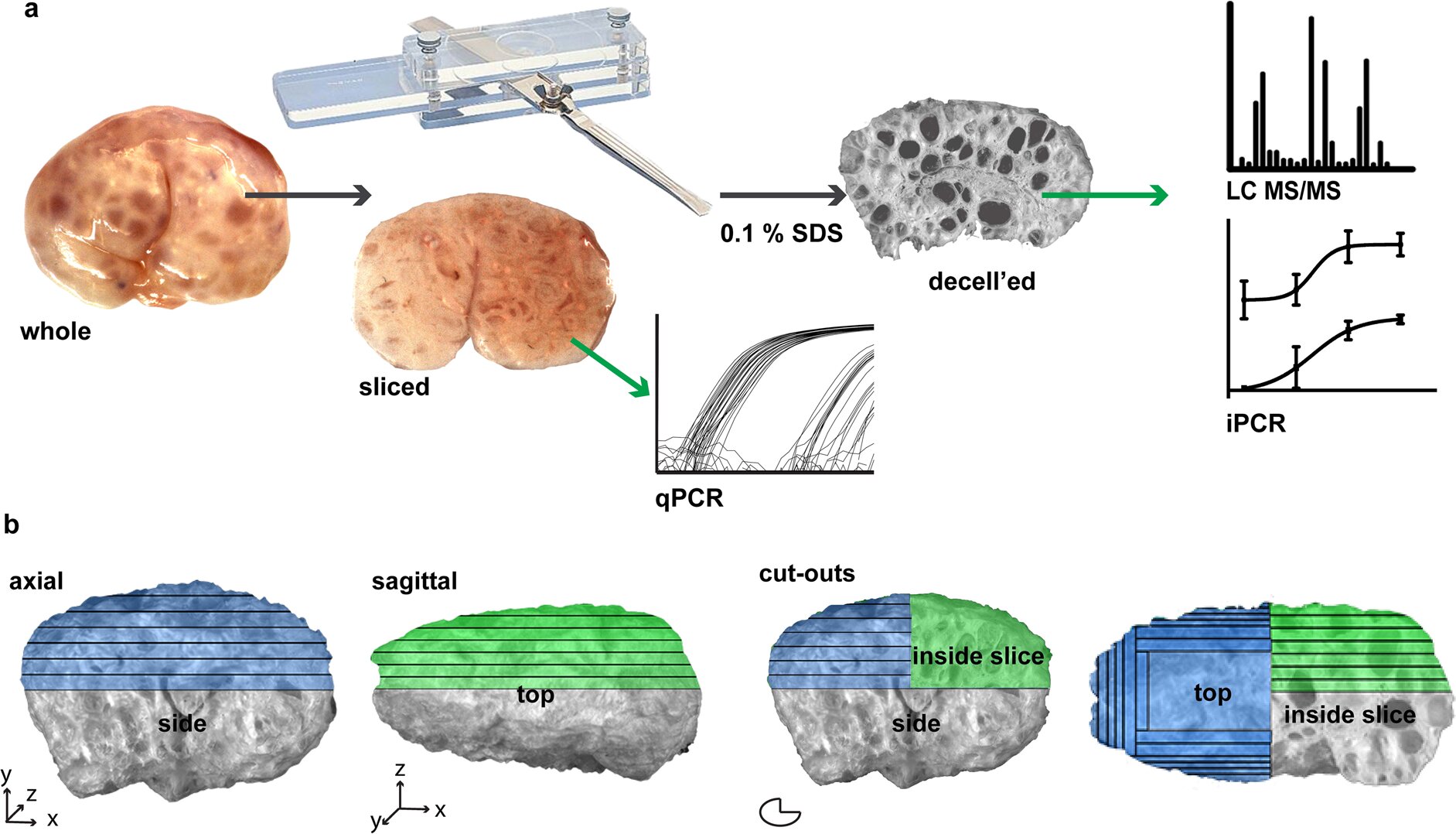
Schematic of (a) processing the porcine ovary with a tissue slicer, prior to qPCR analysis, decellularization then proteomics analysis and iPCR validation. (b) Ovaries were sliced axially and sagittally. SDS, sodium dodecyl sulfate; decell’ed, decellularized; LC MS/MS, liquid chromatography tandem mass spectrometry; iPCR, immuno PCR. Credit: Scientific Reports (2019). DOI: 10.1038/s41598-019-56454-3
Findings a huge step forward in fertility preservation and hormone restoration. For the first time, scientists identified and mapped the location of structural proteins in a pig ovary. Ongoing development of an “ink” with these proteins will be used for 3-D printing an artificial (or bio-prosthetic) ovary that could be implanted and allow a woman to have a child...








Recent Comments