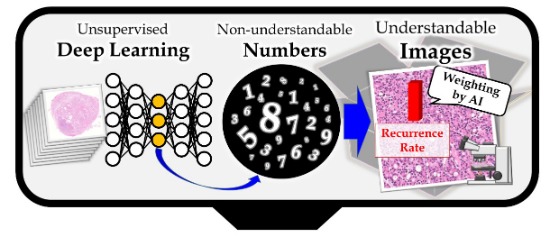
Outline of the method. First, unsupervised deep neural networks were applied to pathology images without being taught any medical knowledge. Next, the features (a series of numbers that humans cannot directly understand) acquired by AI were translated into high-resolution images that can be understood by humans and were automatically assigned optimum weights to make images interpretable.
Artificial intelligence (AI) technology developed by the RIKEN Center for Advanced Intelligence Project (AIP) in Japan has successfully found features in pathology images from human cancer patients, without annotation, that could be understood by human doctors...
Selective activation of basolateral amygdala projections to the rostromedial striatum induced using the MNM004 capsid drives fear and anxiety phenotypes.
Neuroscientists at Lund University in Sweden have developed a new technology that engineers the shell of a virus to deliver gene therapy to the exact cell type in the body that needs to be treated. The researchers believe that the new technology can be likened to dramatically accelerating evolution from millions of years to weeks.
Several of the new revolutionary treatments that have been used clinically in recent years to treat complex diseases – such as spinal muscular atrophy and enzyme deficiency – are based on gene therapy.
With gene therapy, the genetic material is controlled or altered using biological drugs...
An illustration shows how effective a selection of custom-designed peptide hydrogels are in controlling inflammation. The gels developed at Rice University serve as scaffolds for new tissue and show promise for treating wounds and cancer and for delivering drugs. The hydrogels are designed to dissolve in the body as they are replaced by natural, functional tissue. Illustration by Tania Lopez-Silva
Scientists model how synthetic gels can tune body’s inflammatory response. Hydrogels for healing, synthesized from the molecules up by Rice University bioengineers, are a few steps closer to the clinic.
Rice researchers and collaborators at Texas Heart Institute (THI) have established a baseline set of injectable hydrogels that promise to help heal wounds, deliver drugs and treat cancer...
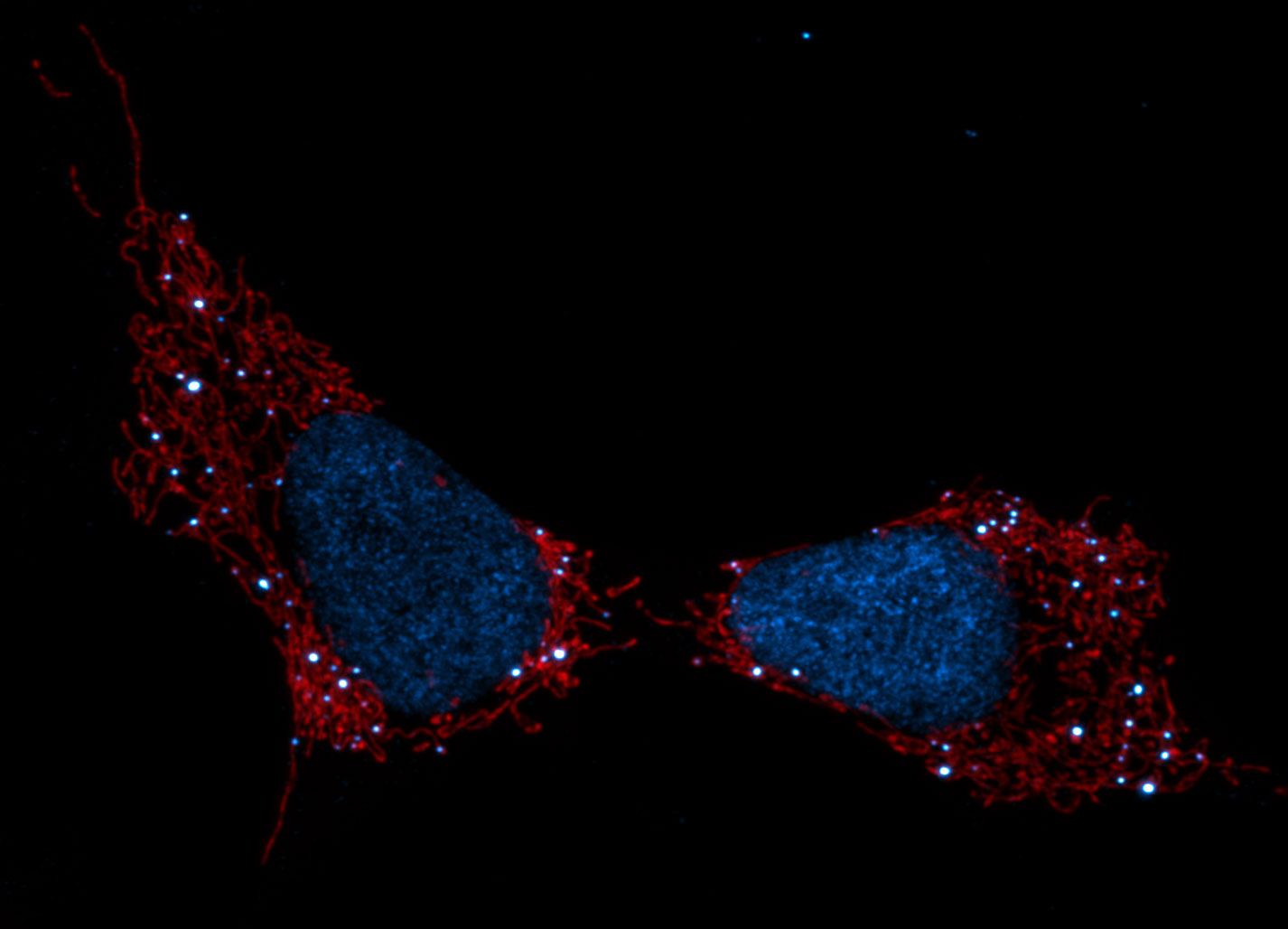
Pictured are mitochondria (red), cell nuclei (blue) and mtDNA (white dots). Credit: Salk Institute/Waitt Advanced Biophotonics Center
How some cancers resist chemotherapy…
Mitochondria, tiny structures present in most cells, are known for their energy-generating machinery. Now, Salk researchers have discovered a new function of mitochondria: they set off molecular alarms when cells are exposed to stress or chemicals that can damage DNA, such as chemotherapy. The results, published online in Nature Metabolism on December 9, 2019, could lead to new cancer treatments that prevent tumors from becoming resistant to chemotherapy.
“Mitochondria are acting as a first line of defense in sensing DNA stress...







Recent Comments