Category Biology/Biotechnology

Brain Plasticity Restored in Adult Mice through Targeting Specific Nerve Cell Connections


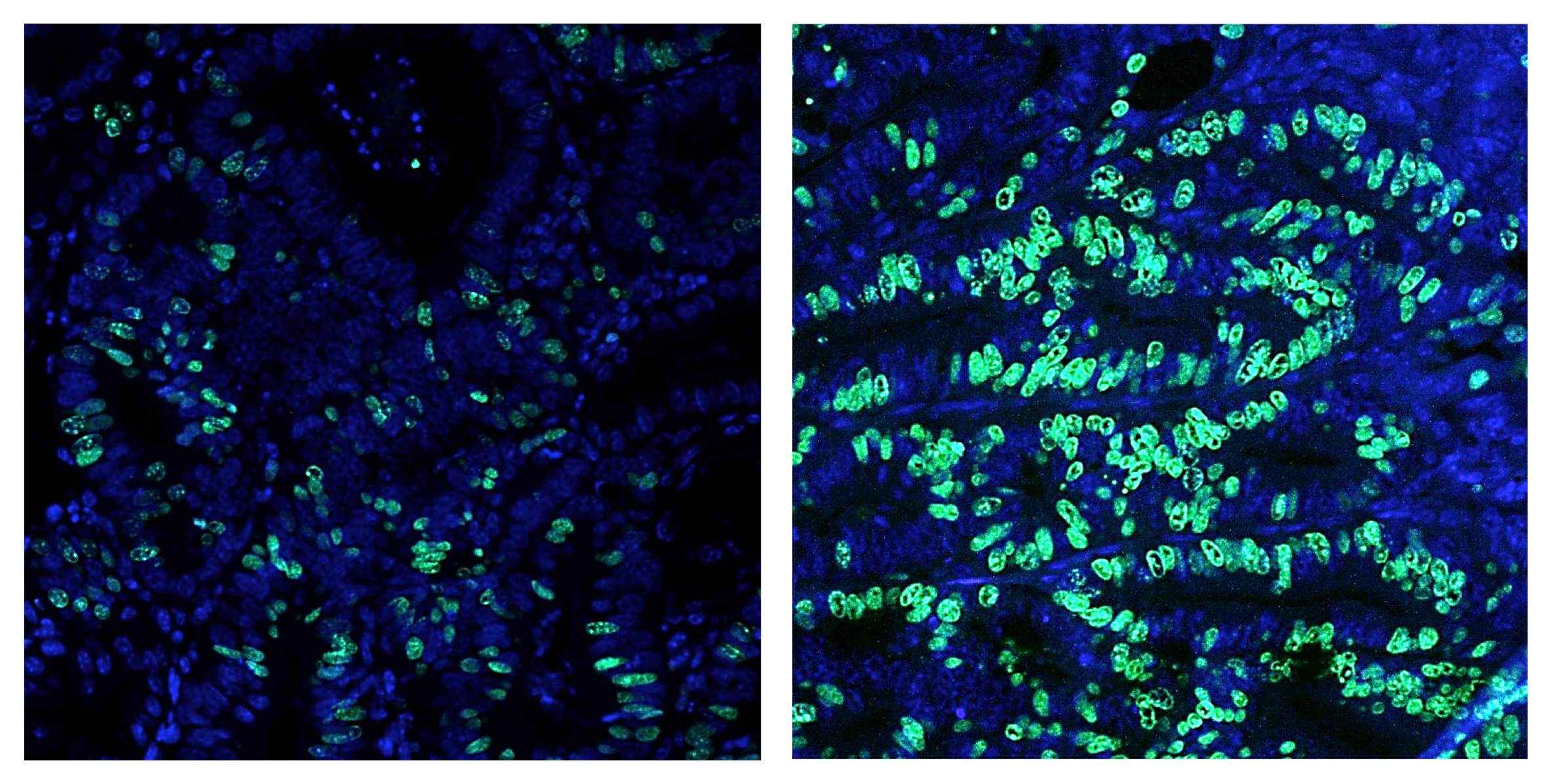
Research in mice led by neuroscientists at Tufts University School of Medicine reveals a new molecular mechanism that is essential for brain maturation and may be used to restore plasticity in aged brains. The study focused on a subtype of inhibitory cell also found in people called Parvalbumin neurons (stained in blue) which exert significant power over the timing of the “critical period” for brain maturation. While previous studies had shown that the short-range synapses (green dots) on these neurons affected critical period opening in the brain’s visual cortex (which processes visual scenes), the new study shows that long-range synapses (red dots) on these neurons have a powerful control over critical period closure, despite their lower density in the brain...
Read More

New Materials could ‘Drive Wound Healing’ by harnessing natural healing methods

image
Bioinspired aptamers enable the creation of synthetic mimics of the natural TGF‐β1 large latent complex (LLC).

Materials are widely used to help heal wounds: Collagen sponges help treat burns and pressure sores, and scaffold-like implants are used to repair bones. However, the process of tissue repair changes over time, so scientists are developing biomaterials that interact with tissues as healing takes place.

Now, Dr Ben Almquist and his team at Imperial College London have created a new molecule that could change the way traditional materials work with the body. Known as traction force-activated payloads (TrAPs), their method lets materials talk to the body’s natural repair systems to drive healing.

The researchers say incorporating TrAPs into existing medical materials c...

Read More

Engineers create an Inhalable form of Messenger RNA

MIT researchers have designed inhalable particles that can deliver messenger RNA. These lung epithelial cells have taken up particles (yellow) that carry mRNA encoding green fluorescent protein.
Credit: Asha Patel

Patients with lung disease could find relief by breathing in messenger RNA molecules. In an advance that could lead to new treatments for lung disease, researchers have now designed an inhalable form of mRNA. This aerosol could be administered directly to the lungs to help treat diseases such as cystic fibrosis, the researchers say.

mRNA, which can induce cells to produce therapeutic proteins, holds great promise for treating a variety of diseases...

Read More

‘Christmas Berry’ plant compound could fight Uveal melanoma

christmas berry plant Benovic uveal melanoma
Christmas berry plant (Ardisia crenata)

A molecule derived from a type of primrose could prove to be a potent inhibitor of metastatic growth for a rare and aggressive cancer. Doctors diagnose about 2000 adults with uveal melanoma, a cancer of the eye, every year. In half of cases, the disease metastasizes to the liver. For these patients treatment options are scarce. Researchers at the Sidney Kimmel Cancer Center (SKCC) — Jefferson Health and the Icahn School of Medicine at Mt. Sinai found that a compound extracted from the Christmas berry primrose plant stops the cancer’s growth in preliminary tests. With further testing, the discovery could lead to new therapeutic options for patients with uveal melanoma.

“I’m very optimistic,” said Jeffrey Benovic, PhD, Thomas Eakins Endowed Profes...

Read More