Category Biology/Biotechnology

Gut bacteria and acetate team up to cut fat in mice without muscle loss

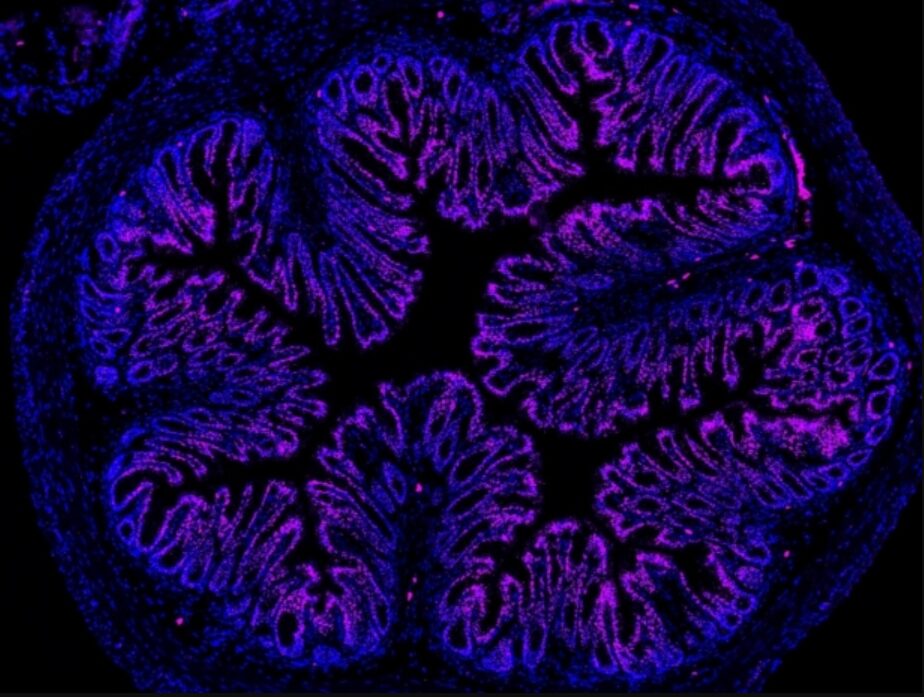
Gut bacteria and acetate, a great combination for weight loss
Credit: Cell Metabolism (2025). DOI: 10.1016/j.cmet.2025.04.013

Researchers led by Hiroshi Ohno at the RIKEN Center for Integrative Medical Sciences (IMS) in Japan have discovered a new way to reduce obesity. Their study shows that supplying the gut with extra acetate reduces fat and liver mass in both normal and obese mice, as long as bacteria of the Bacteroides species are also present in the gut.

When both these conditions are met, gut bacteria can eliminate more sugars from the gut and promote the burning of fats for energy in the host. The findings were published in Cell Metabolism.

Affecting hundreds of millions of people around the world, obesity constitutes a global epidemic...

Read More

A common enzyme takes on a surprising role in preventing cancer

A common enzyme takes on a surprising role in preventing cancer
Working model revealing the role of ALDH4A1 in maintaining an active MPC complex for mitochondrial pyruvate import and TCA cycle entry. Credit: Nature Cell Biology (2025). DOI: 10.1038/s41556-025-01651-8

Researchers at Duke University Medical Center and Wake Forest University School of Medicine have identified ALDH4A1, a Mitochondrial proline-metabolizing enzyme, as a third structural component of the mitochondrial pyruvate carrier (MPC) complex. Forming a trimeric assembly with MPC1 and MPC2, ALDH4A1 maintains MPC integrity and facilitates pyruvate import into mitochondria.

Mitochondrial pyruvate import serves as a critical step in cellular energy metabolism, linking cytosolic glycolysis to mitochondrial oxidative phosphorylation...

Read More

Synthetic materials mimic seashells to enhance energy absorption

Researchers seated behind a hand scale prototype of their new multilayer material.
Professor Shelly Zhang, center, joined by fellow researchers Rahul Dev Kundu, left, and Shi Zhao, right, have developed a synthetic multi-layered material where each layer responds to stress differently. This original concept is derived from bones and clam shells, which use multiple layers to help heal from trauma. The researchers envision this being used in things like car bumpers and even wearable bandages. Photo taken at the University of Illinois Urbana-Champaign on Wednesday, May 7, 2025. (Photo by Fred Zwicky / University of Illinois Urbana-Champaign)

Millions of years of evolution have enabled some marine animals to grow complex protective shells composed of multiple layers that work together to dissipate physical stress...

Read More

US approves first blood test for Alzheimer’s

blood test
Credit: Karolina Grabowska from Pexels

The United States on Friday approved the first blood test for Alzheimer’s, a move that could help patients begin treatment earlier with newly approved drugs that slow the progression of the devastating neurological disease.

The test, developed by Fujirebio Diagnostics, measures the ratio of two proteins in the blood. The ratio is correlated with amyloid plaques in the brain—a hallmark of Alzheimer’s that, until now, has been detected only through brain scans or spinal fluid analysis.

“Alzheimer’s disease impacts too many people—more than breast cancer and prostate cancer combined,” said Food and Drug Administration Commissioner Marty Makary.

“Knowing that 10% of people aged 65 and older have Alzheimer’s, and that by 2050 that number i...

Read More