

Category Biology/Biotechnology

Low-Fat or Low-Carb? It’s a Draw, study finds

Image result for Low-fat or low-carb? It's a draw, study finds

Effect of Low-Fat vs Low-Carbohydrate Diet on 12-Month Weight Loss in Overweight Adults and the Association With Genotype Pattern or Insulin Secretion The DIETFITS Randomized Clinical Trial

New evidence from Stanford University School of Medicine might dismay those who have chosen sides in the low-fat versus low-carb diet debate. Neither option is superior: Cutting either carbs or fats shaves off excess weight in about the same proportion, according to the study. What’s more, the study inquired whether insulin levels or a specific genotype pattern could predict an individual’s success on either diet. The answer, in both cases, was no...

Read More
New Stem-cell based Stroke Rx Repairs Damaged Brain Tissue Human clinical trials could begin as early as next year

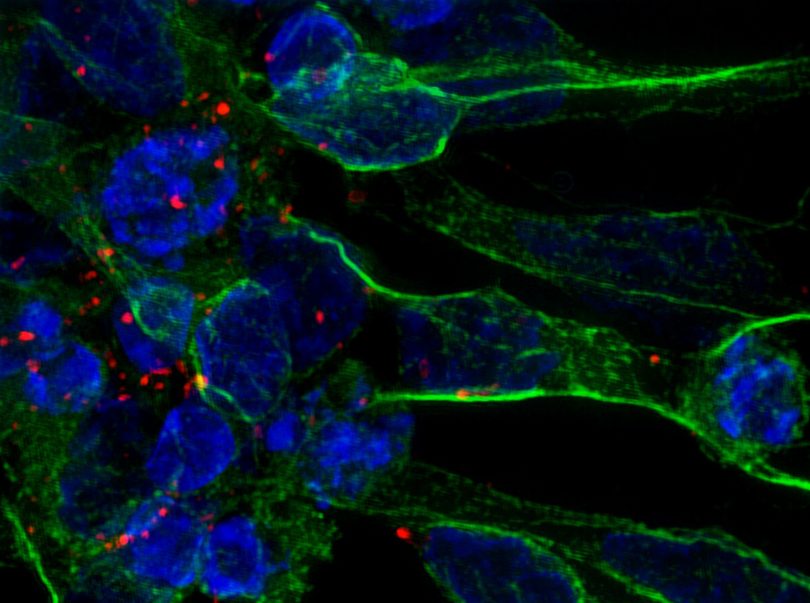
Exosomes under a microscope

Exosomes, shown as small red punctate clusters, are taken up by neurons, shown as green cell extensions surrounding a blue nucleus. Credit: UGA

A team of researchers at the University of Georgia’s Regenerative Bioscience Center and ArunA Biomedical, a UGA startup company, have developed a new treatment for stroke that reduces brain damage and accelerates the brain’s natural healing tendencies in animal models. The team created a treatment called AB126 using extracellular vesicles (EV), fluid-filled structures known as exosomes, generated from human neural stem cells.

Fully able to cloak itself within the bloodstream, this type of regenerative EV therapy appears to be the most promising in overcoming the limitations of many cell therapies-with the ability for exosomes to carry and deliver m...

Read More

CRISPR-based Diagnostic Tool Advanced, Miniature Paper Test developed

This is a collection of SHERLOCK paper test strips. (Left) Unused paper strips. (Middle) Paper tests displaying a negative SHERLOCK readout. (Right) Paper tests displaying a positive SHERLOCK readout. Credit: Zhang lab, Broad Institute of MIT and Harvard

This is a collection of SHERLOCK paper test strips. (Left) Unused paper strips. (Middle) Paper tests displaying a negative SHERLOCK readout. (Right) Paper tests displaying a positive SHERLOCK readout. Credit: Zhang lab, Broad Institute of MIT and Harvard

100-fold greater sensitivity, ability to detect multiple targets at once, and other improvements provide more power for detecting genetic signatures. The team that first unveiled the rapid, inexpensive, highly sensitive CRISPR-based diagnostic tool called SHERLOCK has greatly enhanced the tool’s power, and has developed a miniature paper test that allows results to be seen with the naked eye – without the need for expensive equipment.

The SHERLOCK team developed a simple paper strip to display test results for a single genetic signature, b...

Read More

Newly Discovered Gene may Protect against Heart Disease

Tamer Sallam and Peter Tontonoz

UCLA researchers Tamer Sallam, left, and Peter Tontonoz expect that further exploration will lead to new insights into normal physiology as well as disease.

So-called ‘selfish’ gene acts to remove cholesterol from blood vessels. Scientists have identified a gene that may play a protective role in preventing heart disease. Their research revealed that the gene, called MeXis, acts within key cells inside clogged arteries to help remove excess cholesterol from blood vessels. Published in the journal Nature Medicine, the UCLA-led study in mice found that MeXis controls the expression of a protein that pumps cholesterol out of cells in the artery wall.

MeXis is an example of a “selfish” gene, one that is presumed to have no function because it does not make a protein product...

Read More