
Category Biology/Biotechnology

Natural Compound Coupled with Specific Gut Microbes may Prevent Severe Flu

Researchers at Washington University School of Medicine in St. Louis have found that a particular gut microbe can prevent severe flu infections in mice, likely by breaking down naturally occurring compounds -- called flavonoids -- commonly found in foods such as black tea, red wine and blueberries. Credit: © taa22 / Fotolia

Researchers at Washington University School of Medicine in St. Louis have found that a particular gut microbe can prevent severe flu infections in mice, likely by breaking down naturally occurring compounds — called flavonoids — commonly found in foods such as black tea, red wine and blueberries. Credit: © taa22 / Fotolia

Natural Compound Coupled with Specific Gut Microbes may Prevent Severe Flu

A particular gut microbe can prevent severe flu infections in mice, likely by breaking down naturally occurring compounds – called flavonoids – commonly found in foods such as black tea, red wine and blueberries. The research in mice by scientists at Washington University School of Medicine in St...

Read More
Brain ‘Switch’ tells Body to Burn Fat After a Meal

Highlights •Diurnal changes in hypothalamic TCPTP coordinate feeding with energy expenditure •Feeding represses hypothalamic TCPTP to increase energy expenditure •TCPTP inhibits insulin signaling in AgRP neurons to repress energy expenditure •Insulin signaling in AgRP neurons increases the browning of white fat

Highlights
•Diurnal changes in hypothalamic TCPTP coordinate feeding with energy expenditure
•Feeding represses hypothalamic TCPTP to increase energy expenditure
•TCPTP inhibits insulin signaling in AgRP neurons to repress energy expenditure
•Insulin signaling in AgRP neurons increases the browning of white fat

Scientists at Monash University’s Biomedicine Discovery Institute have found a mechanism by which the brain coordinates feeding with energy expenditure, solving a puzzle that has previously eluded researchers and offering a potential novel target for the treatment of obesity. Obesity – a major risk factor for many diseases including cardiovascular disease, Type 2 diabetes, liver disease and several cancers – is at epidemic levels in Australia.

Researchers from the Metabolic D...

Read More

It’s not just what you Eat, it’s what’s Eating You

Aging Study, C. elegans, Worms

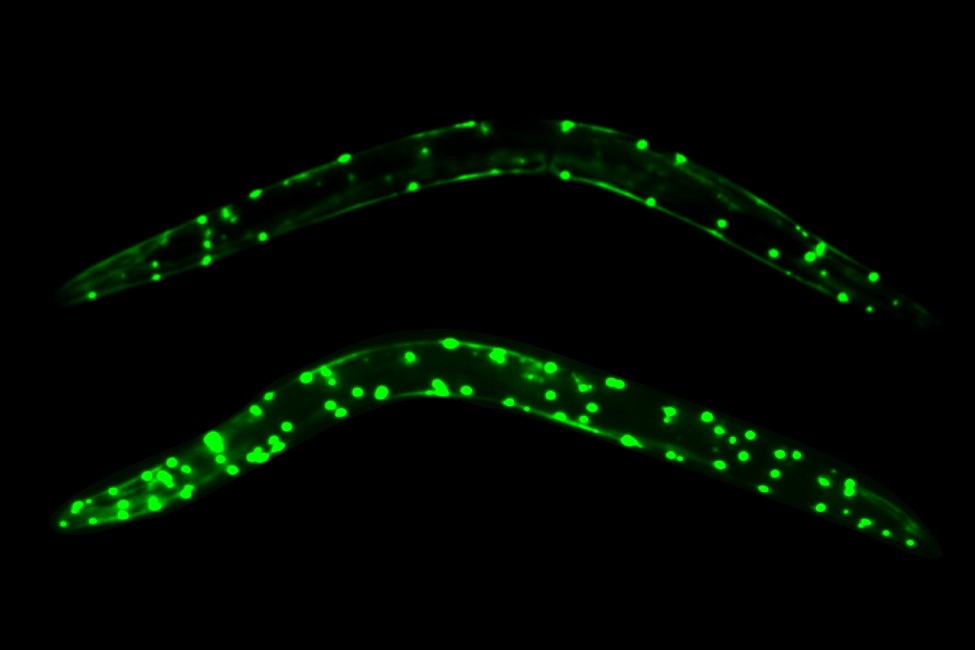
With disease, when you decrease autophagy (a garbage disposal-like process where cells “eat” debris they produce) the disease process is exacerbated and when you increase it you get the opposite effect. Aggregation of polyglutamine expansion protein is a hallmark of Huntington’s disease and other neurodegenerative diseases. The picture shows that there are more aggregates of green fluorescence protein-labelled polyglutamine expansion protein in autophagy deficient worms (bottom) compared to normal worms (top).

Restricting how much you eat without starving has been shown to robustly extend lifespan in more than 20 species of animals including primates. How this works is still unclear...

Read More

Cicada Wings may Inspire new Surface Technologies

The wings of Megatibicen dorsatus, a prairie-dwelling cicada, are helping engineers design water-repellent surfaces. Credit: Photo courtesy Catherine Dana

The wings of Megatibicen dorsatus, a prairie-dwelling cicada, are helping engineers design water-repellent surfaces. Credit: Photo courtesy Catherine Dana

Researchers are looking to insects – specifically cicadas – for insight into the design of artificial surfaces with de-icing, self-cleaning and anti-fogging abilities.Their wings allow cicadas to fly, of course, but they also are good at repelling water – a condition that humans can appreciate, too. “Our work with cicadas is letting us explore a field called bioinspiration,” said Nenad Miljkovic, a University of Illinois mechanical science and engineering professor who co-led a new study of cicada wings.

“We are learning as much as we can from the natural design of cicada wings to engineer artificial objects that are useful to humans...

Read More