Category Biology/Biotechnology

Embryonic Gene Nanog Reverses Aging in Adult Stem Cells

The images above show, from left to right, functioning stem cells, stem cells no longer functioning due to Hutchinson-Gilford Progeria syndrome (HGPS), and stem cells previously not functioning due to HGPS that were rebooted by the embryonic stem cell gene Nanog. Credit: Stelios Andreadis.

The images above show, from left to right, functioning stem cells, stem cells no longer functioning due to Hutchinson-Gilford Progeria syndrome (HGPS), and stem cells previously not functioning due to HGPS that were rebooted by the embryonic stem cell gene Nanog. Credit: Stelios Andreadis.

The discovery may lead to treatments for atherosclerosis, osteoporosis, Alzheimer’s and other age-related disorders. The fountain of youth may reside in an embryonic stem cell gene named Nanog. In a series of experiments at the University at Buffalo, the gene kicked into action dormant cellular processes that are key to preventing weak bones, clogged arteries and other telltale signs of growing old...

Read More

Parasite Proteins prompt Immune System to Fight off Ovarian Tumors in mice

Parasite proteins prompt immune system to fight off ovarian tumors in mice

This image shows an ordered string or ribbon of Toxoplasma parasites with their nuclei shown in blue and the parasite rhoptries that secrete the effectors shown in green. Credit: Barbara Fox and colleagues

Scientists identified the specific proteins secreted by the parasite Toxoplasma gondii that cause the immune system in mice to attack established ovarian tumors. A promising strategy in the fight against cancer is to use the body’s own immune system to remove tumor cells, but due to a phenomenon called immune tolerance, the immune system has a difficult time identifying which cells to attack. In the new study, scientists built upon previous discoveries that a safe, non-reproducing vaccine strain of T...

Read More

Vaccine Strategy Induces Antibodies that can Target Multiple Influenza Viruses

This is an X-ray crystal structure image of one of the new signature antibodies. The blue ribbons show antibody 16.a.26 Fab regions. The grey ribbons represent HA of influenza strain 1968 Hong Kong. The green spheres are glycans. Credit: NIAID VRC

This is an X-ray crystal structure image of one of the new signature antibodies. The blue ribbons show antibody 16.a.26 Fab regions. The grey ribbons represent HA of influenza strain 1968 Hong Kong. The green spheres are glycans. Credit: NIAID VRC

Scientists have identified 3 types of vaccine-induced antibodies that can neutralize diverse strains of influenza virus that infect humans. It will help guide development of a universal influenza vaccine, according to investigators at the National Institute of Allergy and Infectious Diseases (NIAID), and the National Human Genome Research Institute (NHGRI), both part of the National Institutes of Health (NIH), and collaborators who conducted the research.

The seasonal influenza vaccine must be updated each year because flu viruses mutate...

Read More

Plant Compounds give 1,2 Punch to Colon Cancer

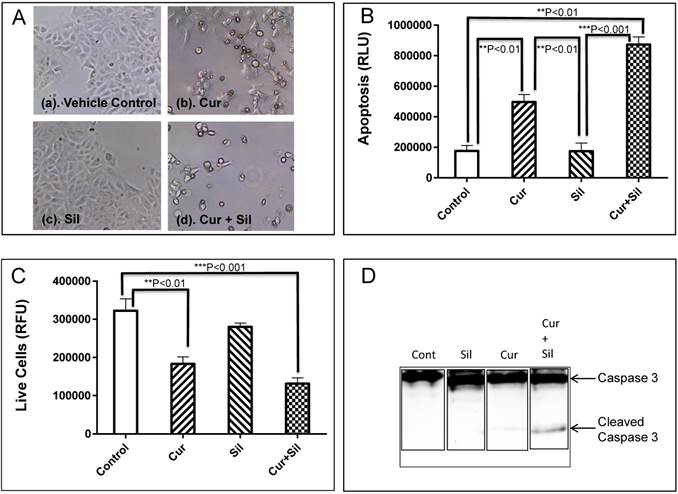
Increased apoptosis was induced by curcumin + silymarin combination treatment of DLD-1 colon cancer cells.

Increased apoptosis was induced by curcumin + silymarin combination treatment of DLD-1 colon cancer cells.

The combination of 2 plant compounds that have medicinal properties – curcumin and silymarin – holds promise in treating colon cancer, according Saint Louis University research published in the June 23 issue of the Journal of Cancer. Curcumin is the active ingredient in the spice turmeric, which is present in spicy curry dishes, and silymarin is a component of milk thistle, which has been used to treat liver disease.

The researchers and their students studied a line of colon cancer cells in a laboratory model. They found treating the cells initially with curcumin, then with silymarin was more effective in fighting cancer than treating the cells with either phytochemical alone.

“The co...

Read More