
Category Biology/Biotechnology

Vital Nutrient has key role in keeping Body Clocks Running on time

9-magnesium-foods

An essential mineral in our diets has an unexpected role in helping living things remain adapted to the rhythms of night and day. Mg – a nutrient found in many foods – helps control how cells keep their own form of time to cope with the natural environmental cycle of day and night. The discovery in cells is expected to be linked to whole body clocks which influence circadian rhythms – of sleeping and waking, hormone release, body temperature and other important bodily functions in people.

The surprising discovery may aid the development of chronotherapy – Rx scheduled according to time of day – in people, and development of new crop varieties with increased yields or adjustable harvesting seasons...

Read More
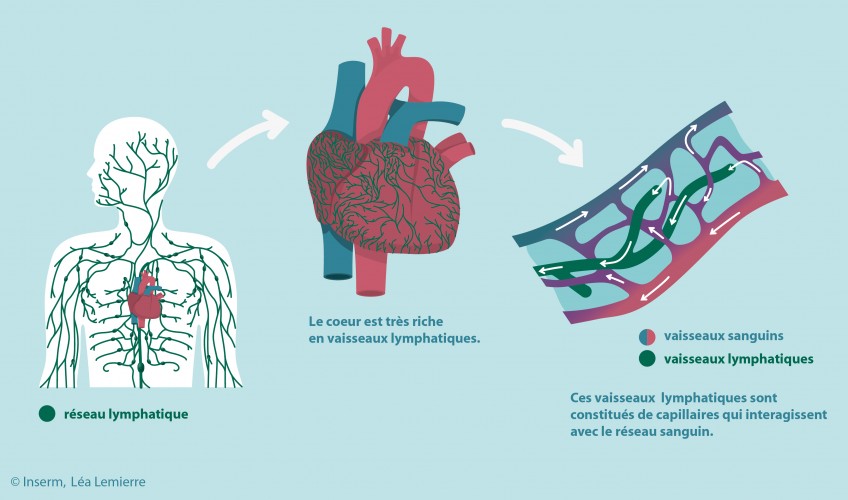
An Invisible System to Rescue the Heart

The human lymphatic system © Inserm, Léa Lemierre

The human lymphatic system © Inserm, Léa Lemierre

In a new heart failure study, the blood system is being explored for the purpose of improving heart function. The study has revealed the potential of a secondary system that had previously received scant attention.

The researchers analysed the heart lymphatic system in an animal model which was highly impaired following a myocardial infarction. Using a biotherapy based on the injection of innovative microparticles, they succeeded in regenerating lymphatic vessels in a targeted manner. This treatment promotes lymphatic drainage, thus limiting post-infarct oedema and inflammation. Heart function is thereby improved.

 Lymphatic vessels in the rat heart visible in red by immunofluorescence © Inserm, Ebba Brakenhielm

Lymphatic vessels in the rat heart visible in red by immunofluorescence © Inserm, Ebba Brakenhielm

When the heart is no longe...

Read More

New Insights into How the Brain Adapts to Stress

Anatomy of hippocampal circuit into which new neurons integrate. Neurogenesis is localized to the dentate gyrus (DG) region, where only excitatory granule cells are continually produced throughout life. The DG has a complex local circuitry, with both inhibitory interneurons and excitatory feedback neurons (mossy cells) participating in the network's behavior. Granule cells in the DG project to the CA3 region, which in addition to a robust recurrent connection then projects to the CA1 region. The CA1 then projects back to the entorhinal cortex and subiculum regions, closing the “hippocampal loop.”

Anatomy of hippocampal circuit into which new neurons integrate. Neurogenesis is localized to the dentate gyrus (DG) region, where only excitatory granule cells are continually produced throughout life. The DG has a complex local circuitry, with both inhibitory interneurons and excitatory feedback neurons (mossy cells) participating in the network’s behavior. Granule cells in the DG project to the CA3 region, which in addition to a robust recurrent connection then projects to the CA1 region. The CA1 then projects back to the entorhinal cortex and subiculum regions, closing the “hippocampal loop.”

Stressful events result in epigenetic modifications within immediate-early genes in hippocampus neurons...

Read More

Clean Energy generated using Bacteria-Powered Solar panel

These are nine biological-solar (bio-solar) cells connected into a bio-solar panel. The panel has generated the most wattage of any existing small-scale bio-solar cells - 5.59 microwatts Credit: Seokheun "Sean" Choi

These are nine biological-solar (bio-solar) cells connected into a bio-solar panel. The panel has generated the most wattage of any existing small-scale bio-solar cells – 5.59 microwatts Credit: Seokheun “Sean” Choi

For the 1st time ever, researchers connected 9 biological-solar (bio-solar) cells into a bio-solar panel. Then they continuously produced electricity from the panel and generated the most wattage of any existing small-scale bio-solar cells – 5.59 microwatts. “Once a functional bio-solar panel becomes available, it could become a permanent power source for supplying long-term power for small, wireless telemetry systems as well as wireless sensors used at remote sites where frequent battery replacement is impractical,” said Assistant Professor Seokheun “Sean” Choi.

“This research...

Read More