Category Biology/Biotechnology

High Serum Omega-6 Polyunsaturated fatty acid concentrations linked to lower risk of type 2 Diabetes

Omega-6 unsaturated fatty acid (linoleic acid, LA),

Omega-6 unsaturated fatty acid (linoleic acid, LA),

A new study from the University of Eastern Finland shows that high serum omega-6 polyunsaturated fatty acid concentrations are linked to a significantly reduced risk of type 2 diabetes. The findings were published in the American Journal of Clinical Nutrition.

It has been speculated that a high intake of omega-6 polyunsaturated fatty acids may increase the risk of several chronic diseases, as these fatty acids have been suggested to promote low-grade inflammation, among other things. However, studies conducted on humans have not established a link between even a high intake of omega-6 fatty acids and inflammation. Furthermore, omega-6 fatty acids have beneficial effects on, for example, glucose metabolism...

Read More

Modified Maggots could help human Wound Healing

Heat inducible expression of pdgf-b mRNA in transgenic PD-1 L. sericata. a Schematic of heat-inducible pdgf-b gene construct in a piggyBac transformation vector with a ZsGreen marker gene. b Genomic DNA sequence adjacent to the 5' pBac end in the PD-1 transgenic line. The TTAA insertion site is underlined. c RT-PCR amplification of pdgf-b on total RNA obtained from first instar PD-1 larvae that had been given a heat shock (+HS) or no heat shock (-HS)

Heat inducible expression of pdgf-b mRNA in transgenic PD-1 L. sericata. a Schematic of heat-inducible pdgf-b gene construct in a piggyBac transformation vector with a ZsGreen marker gene. b Genomic DNA sequence adjacent to the 5′ pBac end in the PD-1 transgenic line. The TTAA insertion site is underlined. c RT-PCR amplification of pdgf-b on total RNA obtained from first instar PD-1 larvae that had been given a heat shock (+HS) or no heat shock (-HS)

Genetically engineered green bottle fly larvae (Lucilia sericata) can produce and secrete a human growth factor – a molecule that helps promote cell growth and wound healing...

Read More

Sleep Tight, Fruit Fly: Scientists find Gene responsible for Sleep Deprivation and Metabolic Disorders

Man unable to sleep (stock image). Acute sleep loss in humans is associated with increased appetite and insulin insensitivity, while chronically sleep-deprived individuals are more likely to develop obesity, metabolic syndrome, type 2 diabetes, and cardiovascular disease. Credit: © Focus Pocus LTD / Fotolia

Man unable to sleep (stock image). Acute sleep loss in humans is associated with increased appetite and insulin insensitivity, while chronically sleep-deprived individuals are more likely to develop obesity, metabolic syndrome, type 2 diabetes, and cardiovascular disease. Credit: © Focus Pocus LTD / Fotolia

A new study is the first to identify that a conserved gene – translin – works as a modulator of sleep in response to metabolic changes. The sleep habits of fruit flies are remarkably similar to humans. They get most of their sleep at night, certain drugs and stimulants like caffeine can negatively affect their sleep, and if they get a lousy night’s sleep it can even affect their memory performance.

When fruit flies are hungry, they sleep less because they will sacrifice sleep for their...

Read More

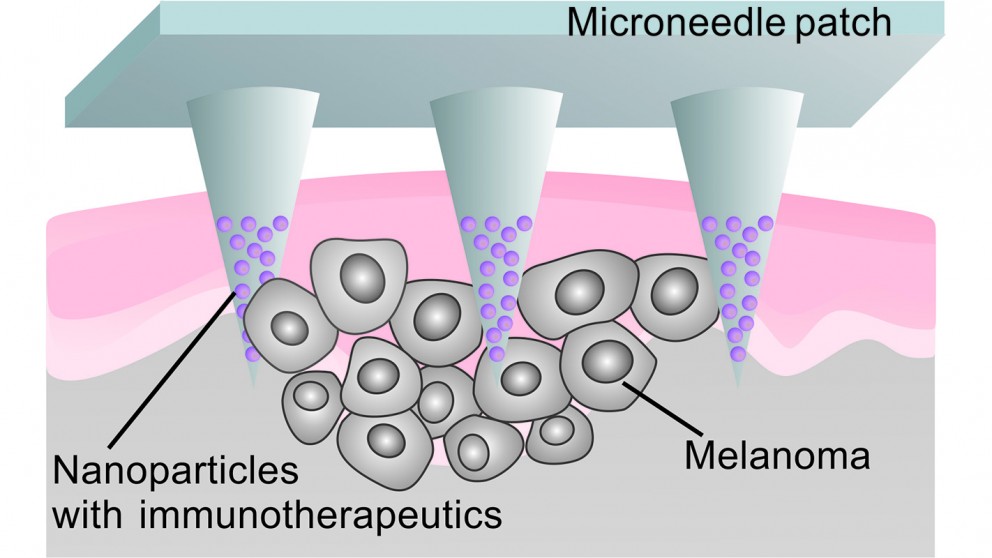
Microneedle Patch delivers localized Cancer Immunotherapy to Melanoma

Enhanced Cancer Immunotherapy by Microneedle Patch-Assisted Delivery of Anti-PD1 Antibody.

Enhanced Cancer Immunotherapy by Microneedle Patch-Assisted Delivery of Anti-PD1 Antibody.

Biomedical engineering researchers have developed a technique that uses a patch embedded with microneedles to deliver cancer immunotherapy treatment directly to the site of melanoma skin cancer. In animal studies, the technique more effectively targeted melanoma than other immunotherapy treatments.

More than 67,000 people in the US were diagnosed with melanoma in 2012 alone – the most recent year for which data are available. If caught early, melanoma patients have a 5yr survival rate of more than 98%. That number dips to 16.6% if the cancer has metastasized before diagnosis and treatment.

Cancer cells can trick T cells...

Read More