Category Biology/Biotechnology

Is Autism hiding in a Fold of the Brain?

Mapping of cortical fold depths. In green: sulcal pits (the deepest point of each fold). In red: localization of the abnormality detected in autistic children (in Broca's area). Credit: © SCALP team / INT

Mapping of cortical fold depths. In green: sulcal pits (the deepest point of each fold). In red: localization of the abnormality detected in autistic children (in Broca’s area). Credit: © SCALP team / INT

Scientists have identified a cerebral marker specific to autism that can be detected by MRI present from 2 yo. The abnormality consists in a less deep fold in Broca’s area, a region of the brain specialized in language and communication, functions that are impaired in autistic patients. This discovery may assist in the earlier diagnosis and management of these patients...

Read More

Life-Extending Hormone Bolsters the Body’s Immune Function

Life-extending hormone bolsters the body's immune function. Credit: Yale University

Life-extending hormone bolsters the body’s immune function. Credit: Yale University

A hormone that extends lifespan in mice by 40% is produced by specialized cells in the thymus gland, according to a new study by Yale School of Medicine researchers. The team also found that increasing the levels of this hormone, called FGF21, protects against the loss of immune function that comes with age. The study’s findings have future implications for improving immune function in the elderly, for obesity, and for illnesses such as cancer and type-2 diabetes.

When functioning normally, the thymus produces new T cells for the immune system, but with age, the thymus becomes fatty and loses its ability to produce new T cells...

Read More

Exercise Associated With Prevention of Low Back Pain

LBP

Exercise, alone or in combination with education, may reduce the risk of low back pain, a meta-analysis and review of medical literature suggests. Daniel Steffens, Ph.D., of the University of Sydney, Australia, and coauthors identified 23 published reports (on 21 different randomized clinical trials including 30,850 participants) that met their inclusion criteria.

Moderate-quality evidence suggests exercise combined with education reduces the risk of an episode of low back pain and low- to very low-quality evidence suggests exercise alone may reduce the risk of both a low back pain episode and the use of sick leave. Other interventions, including education alone, back belts and shoe inserts do not appear to be associated with the prevention of low back pain.

“Although our review found evi...

Read More

Painkiller Tapped to become future Cancer-Killer

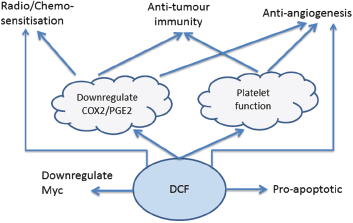
Cheap Diclofenac has anti-cancer properties. Like other drugs examined by the ReDO project, diclofenac is cheap and readily accessible — and as it’s already present in many medicine cabinets, it has been carefully tested. The Repurposing Drugs in Oncology (ReDO) project, an international collaboration between the Anticancer Fund, Belgium, and US based GlobalCures, finds that existing and widely-used non-cancer drugs may represent a relatively untapped source of novel therapies for cancer.

Diclofenac is a well-known and widely used non-steroidal anti-inflammatory drug (NSAID) used to treat pain in conditions such as rheumatoid arthritis, as well as migraine, fever, acute gout and post-operative pain.

NSAIDs have shown promise in cancer prevention, but there is now emerging evidence that su...

Read More