
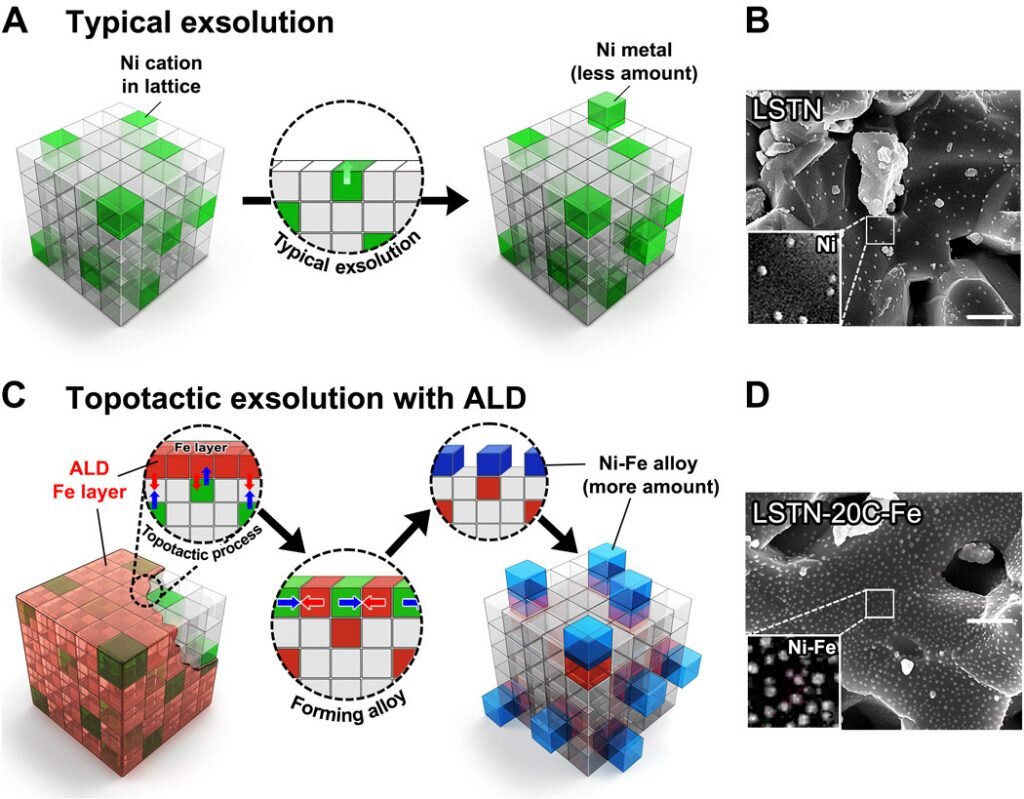
A new nanocatalyst that recycles major greenhouse gases, such as carbon dioxide (CO2) and methane (CH4), into highly value-added hydrogen (H2) gas has been developed...
Read More

A new nanocatalyst that recycles major greenhouse gases, such as carbon dioxide (CO2) and methane (CH4), into highly value-added hydrogen (H2) gas has been developed...
Read More
October 24, 2020,
 Technology/Electronics, Chemistry/Nanotechnology, Physics

POSTECH Professor Byoungwoo Kang’s research team uncovers a new Li-ion battery electrode material that can achieve high-energy density and high power capability per volume without reducing particle size.
With Telsa in the lead, the electric vehicle market is growing around the world. Unlike conventional cars that use internal combustion engines, electric cars are solely powered by lithium ion batteries, so the battery performance defines the car’s overall performance...
Read More
October 21, 2020,
Technology/Electronics, Chemistry/Nanotechnology
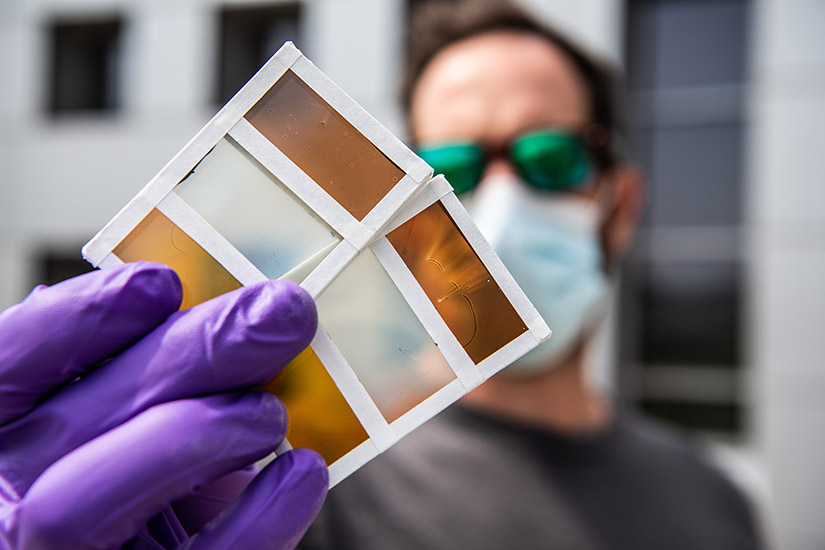
Research developments create faster changes at lower temperatures, more colors. Scientists at the U.S. Department of Energy’s National Renewable Energy Laboratory (NREL) report a breakthrough in developing a next-generation thermochromic window that not only reduces the need for air conditioning but simultaneously generates electricity.
Heat generated by sunlight shining through windows is the single largest contributor to the need for air conditioning and cooling in buildings. Because residential and commercial buildings use 74% of all electricity and 39% of all energy in the United States, the shading effect from tinting windows helps buildings use less energy.
The...
Read More
October 17, 2020,
Technology/Electronics, Chemistry/Nanotechnology

A world-first study by Monash University engineers has demonstrated improvements in the fatigue life of high strength aluminium alloys by 25 times — a significant outcome for the transport manufacturing industry.
Published today (Thursday 15 October 2020) in the journal Nature Communications, researchers demonstrated that the poor fatigue performance of high strength aluminium alloys was because of weak links called ‘precipitate free zones’ (PFZs).
The team led by Professor Christopher Hutchinson, a Professor of Materials Science and Engineering at Monash University in Australia, was able to make aluminium alloy microstructures that can heal the weak links while in operation (i.e...
Read More
Recent Comments