This device, developed by a team from the University of Cambridge, is a significant step toward achieving artificial photosynthesis – a process mimicking the ability of plants to convert sunlight into energy. It is based on an advanced ‘photosheet’ technology and converts sunlight, carbon dioxide and water into oxygen and formic acid – a storable fuel that can be either be used directly or be converted into hydrogen. Credit: University of Cambridge
Researchers have developed a standalone device that converts sunlight, carbon dioxide and water into a carbon-neutral fuel, without requiring any additional components or electricity.
The device, developed by a team from the University of Cambridge, is a significant step toward achieving artificial photosynthesis—a process mimicking the a...
Simulated mountain and valley landscape created by buckling in graphene. The bright linked dots are electrons that have slowed down and interact strongly. Image: Yuhang Jiang
Cooled graphene mimics effect of enormous magnetic fields that would benefit electronics. Graphene, an extremely thin two-dimensional layer of the graphite used in pencils, buckles when cooled while attached to a flat surface, resulting in beautiful pucker patterns that could benefit the search for novel quantum materials and superconductors, according to Rutgers-led research in the journal Nature.
Quantum materials host strongly interacting electrons with special properties, such as entangled trajectories, that could provide building blocks for super-fast quantum computers...
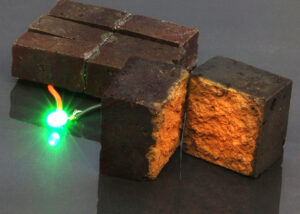
Chemists in Arts & Sciences have developed a method to make or modify “smart bricks” that can store energy until required for powering devices. (Image: D’Arcy laboratory)
Red bricks – some of the world’s cheapest and most familiar building materials – can be converted into energy storage units that can be charged to hold electricity, like a battery, according to new research from Washington University in St. Louis.
Brick has been used in walls and buildings for thousands of years, but rarely has been found fit for any other use. Now, chemists in Arts & Sciences have developed a method to make or modify “smart bricks” that can store energy until required for powering devices. A proof-of-concept published Aug...
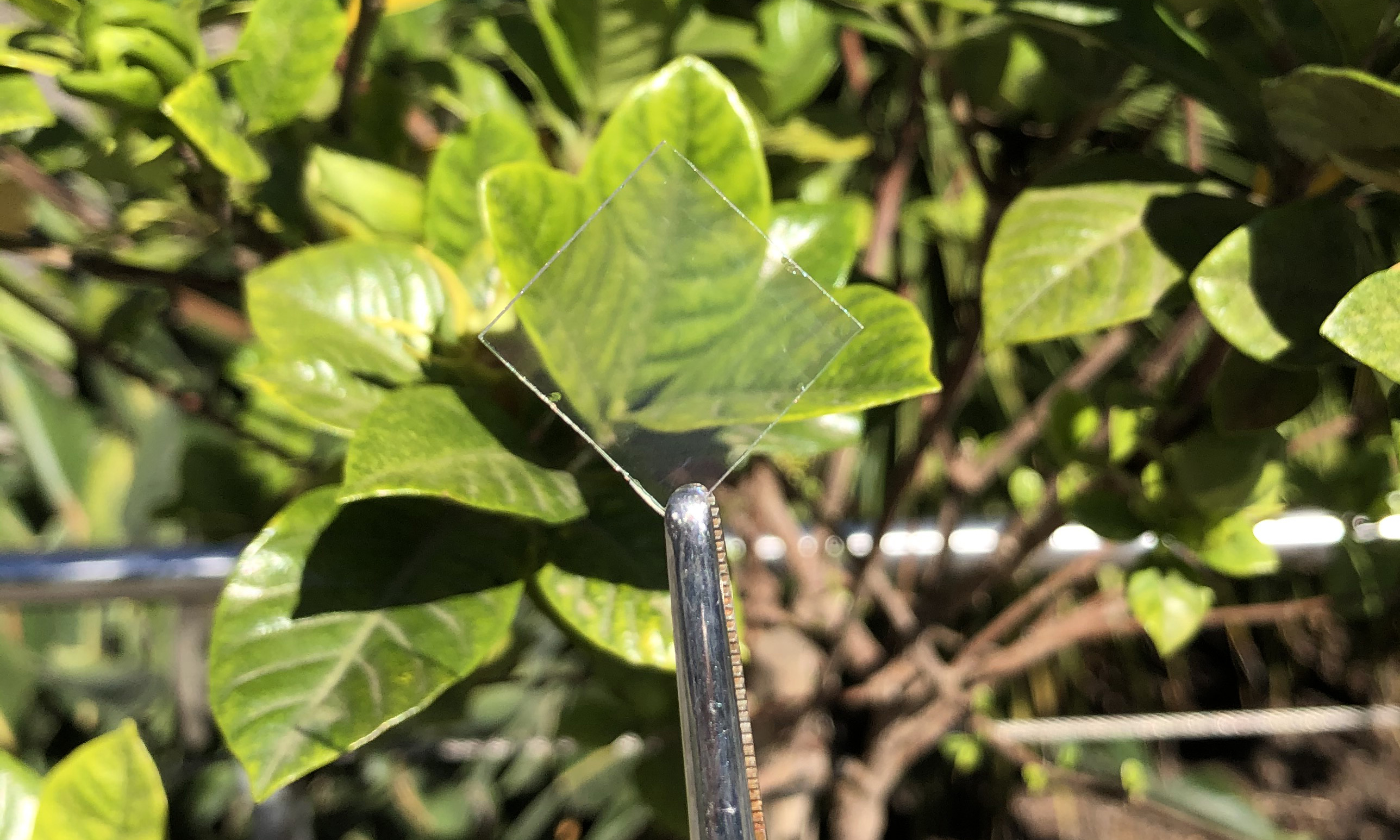
The ultra-thin clear coatings are made with a new spray-on method that is fast, cost-effective and scalable.
New transparent spray-on coatings are conductive, cost-effective and rival the performance of current industry standards. A simple method for making clear coatings that can block heat and conduct electricity could radically cut the cost of energy-saving smart windows and heat-repelling glass.
The spray-on coatings developed by researchers at RMIT University in Melbourne, Australia, are ultra-thin, cost-effective and rival the performance of current industry standards for transparent electrodes.
Combining the best properties of glass and metals in a single component, a transparent electrode is a highly conductive clear coating that allows visible light through.






Recent Comments