

Carbon-hydrogen bonds in hydrocarbon molecules have resisted functionalization until now...
Read More

May 26, 2020,
 Chemistry/Nanotechnology
Carbon-hydrogen bonds in hydrocarbon molecules have resisted functionalization until now...
Read More
May 21, 2020,
Chemistry/Nanotechnology

Scientists from Hong Kong Baptist University (HKBU) have developed a novel technique that can produce pure therapeutic drugs without the associated side effects.
The approach, which uses a nanostructure fabrication device, can manipulate the chirality of drug molecules by controlling the direction a substrate is rotated within the device, thus eliminating the possible side effects that can arise when people take drugs containing molecules with the incorrect chirality.
Published in the international scientific journal Nature Chemistry, the research findings pave the way towards the mass production of purer, cheaper and ...
Read More
May 14, 2020,
Physics, Health/Medical, Chemistry/Nanotechnology, Biology/Biotechnology
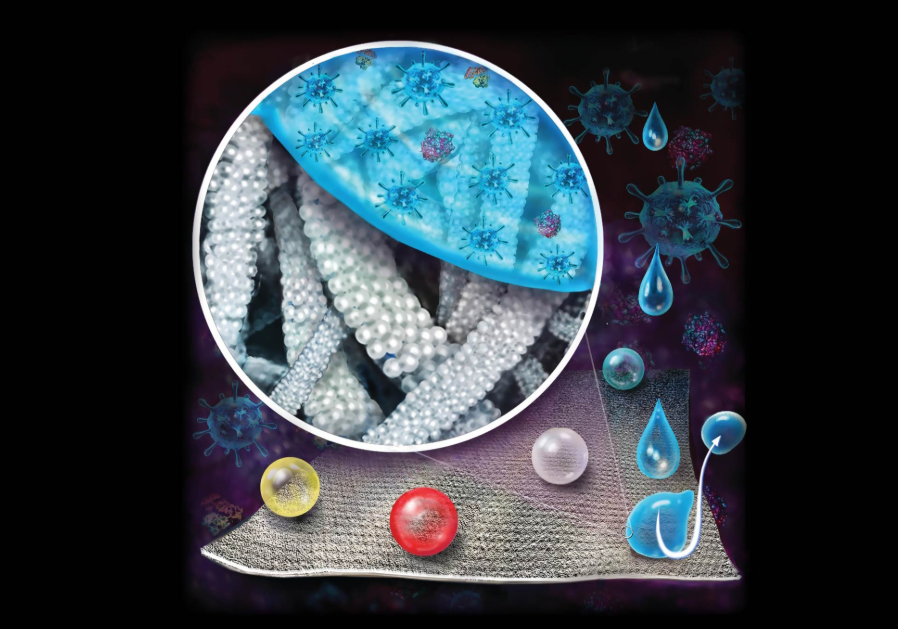
New research could lead to safely reusable PPE. Researchers have created a textile coating that can not only repel liquids like blood and saliva but can also prevent viruses from adhering to the surface. Masks, gowns, and other personal protective equipment (PPE) are essential for protecting healthcare workers. However, the textiles and materials used in such items can absorb and carry viruses and bacteria, inadvertently spreading the disease the wearer sought to contain.
When the coronavirus spread amongst healthcare professionals and left PPE in short supply, finding a way to provide better protection while allowing for the safe reuse of these items became paramount.
Research from the LAMP Lab at the Universit...
Read More
May 10, 2020,
Physics, Technology/Electronics, Chemistry/Nanotechnology

Computers, mobile phones and all other electronic devices contain thousands of transistors, linked together by thin films of metal. Scientists at Linköping University, Sweden, have developed a method that can use the electrons in a plasma to produce these films.
The processors used in today’s computers and phones consist of billions of tiny transistors connected by thin metallic films. Scientists at Linköping University, LiU, have now shown that it is possible to create thin films of metals by allowing the free electrons in a plasma take an active role...
Read More
Recent Comments