Category Chemistry/Nanotechnology

Goodyear’s Biodegradable Concept Tire Regenerates its Tread

Credit: Goodyear

Goodyear recently unveiled a tire concept that could revolutionize the auto industry. Dubbed reCharge, this concept tire would never require replacements or rotations because it regenerates its tread as needed.

In addition to eliminating flat tires and the need to check tire pressure, the concept’s regeneration features would be customized to the driving habits and conditions of individual motorists courtesy of a combination of AI and telemetry data.

The crux of reCharge’s regeneration capabilities is a biodegradable, reloadable liquid compound that’s recharged by capsules. The compound is fortified by a mixture of dandelion rubber and fibers similar to spider silk, known to be one of the toughest raw materials found in nature...

Read More

New DNA Origami Motor Breaks Speed Record for Nano Machines

Sixteen strands of DNA, stacked four-by-four, form the beam-shaped “chassis” of the DNA motor (in gray). Bits of DNA (in green) protrude from the chassis like little feet. The motor is fueled by RNA laid on a track. The RNA binds with the DNA feet on the bottom face of the chassis. An enzyme targeting bound RNA then destroys these RNA molecules (grey and red). The process repeats, as more RNA pulls the DNA feet, tipping the chassis forward, causing it to roll. (Stephanie Jones, bio-illustrations.com)

Scientists pave way for ‘nano bots’ to one day diagnose and treat disease. Through a technique known as DNA origami, scientists have created the fastest, most persistent DNA nano motor yet...

Read More

Engineers Zap and Unstick Underwater Smart Glue

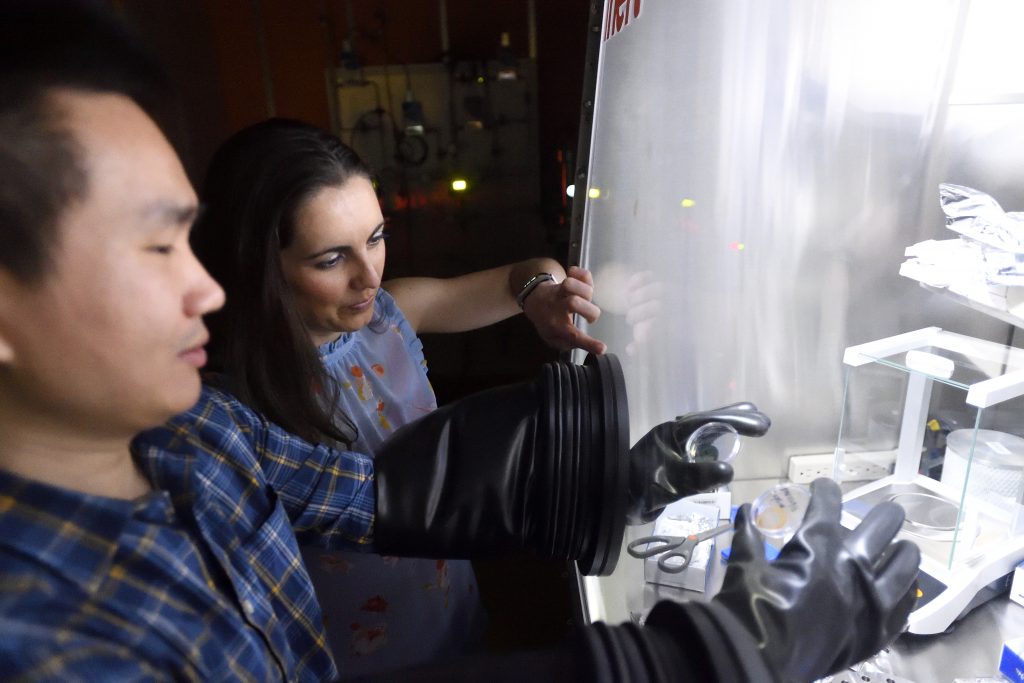
Biomedical engineers Bruce Lee and Saleh Akram Bhuiyan test catechol-containing adhesives to make underwater smart glue.

With a small zap of electricity, biomedical engineers at Michigan Technological University take an underwater smart glue prototype from sticky to not in seven seconds.

Turning adhesion on and off is what makes a glue smart. It’s one thing to do this in the open air and quite another under water. Inspired by nature, catechols are synthetic compounds that mimic the -but-still- proteins secreted by mussels and offer promise for smart adhesives that work in water. The technology could help with underwater glue, wound dressings, prosthetic attachments or even making car parts and in other manufacturing.

Bruce Lee, associate professor of biomedical engineering at M...

Read More

Potassium Metal Battery emerges as a rival to Lithium-ion technology

Rensselaer team finds solution to persistent problem facing potassium metal batteries

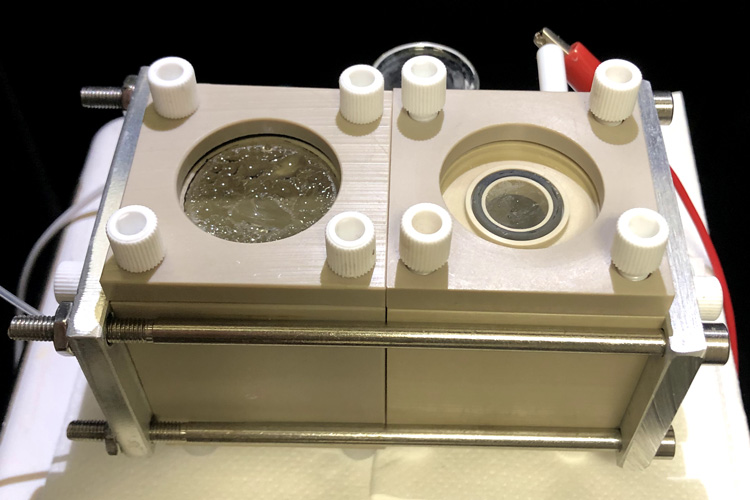
Rensselaer team finds solution to persistent problem facing potassium-metal batteries. Researchers demonstrate how they can overcome dendrites to create a metal battery that performs nearly as well as a lithium-ion battery, but relies on potassium – a much more abundant and less expensive element.

If you were to look inside a lithium-ion battery you’d typically find a cathode made of lithium cobalt oxide and an anode made of graphite. During charging and discharging, lithium ions flow back and forth between these two electrodes.

In this setup, if researchers were to simply replace lithium cobalt oxide with potassium cobalt oxide, performance would drop...

Read More