
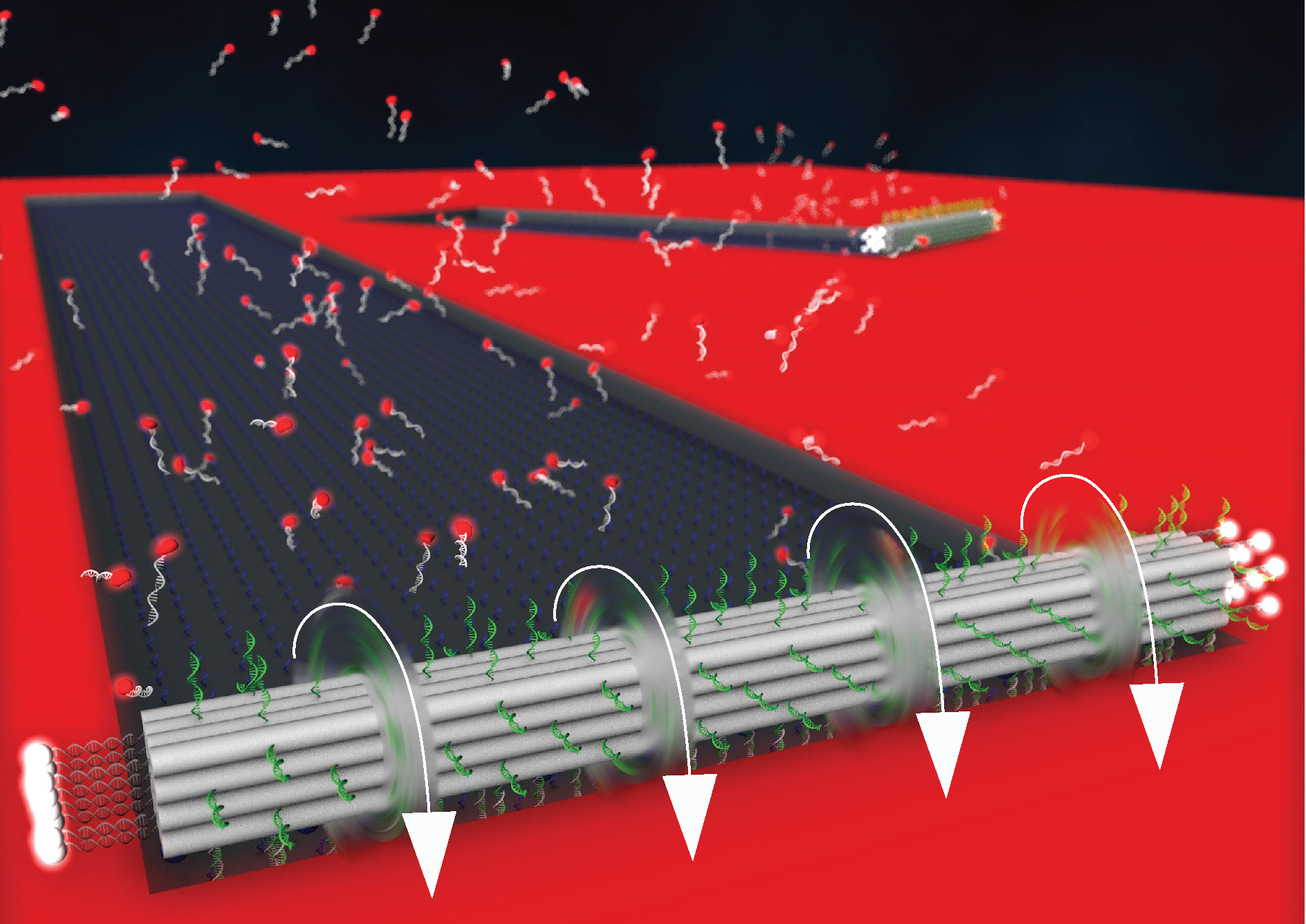
Scientists pave way for ‘nano bots’ to one day diagnose and treat disease. Through a technique known as DNA origami, scientists have created the fastest, most persistent DNA nano motor yet...
Read More

March 6, 2020,
 Health/Medical, Chemistry/Nanotechnology, Biology/Biotechnology
Scientists pave way for ‘nano bots’ to one day diagnose and treat disease. Through a technique known as DNA origami, scientists have created the fastest, most persistent DNA nano motor yet...
Read More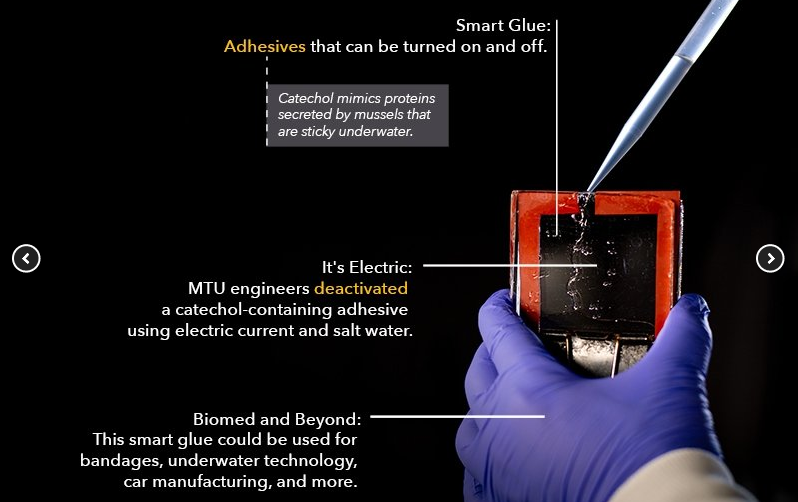
With a small zap of electricity, biomedical engineers at Michigan Technological University take an underwater smart glue prototype from sticky to not in seven seconds.
Turning adhesion on and off is what makes a glue smart. It’s one thing to do this in the open air and quite another under water. Inspired by nature, catechols are synthetic compounds that mimic the -but-still- proteins secreted by mussels and offer promise for smart adhesives that work in water. The technology could help with underwater glue, wound dressings, prosthetic attachments or even making car parts and in other manufacturing.
Bruce Lee, associate professor of biomedical engineering at M...
Read More
March 3, 2020,
Technology/Electronics, Chemistry/Nanotechnology

Rensselaer team finds solution to persistent problem facing potassium-metal batteries. Researchers demonstrate how they can overcome dendrites to create a metal battery that performs nearly as well as a lithium-ion battery, but relies on potassium – a much more abundant and less expensive element.
If you were to look inside a lithium-ion battery you’d typically find a cathode made of lithium cobalt oxide and an anode made of graphite. During charging and discharging, lithium ions flow back and forth between these two electrodes.
In this setup, if researchers were to simply replace lithium cobalt oxide with potassium cobalt oxide, performance would drop...
Read More
February 19, 2020,
Physics, Technology/Electronics, Chemistry/Nanotechnology
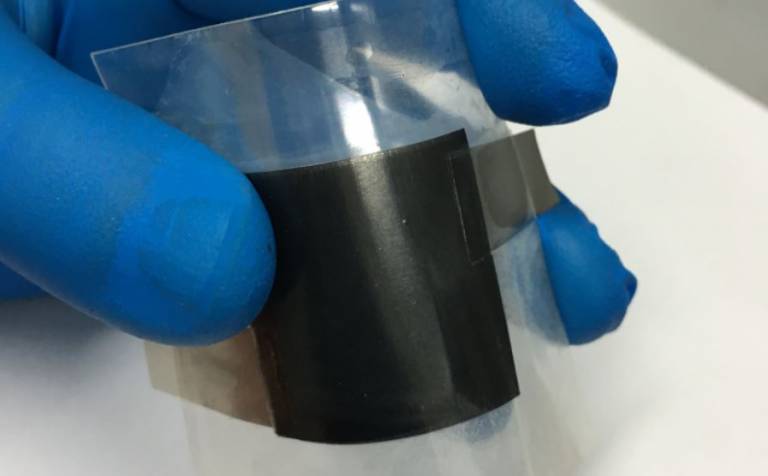
A new bendable supercapacitor made from graphene, which charges quickly and safely stores a record-high level of energy for use over a long period, has been developed. While at the proof-of-concept stage, it shows enormous potential as a portable power supply in several practical applications including electric vehicles, phones and wearable technology.
The discovery, published today in Nature Energy, overcomes the issue faced by high-powered, fast-charging supercapacitors — that they usually cannot hold a large amount of energy in a small space.
First author of the study, Dr Zhuangnan Li (UCL Chemi...
Read More
Recent Comments