Category Chemistry/Nanotechnology

Nylon as a Building Block for transparent Electronic devices?

Transparent nylon could be an important building block for the development of transparent electronic circuits in the future

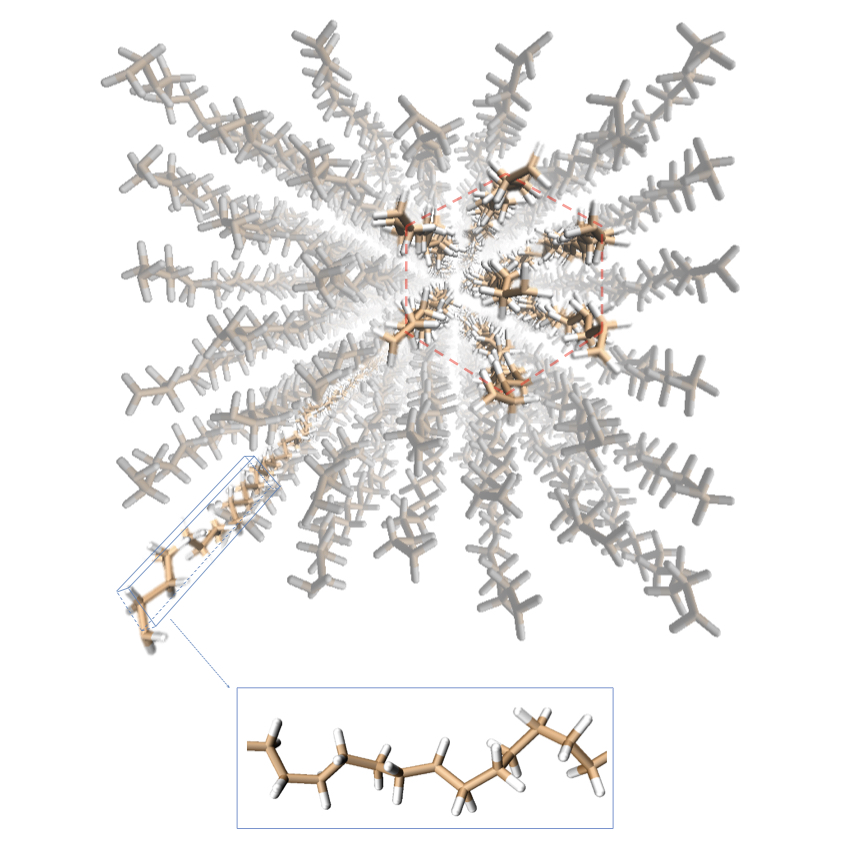
Scientists develop solution processable ferroelectric nylons. Scientists have solved a four decade long challenge of producing very thin nylon films that can be used for instance in electronic memory components. The thin nylon films are several 100 times thinner than human hair and could thus be attractive for applications in bendable electronic devices or for electronics in clothing.

As the microelectronic industry is now shifting toward wearable electronic gadgets and electronic (e-)textiles, the comprising electronic materials, such as ferroelectrics, should be integrated with our clothes...

Read More

Supercapacitors Turbocharged by Laxatives

Illustration of detergent-like ionic liquids on an electrode surfaceXianwen Mao/Massachusetts Institute of Technology

An international team of scientists, including a professor of chemistry from the University of Bristol, has worked out a way to improve energy storage devices called supercapacitors, by designing a new class of detergents chemically related to laxatives. Their paper, published in the journal Nature Materials, explains why these detergents, called ionic liquids, are better electrolytes than current materials and can improve supercapacitors.

Currently, aqueous and organic electrolytes are used, but more recently, researchers and manufacturers have been testing ionic liquids instead to boost performance...

Read More

In the future, this Electricity-Free Tech could help Cool Buildings in Metropolitan Areas

A radiative cooling device developed by UB researchers on top of a stone bench.
The system helps cool its surroundings by absorbing heat from the air inside the box and transmitting that energy through the Earth’s atmosphere into outer space. Credit: University at Buffalo.

Engineers have designed a new system that can help cool buildings in crowded metropolitan areas without consuming electricity, an important innovation at a time when cities are working to adapt to climate change.

The system consists of a special material – an inexpensive polymer/aluminum film – that’s installed inside a box at the bottom of a specially designed solar “shelter.” The film helps to keep its surroundings cool by absorbing heat from the air inside the box and transmitting that energy through the Earth’s atmosphere into outer space...

Read More

Eco-friendly Composite Catalyst and Ultrasound Removes Pollutants from water

Image result for Ultrasound-assisted heterogeneous Fenton-like process for bisphenol A removal at neutral pH using hierarchically structured manganese dioxide/biochar nanocomposites as catalysts
Ultrasound-assisted heterogeneous Fenton-like process for bisphenol A removal at neutral pH using hierarchically structured manganese dioxide/biochar nanocomposites as catalysts

Scientists have developed a wastewater treatment process that uses a common agricultural byproduct to effectively remove pollutants and environmental hormones, which are known to be endocrine disruptors.

The performance of the catalyst that is currently being used to process sewage and wastewater drops significantly with time. Because high efficiency is difficult to achieve given the conditions, the biggest disadvantage of the existing process is the high cost involved...

Read More