Category Health/Medical

3D-Printed Electronic Skin provides promise for Human-Machine Interaction

3D printed electronic skin provides promise for human-machine interaction
Credit: INMYWORK Studio

With more than 1,000 nerve endings, human skin is the brain’s largest sensory connection to the outside world, providing a wealth of feedback through touch, temperature and pressure. While these complex features make skin a vital organ, they also make it a challenge to replicate.

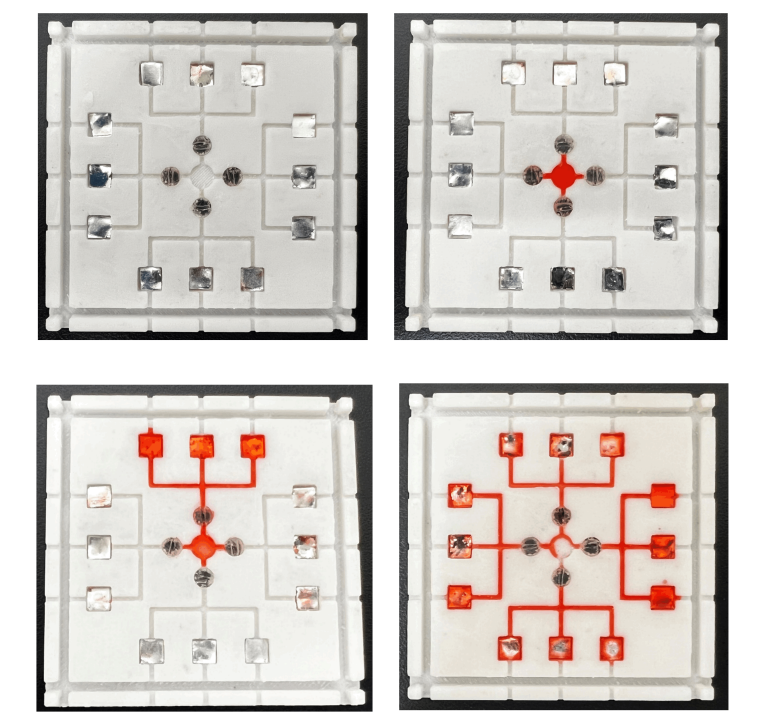
By utilizing nanoengineered hydrogels that exhibit tunable electronic and thermal biosensing capabilities, researchers at Texas A&M University have developed a 3D-printed electronic skin (E-skin) that can flex, stretch and sense like human skin.

“The ability to replicate the sense of touch and integrate it into various technologies opens up new possibilities for human-machine interaction and advanced sensory experiences,” said Dr...

Read More

‘Cancer-Cooling’ Protein puts Bowel Cancer on Ice

digestive system
Credit: Pixabay/CC0 Public Domain

A protein in the immune system can be manipulated to help overcome bowel cancer, according to new research from The Australian National University (ANU). The research is published in Science Advances.

Bowel cancer claims more than 100 lives in Australia each week, yet around 90% of cases can be successfully treated if detected early.

According to lead author Dr. Abhimanu Pandey, from ANU, the protein, known as Ku70, can be activated or “turned on” like a light switch by using a combination of new and existing drugs.

“In its activated state, the protein acts like a surveillance system, detecting signs of damaged DNA in our cells,” Dr. Pandey said.

“DNA is the genetic code of life...

Read More

When Lab-Trained AI Meets the Real World, ‘Mistakes can Happen’

AI and pathology
When humans examine tissue on slides, they can only look at a limited field within the microscope, then move to a new field and so on.

Tissue contamination distracts AI models from making accurate real-world diagnoses. Human pathologists are extensively trained to detect when tissue samples from one patient mistakenly end up on another patient’s microscope slides (a problem known as tissue contamination). But such contamination can easily confuse artificial intelligence (AI) models, which are often trained in pristine, simulated environments, reports a new Northwestern Medicine study.

“We train AIs to tell ‘A’ versus ‘B’ in a very clean, artificial environment, but, in real life, the AI will see a variety of materials that it hasn’t trained on...

Read More

Low-frequency Ultrasound can Improve Oxygen Saturation in blood

Research conducted by a team of scientists from Kaunas universities, Lithuania, revealed that low-frequency ultrasound influences blood parameters. The findings suggest that ultrasound’s effect on haemoglobin can improve oxygen’s transfer from the lungs to bodily tissues.

The research was undertaken on 300 blood samples collected from 42 pulmonary patients. The samples were exposed to six different low-frequency ultrasound modes at the Institute of Mechatronics of Kaunas University of Technology (KTU).

The changes in 20 blood parameters were registered using the blood analysing equipment at the Lithuanian University of Health Sciences (LSMU) laboratories. For the prediction of ultrasound exposure, artificial intelligence, i.e...

Read More