Category Health/Medical

Researchers discover Neurons that Track and Regulate Blood Sugar Levels

picture of a brain neuron
Learning how certain brain neurons sense and react to variations in blood-sugar levels might lead to better diabetes treatments. Getty Images

New research has discovered neurons within the brain that detect and respond to changes in the level of sugar within the bloodstream.

Understanding how this blood sugar detection system works and how these neurocircuits operate would give researchers and doctors greater insights into how our brains regulate our blood sugar, and perhaps, how to target them therapeutically to treat metabolic diseases like diabetes and obesity, according to the study authors.

The study was published June 22 online in Diabetes.

“We’ve known for a long time that many neurons can detect sugar locally within the brain,” said Dr...

Read More

First Bioavailable Compound that specifically Inhibits Free Radical Production in Mitochondria Prevents and Treats Metabolic Syndrome in mice

A potential therapeutic for one of the major chronic diseases of aging. Mopping up free radicals with antioxidants was the rage in the 1970’s; people were taking large, sometimes massive doses of various general antioxidants, including vitamins and minerals, to try to remove harmful byproducts of energy metabolism. The method was supposed to blunt the effects of aging and stave off chronic disease. The strategy didn’t work, and in some cases, it caused harm because untargeted antioxidants also compromised beneficial cellular signaling pathways. Over time, this area of research went on the shelf as mitochondrial theories of disease and aging fell into disfavor.

But research at the Buck offers a new way to deal with free radicals: rather than mop them up, take a pill that selectively...

Read More

New research finds Deep-Sleep Brain Waves Predict Blood Sugar Control

Researchers have uncovered a potential mechanism in humans that explains how and why deep-sleep brain waves at night are able to regulate the body’s sensitivity to insulin, which in turn improves blood sugar control the next day. (Illustration courtesy Matthew Walker)

Researchers have known that a lack of quality sleep can increase a person’s risk of diabetes. What has remained a mystery, however, is why.

Now, new findings from a team of sleep scientists at the University of California, Berkeley, are closer to an answer. The researchers have uncovered a potential mechanism in humans that explains how and why deep-sleep brain waves at night are able to regulate the body’s sensitivity to insulin, which in turn improves blood sugar control the next day.

“These synchronized brain w...

Read More

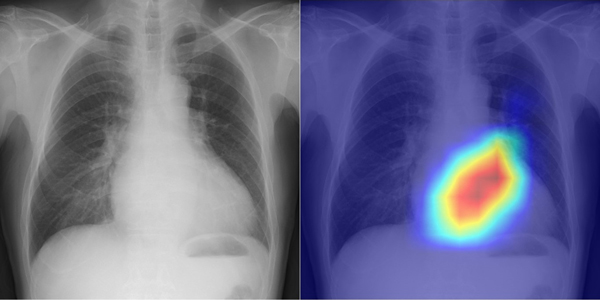
AI finds a way to People’s Hearts (literally!)

Evaluation of Left Ventricular Ejection Fraction
Left: Chest radiograph
Right: Visualization of the grounds for the AI’s judgment
Credit: Daiju Ueda, OMU

Unveiling a groundbreaking and accurate AI-based method to classify cardiac function and disease using chest X-Rays. AI (artificial intelligence) may sound like a cold robotic system, but Osaka Metropolitan University scientists have shown that it can deliver heartwarming — or, more to the point, “heart-warning” — support. They unveiled an innovative use of AI that classifies cardiac functions and pinpoints valvular heart disease with unprecedented accuracy, demonstrating continued progress in merging the fields of medicine and technology to advance patient care. The results will be published in The Lancet Digital Health.

Valvular hea...

Read More